Best Replies After a First Date, Who Should Text First
Who should text first after a date? Usually whoever asked, but either can. Learn the timing, what to mention from the night, and how to read their reply.
Most people expect the person who did the asking to make the first move, and that expectation is the reason both of you can end up staring at your phones. The one who was invited often holds back out of politeness, assuming the inviter will report in. The inviter, meanwhile, may be giving the other person room to respond first. Each side reads the quiet as the other's verdict. Nobody has said no, but nobody has said anything, and the gap fills itself with worst-case guesses.
What you are trying to achieve with the first message is small. You want them to know the evening landed well for you and to hand them something easy to answer. That is the whole assignment. It is not a proposal, a confession, or a test of their interest. When you treat it as a low-stakes comment about a specific moment (the story about their brother's wedding, the terrible playlist in the bar, the way the waiter botched their order), you take pressure off both of you. A detail from the night proves you were paying attention, and it gives them a thread to pull.
Timing matters more than polish. A message sent within a few hours, or the next morning, arrives while the evening is still vivid, so your reference to the burnt dessert or the long walk to the train still lands as a shared memory. Wait two or three days and the same line reads like an item on a to-do list. Late-night texts are fine if the date ended late and you both seemed relaxed. Mid-workday texts the next day also work, since people often check their phones in small breaks and a warm line is a pleasant interruption.
Several habits tend to backfire. Asking for a second date in the very first message can feel like skipping the part where you say anything about the first one. Writing something stiff, the way you would to a recruiter, makes a warm evening sound clinical. Generic praise gives them nothing to respond to, so they reply with a thumbs-up and the thread dies. And sending a second and third message when the first goes unanswered turns mild interest into pressure, which is the opposite of the easy tone you started with.
When their reply comes, read the shape of it rather than only the speed. A person who is interested usually matches your effort: they mention something from the night too, ask you something back, or run with your joke. Short answers that never return a question suggest they are polite but lukewarm, or simply busy. One slow reply means little. A pattern of slow, closed replies means a lot. If the exchange is lively, let the invitation for another meeting rise out of it in a message or two. If it stays flat, answer kindly once and stop chasing.
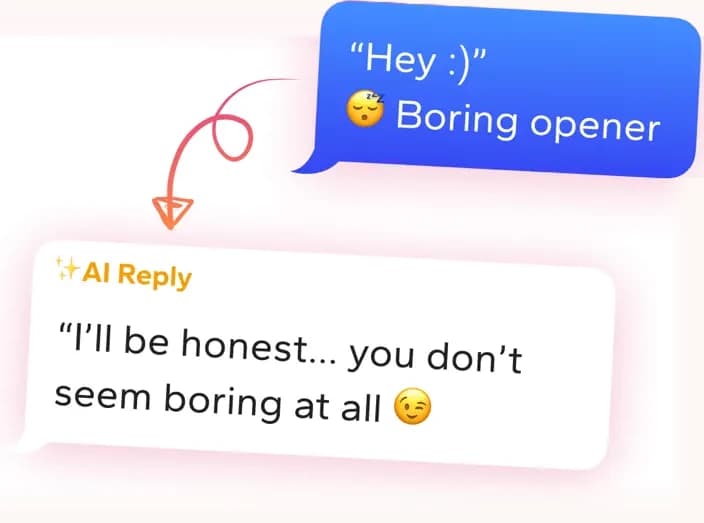
Get replies that sound like you
Screenshot the conversation in WingAI. It reads the vibe and gives you natural replies for this exact situation.
Try for freeWhy the invited person often stays quiet
If someone asked you out, you may feel the next move belongs to them, and that is a perfectly reasonable instinct. The trouble is that they may be thinking the exact same thing about you. Maybe they were nervous the whole evening and are now replaying a joke that fell flat. Maybe they are waiting to see whether you enjoyed it before risking another awkward silence. Neither of you is being cold. You are both being careful. If you were the one who got invited and you liked them, going first removes the guesswork for both of you, and most people are relieved rather than put off when the other person speaks up.
Picking a detail worth mentioning
Choose something that only the two of you share. A throwaway joke works better than a big topic, because it proves you were listening closely rather than waiting for your turn to talk. The odd thing they ordered, the story about getting lost on a road trip, the bartender who knew their name, the band playing too loudly next door. Avoid anything heavy, like a family problem they mentioned reluctantly, since bringing it up in a casual text can feel intrusive. Aim for the moments where you both laughed. Those are the ones that make it easy for them to laugh again in writing.
What a slow reply can mean
People answer on different schedules, and a delay of several hours is often just life: work, a dying battery, a friend's birthday dinner. Do not read a single gap as a verdict. What deserves attention is the pattern across a few exchanges. Do they ever bring up something new, or only respond to what you send? Do they ask about your week, or does every message end with a period? If the warmth is one-sided after a few tries, that tells you more than any single silence. Give it one gentle follow-up at most, then let the conversation rest and see whether they pick it back up.
What not to send
“Had such a good time with you tonight! Would love to do this again soon.”
It could describe any date with anyone, and the vague request for a repeat leaves them nothing from your evening to respond to.
“Hey! Just wanted to reach out and see how your night is going now that we parted ways.”
It reads like a customer service check-in and ignores the laughs, the food, and the conversation you actually shared.
“So when do you want to grab dinner again?”
It jumps straight to scheduling before acknowledging the first date at all, which makes the whole evening feel like a box you ticked.
Mistakes to avoid
- Asking for the second date in the very first text, before saying anything about the evening you just spent together.
- Mentioning a sensitive thing they shared reluctantly, like a family conflict, in a casual follow-up where it feels intrusive.
- Sending a second and third message within the same day when the first has not been answered, which turns warm interest into pressure.
Frequently asked
- Who should text first after a date?
- Usually the person who did the asking, since they already showed initiative, but either of you can start. What counts is that someone reaches out within a few hours or the next morning, with a line about a specific moment from the night rather than a generic compliment.
- Is it weird to text first if they asked me out?
- No. The person who invited you may be leaving room for you to respond first, so a warm message from you often comes as a relief. If you enjoyed the evening and the timing feels natural, send it rather than waiting and letting the silence harden into doubt.
- How long should I wait to text after a first date?
- A few hours is fine, and the next morning works too. Waiting past roughly two days makes even a warm message feel like an afterthought, because the shared memories have faded and the delay starts to look like a lack of interest rather than busyness.
- What if they reply slowly or give short answers?
- One slow reply means little, since people get busy. Send one more natural message and watch the pattern. If they keep answering briefly without asking anything back across several exchanges, they are likely not matching your interest, and it is kinder to yourself to let it go.
Real user feedback
“I overthink every text. Having three options and picking the one that sounds like me cut that spiral short.”
Sam R.
“I'm busy and half the profiles give you almost nothing to work with. WingAI gets me a solid first line fast without me staring at the screen for ten minutes.”
Ralph
Get replies that sound like you
Screenshot the conversation in WingAI. It reads the vibe and gives you natural replies for this exact situation.
Try for free