Reply when she opens up after you seemed distant
How to apologize and reconnect after she shared something vulnerable and you didn't match her energy. Get the tone right.
She told you something real. Then you didn't step up. Maybe you gave short replies, changed the subject, or just went quiet. Now she's either pulling back or giving you another chance by reaching out again.
This is the moment where one text can fix it or cement the damage. She's watching to see if you actually care or if you were just bored that day. A good reply does two things at once: it acknowledges what you missed and shows her you're actually present now.
The trap is over-apologizing like you committed a crime, or being so casual about it that it looks like you didn't notice the shift at all. She needs to feel like you got why it mattered, and that you're not going to do that again.
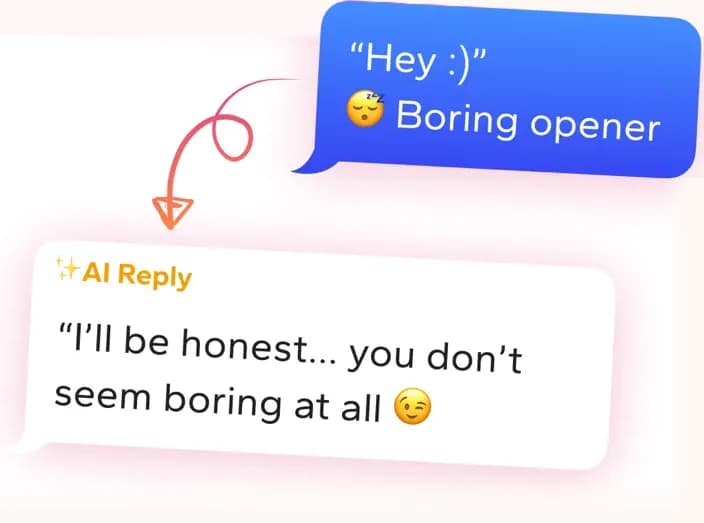
Get replies that sound like you
Screenshot the conversation in WingAI. It reads the vibe and gives you natural replies for this exact situation.
Try for freeRizz AI Screenshot the chat and get the next message for this person.
Why she pulled back or reached out again
When someone shares something vulnerable and you don't match that energy, they don't think you're busy or distracted. They think you don't care. The gap between her openness and your response reads as rejection, even if you didn't mean it that way.
She might go quiet to protect herself. Or she might reach out once more to give you a second chance, which is actually riskier for her. Either way, she's testing whether you're actually interested in knowing her or just interested in surface-level texting. The distance you created felt real to her.
Name what happened, then show up differently
Your reply has to do two separate things. First, acknowledge the specific moment when you checked out. Don't say sorry for nothing or she'll wonder if you even noticed. Say what you were doing or not doing. Then show her you're present right now by engaging with the actual thing she said, not just apologizing about your behavior.
The second move is asking a real question or sharing a real response to what she opened up about. This proves the apology isn't just words. You're actually ready to listen now.
Send it fast, then follow through
Send this reply within a few hours of realizing the gap, not after three days of mulling it over. A delayed apology looks calculated. Once you send it, the work isn't done. When she responds, engage fully. Ask follow-up questions. Be specific. If you go distant again after apologizing, she's gone.
If she doesn't reply to your apology text, wait two days then move on. A second attempt at this point looks like you're trying to convince her instead of letting her decide. You've done your part.
Why these replies fail
“I'm really sorry I was being weird. I've just had a lot going on and wasn't in the best headspace. I hope you understand.”
It centers your excuses instead of acknowledging what you did to her, and it puts the burden on her to understand you.
“My bad for being distant lol. Anyway, how was your day?”
The casual tone and topic jump signal that you don't actually think what happened was a big deal, undoing any apology.
“I'm sorry if I seemed uninterested when you were talking about that thing.”
The vagueness and 'if' make it sound like you're not even sure what you did wrong, which reads as insincere.
Common mistakes
- Writing a long apology that makes the moment about your feelings instead of hers
- Saying sorry but not saying what you're sorry for, leaving it vague
- Following up the apology with a joke or topic change that glosses over it
- Taking days to respond, which signals you only apologized after thinking about it strategically
- Apologizing but then not actually engaging when she opens up again
Questions people ask
- Should I apologize if I'm not even sure she noticed I was distant?
- If you're wondering this, she noticed. People feel when you check out. An apology that comes from actually reflecting on your behavior reads differently than one that sounds defensive or uncertain. Trust that observation.
- How long should my apology text actually be?
- Two to four sentences. Long enough to name the moment and show you're engaged now, short enough that it feels natural and not like a letter. More than that and it starts to look like you're performing.
- What if she doesn't respond to my apology?
- She heard you. Sometimes people need time before they trust that a shift is real. Don't send a follow-up or you'll look like you're trying to convince her. If she comes back, show up fully. If she doesn't, accept it.
- Is it okay to explain why I was distant, or does that sound like I'm making excuses?
- A brief context is fine if it's true. The difference is whether you're saying it to explain your actions or to excuse them. 'I was in a bad place and checked out' acknowledges something real. 'I had a lot going on so I wasn't in the headspace' puts it on her to forgive you.
What people say after using WingAI
“I always freeze on the first sentence. This gets me past that blank box so I actually hit send.”
joejoe4567
“I was skeptical at first. Then I tried it on a dry chat and the replies actually sounded like me, not a chatbot.”
Mazoonx
“I overthink every text. Having three options and picking the one that sounds like me cut that spiral short.”
Sam R.
Get replies that sound like you
Screenshot the conversation in WingAI. It reads the vibe and gives you natural replies for this exact situation.
Try for free