Should you correct someone's mistake early in dating
When to gently correct a dating match and when to let it go. How to keep momentum without ignoring red flags.
Early dating has a thin margin. Correct someone too fast and you sound like a parent or a know-it-all. Let everything slide and you either waste time with someone careless or signal you don't have standards.
The real question is not whether to correct them, but whether the mistake matters. A typo or mixing up a detail about you? Let it pass. A factual claim they state confidently wrong, or something that reveals carelessness about you specifically? That's worth addressing, but only if you do it right.
A good reply acknowledges what they said, slips in the correction without making them feel stupid, and moves forward. You're not their teacher. You're someone who knows what's true and isn't afraid to say it lightly.
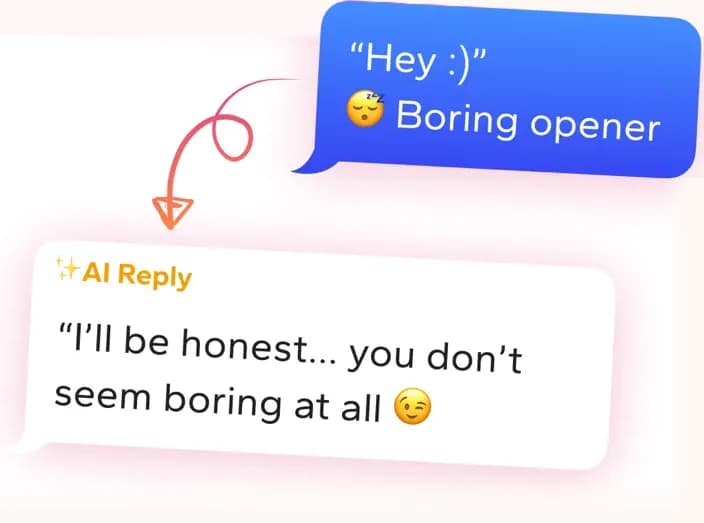
Get replies that sound like you
Screenshot the conversation in WingAI. It reads the vibe and gives you natural replies for this exact situation.
Try for freeRizz AI Screenshot the chat and get the next message for this person.
Repeated false claims versus occasional mix-ups
A slip is forgetting which drink you ordered or mixing up a detail you mentioned once. A signal is confidently stating something false, not caring about accuracy, or misremembering something about you specifically after you told them clearly.
Pay attention to patterns. One mistake is nothing. They forget you said no tomato on your sandwich, fine. They forget three times? That's not sloppiness, that's not listening. The mistake matters less than what it reveals about how much attention they're paying to you.
Staying collaborative when you need to correct them
The move is to treat the correction like you're both on the same team. You're not the fact-checker. You're just casually putting the record straight because the conversation matters.
Keep it short. A light frame works best: 'I think I misspoke' or 'actually, it was...' or 'wait, no, I meant...' Then move on immediately. If you dwell on it or keep referring back to it, you've turned a small thing into a big thing. The goal is for them to absorb the correction and forget it happened two messages later.
Why correcting in the moment feels natural
Correct in the same conversation where the mistake happened. Early. This keeps it light and connected to context instead of dragging it up later when it looks like you've been sitting on it.
If you don't correct it in the moment, let it go. Bringing it up three exchanges later or the next day feels petty and pulls focus away from building momentum. The exception: if the mistake directly affects plans or how they'll treat you, then speak up even if time has passed. But most slips should be addressed immediately or forgotten.
Why these replies fail
“Actually, I went to State, not Yale. It's a state school, not an Ivy. Most people get that confused I guess”
Sounds condescending and passive-aggressive, making them feel small instead of just setting the record straight
“Hmm that's not quite right but okay”
Vague and dismissive without actually clarifying anything, which leaves confusion and makes you sound annoyed
“you keep getting this wrong and honestly it's starting to feel like you're not really paying attention to what I'm telling you”
Escalates a small slip into a character judgment before giving them a real chance to adjust
Common mistakes
- Correcting them like they're wrong instead of like you're clarifying, which puts them on defense
- Over-explaining the correction, which makes it feel like a lecture instead of a casual fix
- Letting repeated carelessness about details they should know pass without comment
- Correcting small stuff, their joke or their taste, that has nothing to do with how you're treated
- Bringing up the correction days later, which makes it weird instead of keeping it in the moment
Questions people ask
- Is correcting them on a first date different than correcting them over text
- In person, tone carries more weight so small corrections land lighter. Over text, keep them even shorter and use friendly language so they can't misread your tone. The stakes are lower on text anyway, so you can afford to let more pass.
- What if they correct me first. Do I owe them a thanks
- If it's a real mistake, acknowledge it quick: 'Oh good catch, thanks.' If they're being nitpicky about something dumb, you don't need to perform gratitude. A light 'haha okay' and move on works fine. Don't let someone use corrections as a way to position themselves as smarter.
- How do I know if it's too early to correct someone
- There's no too early for factual corrections about you or things you actually said. What matters is how you do it, not when. If they say something objectively wrong and you just want them to know the real version, say it. The only time to hold back is if the mistake is about their opinions or preferences, which aren't correctible.
- What if they get defensive when I correct them
- A decent person absorbs a light correction without drama. If they get pissy about you clarifying something simple, that's data. It suggests they either can't take feedback or they don't like being wrong. Either way, that's something to track before you invest more time.
What people say after using WingAI
“I always freeze on the first sentence. This gets me past that blank box so I actually hit send.”
joejoe4567
“I was skeptical at first. Then I tried it on a dry chat and the replies actually sounded like me, not a chatbot.”
Mazoonx
“I overthink every text. Having three options and picking the one that sounds like me cut that spiral short.”
Sam R.
Get replies that sound like you
Screenshot the conversation in WingAI. It reads the vibe and gives you natural replies for this exact situation.
Try for free