How to Suggest a Date When She's Working a Lot of Shifts
She's been picking up shifts and you want to meet. Here's how to read it, suggest a date without pressure, and follow up without chasing.
When she says she's been picking up a lot of shifts, she's usually telling you two things at once. She's busy, and she's telling you she isn't ignoring you. Most people say this when they're tired or short on time, not when they've lost interest.
That means the job of your reply is to acknowledge the grind without making it the topic, then make one specific, low-effort suggestion. A vague 'we should hang out sometime' hands her the work of planning, and tired people rarely take on extra planning.
Good replies make it easy for her to say yes or no in one word. They also leave her room to say 'not this week' without it feeling like a rejection.
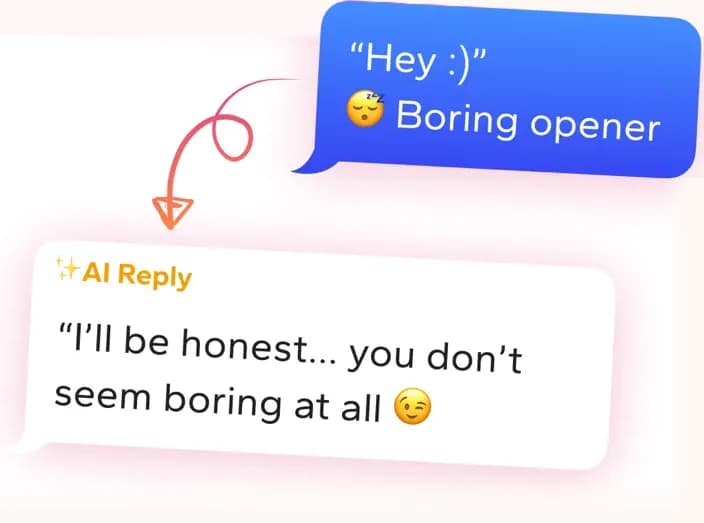
Get replies that sound like you
Screenshot the conversation in WingAI. It reads the vibe and gives you natural replies for this exact situation.
Try for freeRizz AI Screenshot the chat and get the next message for this person.
Read the shifts as a schedule, not a signal
Someone who says they've been picking up lots of shifts is describing their week. They're not usually describing their feelings about you. Money, a shift lead asking, a coworker out sick, a stretch of bills that needs covering: all of these produce the same sentence. The most useful thing you can do is assume the reply is slow because of the schedule until she gives you a reason to think otherwise.
That does not mean you should pretend the message was a joke. It means reading the content literally. She told you her time is tight right now. A good response accepts that fact and works with it, which shows you were listening and aren't waiting around for her to free up.
Look at what she offered, too. Often people mention shifts because they're apologising in advance for being slow to reply or to make plans. If she's apologising, she probably wants to see you, just not this week at 9pm.
Make the ask small enough to answer tired
The reason a vague plan dies is that it asks her to do the thinking. When someone is working double shifts, a question like 'what's your schedule look like' lands as one more task. A concrete suggestion turns the decision into a yes or no, which is far easier to answer when you're on your feet all day.
Pick a short window that fits a normal evening and a place near one of you. Name one option, then let her change it. A coffee, a quick drink, or a walk takes an hour and doesn't require a lot of prep. Keep the length small enough that she won't feel she has to clear a whole night.
Add a soft exit so the ask doesn't feel heavy. Saying something like 'no pressure, I know your week is a lot' gives her an easy way to say next week without feeling she owes you anything. People say yes more often when the no is cheap.
The week of silence matters more than the text
If she goes quiet after a shift-heavy message, the most common reason is that she got busy and the thread slid down her phone. It is rarely a verdict on you. The mistake people make is treating a slow reply as a test, then sending follow-ups that escalate: a second message the same night, a 'hey?' the next morning, a joke with a hint of hurt in it.
Give it a few days before you say anything else. If she's been working nights, a reply at 2pm on a day off is normal. Once a few days have passed, one short follow-up is fair, and it should mostly re-offer the same plan with a slightly different window. Something that makes replying easy, not something that asks why she hasn't replied.
If there is still nothing after that, stop. Don't send a third message to check, and don't send a long note about being confused. Silence after two gentle attempts is an answer, even if it's an unhelpful one. Leave the door open by not commenting on the gap, and move your attention to someone who can reply.
Why these replies fail
“Ugh same, I'm so tired too. We should totally hang out sometime when you're free!”
It sympathises and then hands her the job of picking a time, which is exactly what a tired person can't face right now.
“Hey are you still interested or are you just too busy for me now?”
It reads the shifts as a sign of disinterest and asks her to defend her interest before she has a chance to answer normally.
“Hey? Didn't see a reply, did you get my last message?”
A follow-up sent after a short gap with no plan attached pressures her and gives her nothing easy to say yes to.
Common mistakes
- Sympathising at length, then never getting to a plan
- Suggesting a date with no day, time, or place attached
- Asking when she's free, which makes her do the scheduling
- Treating the shifts as a sign she's losing interest and asking if she's still into it
- Sending a second message before she's replied to the first
Questions people ask
- What if she says she's busy with shifts but doesn't suggest meeting?
- Take it as a schedule note, not a no. Make one specific, short suggestion with a soft exit, like 'no pressure, want to grab a coffee Thursday around 5 if that works, otherwise next week is fine.' If she still doesn't commit to anything after that, you have your answer about the timing, and you can wait for her to bring it back up.
- How long should I wait before following up after she mentions shifts?
- Give it at least two to three days, longer if she's been clear that her week is packed. One gentle follow-up is reasonable. It should re-offer the plan with a different window rather than asking why she hasn't replied. Sending several messages in a row will read as pressure, even if you mean it kindly.
- Should I ask if she's still interested?
- Usually not. Asking directly puts her in the position of defending herself when she's probably just tired. Showing interest through a concrete plan says more than asking about it. If the plan gets no response after a couple of tries, you can conclude the timing isn't working, which is more useful than asking her to reassure you.
- Is it better to suggest a specific day or ask what works for her?
- Suggest a specific option, then let her adjust it. Asking what works makes her do the scheduling, which is hard when she's already at capacity. One clear suggestion with a time and place gives her a yes, a no, or an easy counter, and all three move things forward.
What people say after using WingAI
“I overthink every text. Having three options and picking the one that sounds like me cut that spiral short.”
Sam R.
“I was skeptical at first. Then I tried it on a dry chat and the replies actually sounded like me, not a chatbot.”
Mazoonx
“Used it for a couple hours and set up a date the same night. Not even kidding.”
Nikola2214
Get replies that sound like you
Screenshot the conversation in WingAI. It reads the vibe and gives you natural replies for this exact situation.
Try for free