What to text a girl who only reaches out when she's had a bad day
She texts you mostly after rough days and you're unsure how to answer. Here's the tone, content and timing that keep you warm without turning into her permanent
When someone texts mainly after a bad day, the message is usually a reflex, not a considered choice. Something went wrong, her chest is tight, and she scrolls to the person who feels safe and easy. That says you have a reputation for being kind. It does not say she is plotting a romance with you, and it does not say she is using you either. Most people reaching out in a low moment are not thinking about what the contact means for the other person at all.
Your aim is to be the person she thinks of on ordinary afternoons too, without punishing her for coming to you when things are rough. That means you reply with real warmth and then offer a doorway to something that has nothing to do with the bad day. A light callback to a joke you shared, a question about something she's looking forward to, a small plan with a date attached. You want her to associate you with relief and good company, not only with a place to unload.
Timing matters more than people admit. A reply that lands thirty seconds after her message teaches her that distress buys instant attention. A reply that lands in a reasonable window, say twenty minutes to a couple of hours depending on the hour, reads as a person with a life who still cares. If she texts late at night, a short and soft answer works better than a long emotional one, because long late night exchanges set a pattern that is hard to undo and tend to blur into something intense without being real.
The usual backfires are easy to spot. Interrogating her about the details keeps her inside the story and makes you the interviewer. Advice she did not request sounds like criticism. Overly dramatic sympathy makes her bad day your bad day, which is heavy. Swerving instantly to flirting or plans can feel like you skipped over what she said. And a pointed comment about how she only texts when she's down will land as an accusation, and she will likely pull back and feel embarrassed.
Reading her response tells you where this stands. If she picks up the lighter thread, laughs, or asks a question back, the door is open and you can nudge toward meeting up. If she goes quiet after you reply, take it as a normal end to a vent, not a rejection, and leave it alone. If weeks pass and every contact still starts with a crisis, you have your answer about what you are to her, and you can decide how much of your attention that deserves.
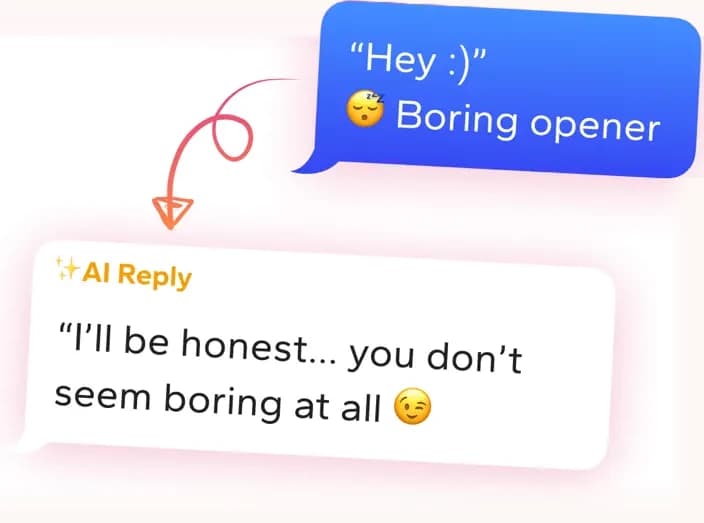
Get replies that sound like you
Screenshot the conversation in WingAI. It reads the vibe and gives you natural replies for this exact situation.
Try for freeMatch her energy, then lift slightly
Start where she is. If her message is short and flat, a short and warm answer fits. If she poured out a paragraph, give a little more, but never mirror the length. Your tone should say you heard her and you're steady, which is calming in itself. Once she has felt acknowledged, let the second half of your message tilt a notch lighter, not dramatically. A dry observation, a reference to something funny from an earlier chat, a mention of what you're up to. You are showing her the conversation can go somewhere easier without telling her to cheer up. Pushing too hard toward cheerful reads as impatience with her feelings.
What belongs in your message
Include one clear sign that you took in the specific thing she said, the boss, the fight with her sister, the exam, not just a general sympathetic noise. Then include something that belongs only to the two of you, such as a callback to an old joke, a show she recommended, or a detail she mentioned last week that she probably forgot she told you. Personal details prove you pay attention when she isn't struggling, which is exactly the quality you want her to connect with you. Close with something low pressure, an open invitation or a loose idea for later, rather than a demand for a reply.
Handling a late night spiral
Messages that arrive near midnight carry a different weight. She may be tired, ruminating, and more raw than the situation deserves. Resist the urge to sit up with her for an hour. Offer a calm, brief response that acknowledges the mood, then say something that eases the conversation toward rest. Keep your tone soft and unhurried. If you pour in energy at that hour, you become associated with intensity and the late night pattern, which is the opposite of what you want. In the morning, a light follow up about something ordinary tells her you're glad to hear from her when nothing is wrong.
Questions people ask
- Should I ask her what happened when she texts about a bad day?
- Acknowledge it first, and ask only if she clearly wants to unload. One open question is fine. A string of them keeps her inside the story and makes you the interviewer. Show you heard the specifics, then let her decide how much more to share before you steer somewhere lighter.
- Does a girl who only texts on bad days like me?
- Possibly, but the pattern alone does not tell you. She may trust you and feel safe with you, or she may treat you as a convenient outlet. Watch what happens when you offer something lighter or a plan. Her response to that matters far more than why she first texted.
- How long should I wait before replying to her?
- Reply within a natural window, roughly twenty minutes to a few hours depending on the time of day. Instant replies every time teach her that distress earns immediate attention. You are not punishing her, just behaving like someone with a full life who still cares about how she is doing.
- What if she vanishes after I reply?
- Leave it. Venting often ends the moment she feels slightly better, and silence afterward is usually relief, not rejection. Do not send a check in or a pointed question. If she only resurfaces during the next rough patch with nothing in between, treat that as information about what the connection is.
Why these replies fail
“Wow, you only ever text me when something's wrong. Do I ever get to hear from you when you're happy?”
Calling out the pattern in the middle of her bad moment makes her feel judged for reaching out, so she is likelier to stop texting than to change.
“I'm so sorry, I hate that this keeps happening to you. I'm here for you whenever, day or night, no matter what.”
Promising unlimited availability tells her your attention is free on demand, which cements the exact role you're trying to grow out of.
“Honestly you should just quit that job and stop letting people treat you like that.”
Unrequested verdicts on her life turn a moment of venting into a debate, and she is left defending her choices when she only wanted to be heard.
Common mistakes
- Replying instantly and at length every time, which trains her to associate you with crisis attention and nothing else.
- Questioning her about every detail of what went wrong, which keeps her stuck in the story instead of giving her relief.
- Jumping straight to flirting or date plans without acknowledging what she said, so she feels her bad day was treated as an opening.
What users say
“She went cold mid-week and I had no idea what to say. The reply I sent felt natural and she picked the chat back up.”
Marcus T.
“My openers used to be boring. Now I reference something from her profile and people actually write back.”
Aiden K.
Get replies that sound like you
Screenshot the conversation in WingAI. It reads the vibe and gives you natural replies for this exact situation.
Try for free