How to respond when he shares something vulnerable
Learn what to say when a guy texts you something personal or emotionally open. Replies that build trust without overdoing it.
When a man texts you something vulnerable, he's taking a risk. He's either shared a fear, admitted a mistake, asked for real advice, or told you something that matters to him. This is different from normal flirting or surface chat.
A good reply does a few things. It acknowledges what he just did. It shows you're not spooked by the realness. And it keeps the door open for him to say more or move forward without making it awkward.
Most replies fail because they either dismiss the moment (too jokey, too light), over-function on it (trying to solve his problem or fix him), or mirror back his sadness in a way that feels like pity. You're not his therapist. You're someone he trusts enough to be real with.
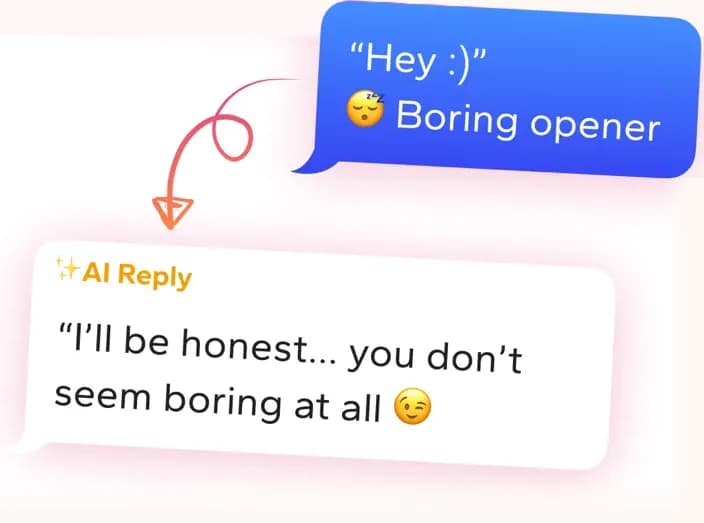
Get replies that sound like you
Screenshot the conversation in WingAI. It reads the vibe and gives you natural replies for this exact situation.
Try for freeRizz AI Screenshot the chat and get the next message for this person.
He's signaling trust, not asking for rescue
When someone shares something vulnerable over text, they're testing whether you'll handle it well. They're not necessarily asking you to solve it or even have a big conversation about it right now. They're showing you a real part of themselves and watching to see if you accept it or run.
The vulnerability is the signal. The specific problem is secondary. If you respond by immediately trying to fix, advise, or over-comfort him, you're actually treating the vulnerability like it's a burden instead of a gift. He already knows his situation is hard. What he needs to know is that you can sit with it without flinching.
Acknowledge him without taking the weight
A strong reply does two moves. First, show you heard what he said and that it matters. This can be direct like 'that's heavy' or 'I hear you', or a specific detail that shows you listened. Second, respond with something true about you or the situation that normalizes what he just shared without minimizing it.
Don't jump to reassurance or problem-solving. Don't ask a ton of follow-up questions as if he's a case to investigate. Keep it short. Keep it honest. The goal is to tell him 'I get it, I'm not running, we're okay here.' Then leave space for him to say more if he wants.
Reply today, don't make him wait
After someone shares something real, silence feels like rejection. Send a reply the same day, preferably within a few hours. It doesn't need to be long. But it needs to land quickly enough that he knows you're still there.
If he doesn't respond to your reply, don't escalate. He may have just needed to get it out. Send one more message in a day or two if the conversation naturally calls for it, but don't keep pushing on the vulnerable topic. And if he ghosts after opening up, that says something about him, not about whether you responded right.
Why these replies fail
“lol same honestly but hey at least you're self aware about it right?”
Treating his vulnerability like a joke kills the moment and makes him feel foolish for opening up.
“You shouldn't feel that way. You're only [age], you have so much time. Honestly when you stop looking is when it happens.”
Dismissing his feelings and launching into clichéd advice makes it worse, not better. He didn't ask to be fixed.
“That sounds really hard. When did you start feeling this way? How long has this been bothering you? Are you okay?”
Too many questions in a row turns it into an interview instead of a conversation, which feels like you're analyzing him rather than connecting.
Common mistakes
- Staying silent or taking too long to reply, which signals you're uncomfortable
- Making a joke to lighten the mood instead of meeting him where he is
- Over-reassuring him with 'you're so great, you'll find someone' which sounds hollow
- Turning it into advice mode and trying to fix his feelings or his situation
- Matching his sadness tone or treating it like a crisis that needs immediate action
Questions people ask
- Should I ask more questions or just acknowledge what he said?
- Start by acknowledging. If he wants to say more, he will. Asking a lot of follow-up questions can feel like interrogation. One natural question is fine, but let him lead whether this becomes a bigger conversation or stays brief.
- What if his vulnerability is about something I can't relate to?
- You don't need to have felt the same thing to respond well. You can still say something real like 'I haven't experienced that exactly, but I believe you' or just focus on something you do understand about the feeling itself, like pressure or loneliness.
- Is it okay to share something vulnerable back?
- Only if it's true and keeps the focus from shifting entirely to you. A small, relevant share can build connection. But avoid making it tit-for-tat or suddenly centering your own stuff. The moment belongs to what he shared.
- What if he shares something really heavy or dark?
- Acknowledge it seriously. Don't minimize or joke. Keep it short and honest. If it's something that suggests he's in crisis or danger, that's when you suggest he talk to someone qualified. But most vulnerability isn't a crisis. Treat it with respect and respond like a person who cares.
What people say after using WingAI
“She went cold mid-week and I had no idea what to say. The reply I sent felt natural and she picked the chat back up.”
Marcus T.
“I was skeptical at first. Then I tried it on a dry chat and the replies actually sounded like me, not a chatbot.”
Mazoonx
“I overthink every text. Having three options and picking the one that sounds like me cut that spiral short.”
Sam R.
Get replies that sound like you
Screenshot the conversation in WingAI. It reads the vibe and gives you natural replies for this exact situation.
Try for free