How to Reply to 'I Need You' (When She Really Means It)
What 'I need you' actually signals and how to respond without overcommitting or ghosting. Read the context, then match her intensity.
When someone texts 'I need you', the stakes feel high, but the meaning depends entirely on what's happening between you two. If you're dating or in early stages and she sends this, she's either asking for emotional support in a real moment, testing your responsiveness, or flagging that she wants more investment from you. The worst move is silence or a joke that dodges what she said.
A solid reply does two things at once. It shows up for her in the moment without overpromising a relationship you haven't defined, and it gives her a clear sense of what you're actually willing to do. There's a real difference between a reply that deepens trust and one that creates confusion or resentment.
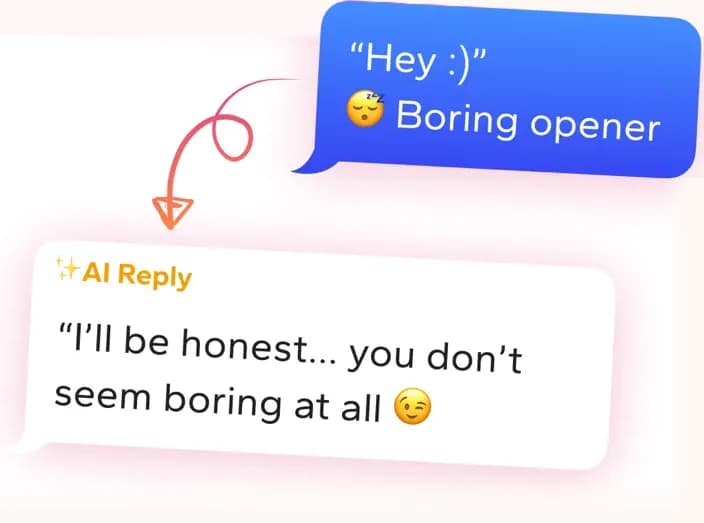
Get replies that sound like you
Screenshot the conversation in WingAI. It reads the vibe and gives you natural replies for this exact situation.
Try for freeRizz AI Screenshot the chat and get the next message for this person.
What 'I need you' means at different stages
Early dating (first few weeks): This usually means she wants you to pick up the phone or come over because something is bothering her. It's a test of your reliability more than a relationship declaration. She's checking if you actually show up.
A few months in: She's asking for emotional presence. This might be work stress, family stuff, or her needing reassurance that you care. It's less about logistics and more about whether you prioritize her.
Vague or no context: Read the timing and history. Did something happen between you? Has she been pulling back? Sometimes 'I need you' is also an indirect way of saying 'I feel like I'm losing you and I want you to fight for this.'
Your reply has to answer one clear question
She needs to know: Can I count on you right now, yes or no? Don't hedge with maybes or future plans. If you can show up, say specifically how and when. If you can't (work, distance, whatever), admit that and offer the next best thing. The move is directness, not grand promises. Say what you can actually do in the next two hours or by tomorrow. Avoid both the brush-off and the overcorrection. She's not asking you to solve her life. She's asking if you're present.
Send it fast, but only if you mean it
Reply within minutes if you can. Delay here reads as 'I don't think your need matters much.' A good reply at 11pm that says 'I'm heading to bed but I'm here first thing tomorrow' beats a panicked 2am essay that overstates what you feel. If you can't show up, say so before she has to ask again.
If she doesn't follow up after you've replied, don't keep texting. You've made your move. Give her space to tell you what's actually going on. If days pass with silence after you offered to help, accept that the dynamic might be unbalanced and decide if that's something you want to keep doing.
Why these replies fail
“What's wrong?”
Puts the work on her to explain herself when she just asked you to show up. She wanted action, not an interview.
“Sounds serious. Let's talk about this soon!”
Delays everything and avoids saying you'll actually do anything. 'Soon' is code for 'maybe' and she'll hear it that way.
“I've got you. No matter what, we're solid. Always here for you babe.”
Oversells the relationship when you barely know each other's family or last names, which creates a false sense of security that won't hold up.
Common mistakes
- Ignoring the message or replying hours later as if it wasn't serious.
- Going full relationship mode with 'I'm here for you always' when you barely know each other.
- Making a joke or deflecting instead of acknowledging she said something that matters.
- Replying with a question that puts the burden back on her ('What's wrong?') without offering anything first.
- Being vague or noncommittal, like 'yeah we should hang soon', which signals you're not actually available.
Questions people ask
- Does 'I need you' always mean there's a real emergency?
- Not always. Sometimes it's emotional need, not crisis. She might be overwhelmed at work, lonely, or wanting reassurance that you care. Read the context and her history of being direct. Either way, take it seriously instead of assuming it's drama.
- What if I can't see her right now?
- Be honest about that immediately. Then offer what you can: a phone call, voice message, staying up to text, coming by tomorrow. Show effort in a different form. What kills trust is silence or 'maybe later.'
- Is it weird to ask what she needs before replying?
- Not weird, but it can come across as stalling. If she trusted you to help without details, start there. A better move: say you're available and ask how you can help, then wait for her answer.
- How do I know if this is a sign of neediness or a real moment?
- One text saying 'I need you' is a moment. Multiple texts a week demanding your time without context is a pattern. React to this message on its own. If a pattern develops later, that's a different conversation.
What people say after using WingAI
“I was skeptical at first. Then I tried it on a dry chat and the replies actually sounded like me, not a chatbot.”
Mazoonx
“I overthink every text. Having three options and picking the one that sounds like me cut that spiral short.”
Sam R.
“She went cold mid-week and I had no idea what to say. The reply I sent felt natural and she picked the chat back up.”
Marcus T.
Get replies that sound like you
Screenshot the conversation in WingAI. It reads the vibe and gives you natural replies for this exact situation.
Try for free