How to respond if he seemed frustrated when you said no to plans
He reacted badly to your decline. Here's how to reply without over-apologizing or ignoring it.
When you turn down plans and he responds with frustration, coldness, or passive-aggressive energy, the moment matters. He's signaling that the rejection stung or that he feels dismissed. The frustration usually points to what's really going on. He's either disappointed and letting it show, or he's testing whether you'll cave and scramble to fix his mood.
A good reply acknowledges the shift without pretending it didn't happen. It's direct enough that you're not walking on eggshells, but warm enough that you're not punishing him for having feelings. The move is to show you respect the disappointment and still stand by your boundary.
This isn't about managing his emotions or convincing him you're worth waiting for. It's about being honest in a way that either moves things forward or makes it clear you're not the right fit. A solid reply tells him. you matter to me, and so does my schedule. He can take it or leave it.
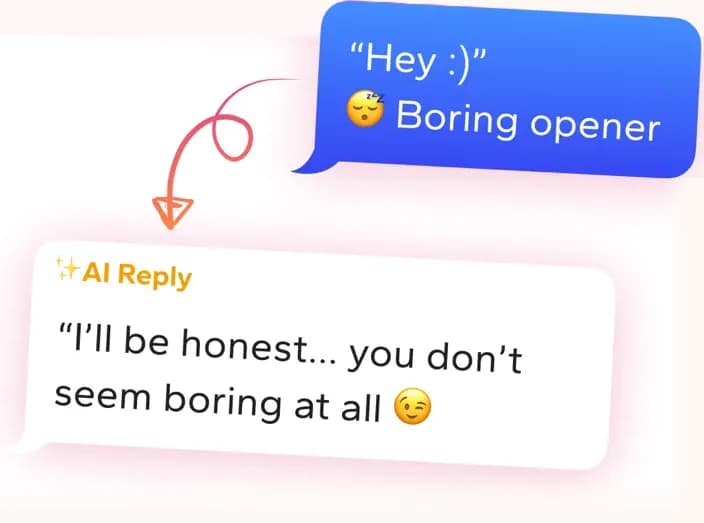
Get replies that sound like you
Screenshot the conversation in WingAI. It reads the vibe and gives you natural replies for this exact situation.
Try for freeRizz AI Screenshot the chat and get the next message for this person.
Frustration after a no usually comes from one of two places
First read: He's disappointed and showing it because he really wanted to see you. This is normal. The frustration isn't a red flag, it's just honest. Second read: He's annoyed that you have a boundary, and he's hoping the cold shoulder will make you regret saying no. Both are information. With the first type, a warm and direct reply works well. With the second type, your reply needs to be friendly but firm, so he knows the frustration won't change your answer. Either way, noticing the shift and naming it internally matters more than trying to guess which one he is. His next move will tell you.
A good reply does two things at once
It stays kind without caving. You're not angry at him for being frustrated, and your tone should show that. But you're also not scrambling or over-managing his feelings. The second move is simpler. you leave space for him to either accept the boundary or step back. Don't close the loop for him by offering a make-good or by apologizing for the original no. Just reply in a way that says, 'I hear you, this stands, and here's what I'm actually like.' Then let him respond or not.
Send it within a few hours, then stop checking
Don't reply instantly, which can look nervous. Wait an hour or two so it's clear you're not panicking. Send it in a calm moment when you can write something you actually mean. After you hit send, put your phone down. If he comes back with understanding or a real question, that's good. If he goes quiet or doubles down on the coldness, you have your answer about compatibility. Don't send a follow-up if he doesn't reply. One solid message is enough. If this pattern repeats on the next few plans, that's when you know it's not working.
Why these replies fail
“I'm so sorry! I hate that you're upset. I can definitely do next weekend instead?”
This apologizes for your boundary and immediately offers an alternative, which teaches him that frustration gets rewarded with compliance.
“Okay, cool. Talk soon.”
Too short and dismissive. It ignores his reaction entirely and makes him feel like you don't care that he's disappointed, which creates distance.
“Not sure what you want from me. I said I couldn't make it.”
Defensive and cold. It meets his frustration with irritation instead of clarity, and it shuts down any chance of understanding what's actually bothering him.
Common mistakes
- Over-apologizing or over-explaining your no, which reads as guilt and invites him to negotiate
- Pretending you didn't notice the frustration, which feels dishonest and leaves tension hanging
- Immediately offering an alternative time to smooth things over, which trains him that irritation works
- Matching his coldness with your own, which escalates instead of defusing
- Texting too quickly, making it look like you're anxious about his reaction
Questions people ask
- Should I apologize for saying no to plans?
- No. Apologizing for a boundary weakens it and suggests your no wasn't real. You can be warm and kind without being sorry. 'I wish I could make it' is different from 'I'm sorry I can't.' One is honest. The other invites negotiation.
- What if he's legitimately disappointed and not trying to guilt me?
- Then your reply can be a little warmer. Acknowledge that it sucks, that you wish the timing worked, and that you're still interested in seeing him when you can. But don't swing the other direction and offer something you're not ready to give just to fix his mood.
- How do I know if his frustration is a dealbreaker?
- One time. probably not. A pattern. yes. If every time you decline, he gets cold or passive-aggressive, that tells you he has a hard time with boundaries. Watch what happens next. Does he get over it and suggest another time, or does he go quiet and make you work to re-engage?
- Should I offer an alternative time to show I'm still interested?
- Only if you actually mean it and if you would've offered it anyway. Don't offer a time as damage control. Let him hear your reply first. If he responds well, the conversation about when you're both free can happen naturally.
What people say after using WingAI
“I overthink every text. Having three options and picking the one that sounds like me cut that spiral short.”
Sam R.
“I was skeptical at first. Then I tried it on a dry chat and the replies actually sounded like me, not a chatbot.”
Mazoonx
“Used it for a couple hours and set up a date the same night. Not even kidding.”
Nikola2214
Get replies that sound like you
Screenshot the conversation in WingAI. It reads the vibe and gives you natural replies for this exact situation.
Try for free