He seemed really into me then went quiet. How to reply.
He was all in, then replies got slow and short. Here's how to read the shift, what kind of message gets a real answer, and when to stop texting.
When a guy who was chatty and eager turns sparse, there are usually a few ordinary explanations. He may be talking to several people and you slid down the list. Something outside the phone may have swallowed his attention, like a work crunch, a family situation, or a bad week. Or his interest cooled and he's too conflict-averse to say so, so he lets the replies thin out and hopes you drift. From your side the cause is invisible, and the phone gives you nothing to separate them. What you can see is the pattern, and the pattern is the only useful evidence you have.
Your goal here is small and practical. You are not trying to win him back or make him feel guilty, and you are not trying to extract an explanation. You want one clean piece of information: does he put in effort when something specific and easy is placed in front of him? Everything about the message should serve that. If you also try to soothe your own anxiety through the text, by hinting you're hurt or fishing for reassurance, the result gets muddy and you learn nothing.
Timing and platform change the read more than people expect. On a dating app, a quiet stretch can be the match list competing with itself, and some people reply in bursts, clearing everything on Sunday night. After a first date or a few weeks of daily texting, the same gap carries more weight, because he has already shown he can sustain contact. A person who messaged you every evening and now answers once every three days has changed something. Compare him to his own earlier behavior, not to some imagined standard of promptness.
What tends to backfire is anything that adds pressure or emotional labor to his side of the exchange. Long messages about how things feel, a string of follow-ups, or a pointed line about him being busy all invite him to either defend himself or agree with the breakup you're implying. Going icy is no better, because it burns the one low-cost chance you have to find out where he stands. The messages that work are short, warm, and aimed at something concrete, like a thing he mentioned or a plan with a day attached.
Reading his answer is mostly about proportion. A reply that matches your specificity, picks a time, or returns a question means the dip was probably circumstantial. A reply that is friendly but vague, with no counteroffer, tells you he is comfortable keeping you at arm's length. Silence after a direct, easy proposal is also an answer, and a fairly clear one. Resist the urge to reinterpret it as a bad day. Give it a fixed window, decide in advance what counts as enough, and let the response, not your hopes, set the next step.
Compare him to his own baseline
Ignore what a responsive person is supposed to look like and look at what he did in week one. If he opened conversations, remembered details, and answered within hours, then a reply that lands the next evening with no question attached is a real change. Scroll back and count: who started the last five exchanges, who asked questions, how long his messages ran. If you started all of them, you have your answer before you send anything. If he was always a slow texter who showed up in person, a quiet few days means much less. The baseline is what makes the shift readable.
Ask about something he already mentioned
A message that picks up a loose thread from earlier works because it proves you were listening and gives him an easy way back in. Say he told you his sister was visiting, or that he had a half marathon coming up. Ask how it went, with a light tone and no mention of the gap. Pair it with a small, dated suggestion if you want a firmer test, like a coffee near his place on Thursday. A vague 'we should hang out' lets him agree without committing. A named day and place forces a yes, a counter, or a dodge, and each of those is information.
Set your cutoff before you send
Decide now what counts as enough, because after the message goes out you will want to grade on a curve. A good response is a real answer to your question plus either a question back or a concrete plan. A pass is a reply that engages but stays vague, which earns one more specific attempt and no more. Anything shorter than that, or silence past two days, closes the question. Write the cutoff down if you need to. People who skip this step end up rereading a lukewarm reply for three days and sending a second, needier message that muddies everything.
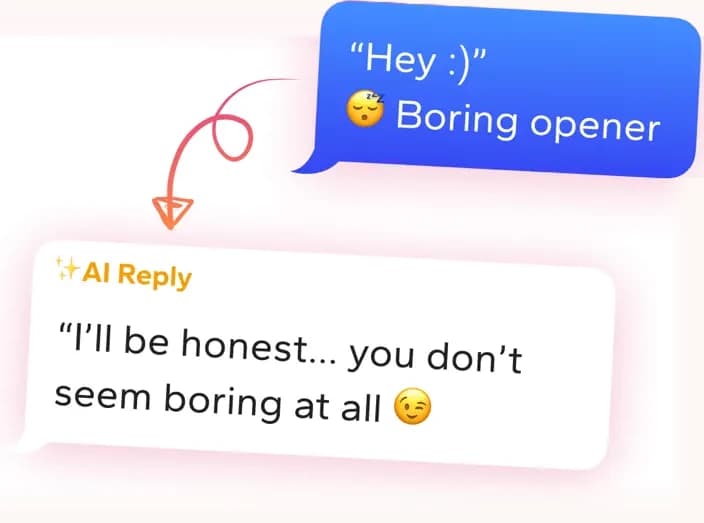
Get replies that sound like you
Screenshot the conversation in WingAI. It reads the vibe and gives you natural replies for this exact situation.
Try for freeWhy these don't work
“Hey, I feel like you've been distant lately. Did I do something wrong?”
It casts you as the one who needs reassurance, and a guy who is already easing out has a free exit by saying he's just been busy.
“No worries if you're swamped, just ignore this, I'll be around!”
Giving him permission to skip the reply means the silence tells you nothing, and it reads as hurt dressed up as casual.
“Haha you're hard to pin down lately ;) what's going on with you??”
The teasing jab at his availability points straight at the gap, and the open-ended question is exactly the kind he can answer with one word.
People also ask
- Why does a guy act obsessed and then get hard to reach?
- There is no single cause. He might be dating several people, dealing with something outside the chat, or losing interest and avoiding the awkward conversation. You can't tell which from the text alone, so watch how he responds to a specific, easy message instead of guessing at motives.
- Should I text him first after he goes quiet?
- Yes, once, if you want to know where things stand. Keep it short, warm, and pointed at something concrete. Don't mention the silence. If he answers with real effort, carry on. If he doesn't, you've learned what you needed and can step back without having made a scene.
- How long should I wait before replying to a half-effort message?
- Let a few hours pass at minimum so you're not matching his pace in a rush, and a day is fine if the message was thin. Replying instantly to a low-effort text teaches him a small effort gets full attention. Then send something specific rather than another general check-in.
- What if he replies warmly but never makes a plan?
- That is a real answer. Friendly text with no plan usually means he likes the attention but isn't moving toward seeing you. Offer one concrete option with a day and place. If he still stays vague, accept it and put your time toward people who show up.
Pitfalls to avoid
- Sending a long message about how you feel to a guy who has gone quiet, which hands him an emotional task he's already avoiding and makes a fade easier to justify.
- Double or triple texting within a day after a slow reply, which turns a clean test into visible chasing and leaves you with no readable result.
- Rereading a vague, friendly reply as proof he's still interested, then holding off on other people for another week while waiting for a plan that never arrives.
It doesn't sound like a bot
“I was skeptical at first. Then I tried it on a dry chat and the replies actually sounded like me, not a chatbot.”
Mazoonx
“I overthink every text. Having three options and picking the one that sounds like me cut that spiral short.”
Sam R.
“She went cold mid-week and I had no idea what to say. The reply I sent felt natural and she picked the chat back up.”
Marcus T.
“I'm busy and half the profiles give you almost nothing to work with. WingAI gets me a solid first line fast without me staring at the screen for ten minutes.”
Ralph
Get replies that sound like you
Screenshot the conversation in WingAI. It reads the vibe and gives you natural replies for this exact situation.
Try for free