How to Tell When the Talking Stage Becomes Actual Dating
How to tell when the talking stage has turned into dating: the plans, pacing and small habits that change, and how to ask about it without pressure.
Most talking stages end without a conversation. Nobody announces anything. The texts just start behaving differently, and the person who notices first is usually the one more anxious about it. Before reading anything into a single message, it helps to remember what the other person is doing in their own head. Someone in the talking stage is often still testing fit, keeping options loose, and protecting themselves from committing to something that might fizzle. That caution is not rejection. It is just a different stage of decision.
What you are trying to find out is whether both of you are now spending time as if next month exists. That is a better test than any label. A label can be agreed on in one flattering moment and abandoned a week later. Behavior is harder to fake across several weeks: who proposes the second and third meeting, who remembers the detail you mentioned about your brother's wedding, who adjusts a schedule to fit the other person in. Count the times each of you reaches out first, and notice whether that tally has become lopsided.
Timing changes how a thread reads. Early on, a four day gap can mean she is busy, cautious, or juggling other conversations, and you cannot tell which from the gap alone. Once you have met in person a few times, the same gap reads differently, because by then a silence interrupts something that was already moving. The same applies to the hour of day. A thread that lives entirely after ten at night tends to stay a thread. Contact that spreads into lunch breaks, commutes and Sunday mornings is usually contact that has found a place in an ordinary week.
The usual way this goes wrong is pushing for a definition too soon, or pretending not to care so long that the other person assumes you really don't. Asking about exclusivity after one coffee puts her in the position of deciding something she has not had time to feel. Going vague and breezy to avoid seeming needy leaves her guessing about what you want, and guessing rarely produces the answer you were hoping for. Chasing a quiet person with escalating messages teaches her that silence gets attention, which is the opposite of what you want.
Reading her response is mostly about specificity. A reply that names a day, offers an alternative when she cannot make yours, or refers back to something from your last meeting is a person making room for you. A reply that is warm but floating, full of emojis and maybes with no landing date, is a person enjoying the conversation without committing the calendar. Neither is wrong. They just tell you different things, and you are allowed to act on what you see instead of what you hope.
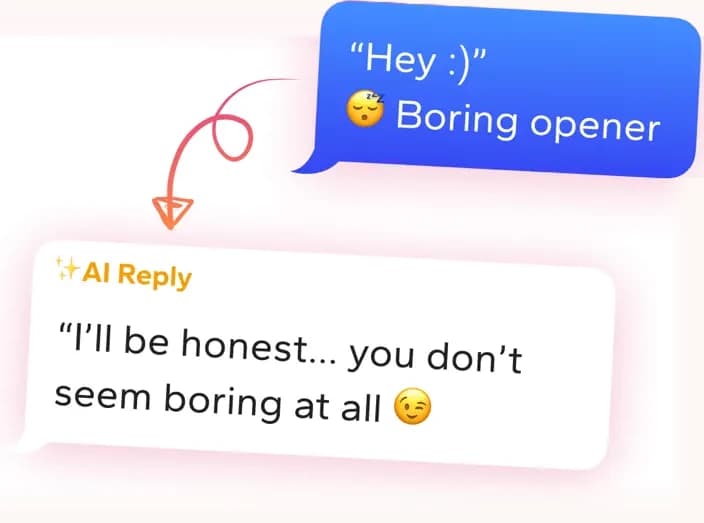
Get replies that sound like you
Screenshot the conversation in WingAI. It reads the vibe and gives you natural replies for this exact situation.
Try for freeWatch what survives a busy week
Anyone can be warm when their schedule is empty. The better evidence shows up in a week with deadlines, family obligations and a cancelled train. If she still sends a short note on Tuesday, mentions that Thursday is chaotic but Saturday could work, or tells you about the dentist appointment she is dreading, you are part of her ordinary week and not a pastime. If contact vanishes whenever life gets full and returns only when things calm down, she is probably treating this as something that fits around her life, not inside it. That is worth knowing before you restructure your own weekends around someone's free time.
Plans that name a place
A plan with a day, a time and a venue is a different object from a plan to see each other sometime soon. Notice who supplies the detail. If you always propose the restaurant and she always agrees, that still counts for something, but if she starts suggesting the bakery she likes or asks whether you have eaten at the place near her office, she is investing imagination, not just availability. Also watch what happens when a plan falls through. Someone who is dating you offers a replacement date in the same message. Someone who is not tends to apologize warmly and leave the gap open, which turns one cancellation into three.
When you have been the planner
If you have arranged every meeting so far, pull back for one round and see what happens. This is not a test to trap her. It is a way to learn whether the momentum belongs to both of you or only to you. Reply warmly, stay present in the conversation, and leave the next step unproposed for a few days. If she steps in with a day and a place, you have your answer, and a good one. If the thread just drifts into jokes and links, you have your answer too. Either way you stop carrying the whole calendar and can see what she does unprompted.
Frequently asked
- How do I know if I'm in a talking stage or dating?
- Look at whether you have met in person, whether plans get kept, and whether both of you propose the next one. Texting alone cannot settle it. If you are seeing each other regularly and planning ahead, you are dating in practice, even if nobody has said so.
- How long does a talking stage usually last?
- There is no standard length, and the number matters less than the movement. A few weeks of texting that leads to real meetings is a healthy arc. Months of messaging with no date on the calendar usually means one of you is content to stay at a distance.
- Can you talk to other people during a talking stage?
- Yes, unless you have both agreed otherwise. Without a spoken agreement, neither person owes exclusivity. If it bothers you, that is a sign to ask directly after a few dates instead of assuming. Silence on the topic leaves both of you free.
- At what point are you actually dating someone?
- When you have met several times, plan ahead together, and both treat the arrangement as ongoing. Some couples name it after three or four dates, others never hold a formal conversation. Exclusivity is a separate decision from dating and deserves its own plain question.
What not to send
“So we've hung out twice now, I think we should talk about what this is and whether we're only seeing each other”
Two meetings is too little shared history for her to have formed a view, so the question forces a premature yes or no and often gets a defensive no.
“haha yeah totally, we should do something soon! anyway how was your day”
It names a plan without a day or place and then changes the subject, so the vague promise sits there while the conversation moves on without it.
“Wow, three days and nothing. I guess I know where I rank in your life”
It treats an ordinary gap in a still undefined situation as a verdict on the relationship, which hands her a grievance to answer instead of a reason to make plans.
Mistakes to avoid
- Counting texts as progress while no date has been booked, so weeks of cheerful messaging get mistaken for a relationship forming.
- Asking about exclusivity at night or in the middle of a flirty exchange, when the question reads as pressure instead of a calm request for information.
- Reading a single quiet day as rejection and sending a follow-up barrage that makes you look anxious and teaches her to expect chasing.
Real user feedback
“I was skeptical at first. Then I tried it on a dry chat and the replies actually sounded like me, not a chatbot.”
Mazoonx
“I overthink every text. Having three options and picking the one that sounds like me cut that spiral short.”
Sam R.
“She went cold mid-week and I had no idea what to say. The reply I sent felt natural and she picked the chat back up.”
Marcus T.
Get replies that sound like you
Screenshot the conversation in WingAI. It reads the vibe and gives you natural replies for this exact situation.
Try for free