Show empathy through text: read the real message first
How to respond with empathy over text. Decode what she's actually saying, then acknowledge it before moving forward.
Empathy in text means you heard the thing beneath the words. When someone shares something difficult, vents about a situation, or reveals they're stressed or hurt, most people skip straight to fixing it or steering back to flirting. That misses the point.
A text that shows empathy does one job first. It proves you actually understood what mattered about what she said. Not the facts. The feeling. When you get that right, she feels seen instead of rushed past.
The second job is to keep the conversation real for another exchange. You're not trying to be her therapist. You're just refusing to pretend the thing she shared didn't happen.
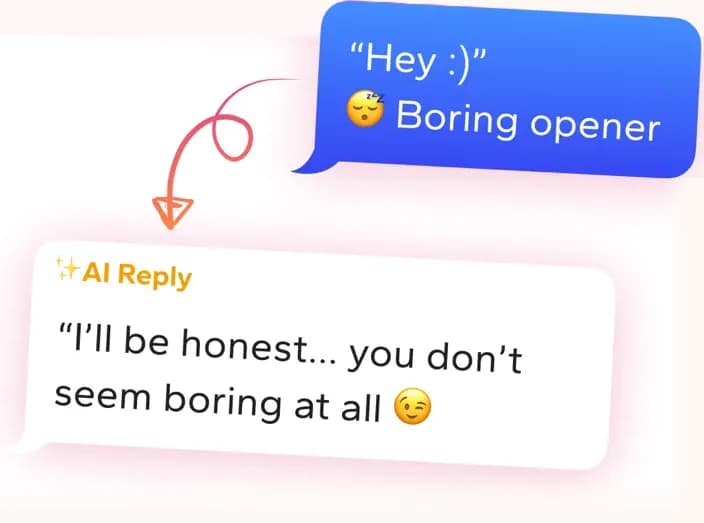
Get replies that sound like you
Screenshot the conversation in WingAI. It reads the vibe and gives you natural replies for this exact situation.
Try for freeThe real signal hiding in the vent
When someone tells you they're stressed, exhausted, or dealing with something hard, they're not always asking for advice. They're usually checking to see if you'll stay present with them or if you'll get uncomfortable and change the subject. The person sharing has already decided you're worth the risk of looking less than perfect.
Read for what she's signalling about herself, not just the situation. Stress and exhaustion say she cares about doing well. A story about a conflict says she's processing something. Disappointment says her expectations mattered. Your job is to notice what it took to tell you this.
Name the weight before moving on
A good empathy reply acknowledges the specific thing she shared, not just the topic. If she said she's exhausted, you mention exhaustion. If she shared a conflict, you name the conflict. If she's disappointed, you call it disappointment. One or two sentences. Short and direct.
Then you can ask a question, offer a thought, or move forward. But that acknowledgment comes first. It's the difference between "that sounds tough" and "dealing with a boss who won't listen is draining." The second one proves you heard her.
Wait for her to settle before shifting tone
Send your empathy text and let it sit for a bit. She may respond right away, or she may send another message, or she may just appreciate that you got it and move on from there naturally. Don't follow up immediately with a joke or a flirty pivot. That signals the serious moment was a speed bump, not something you actually registered.
If she keeps venting or sharing, keep acknowledging. If she shifts the topic herself, you can follow her lead. And if she goes quiet after something vulnerable, give it at least a day before checking in. Rushing back to light banter after she's been real with you feels like rejection.
Why these replies fail
“That's rough. But hey, at least the weekend is coming up. We should grab drinks and you can forget about work for a bit.”
It skips over what she actually said and pivots to the plan instead of staying with her for one more exchange.
“Oh man, I totally get it. My last job was insane. My boss used to make me stay late all the time and I was so burned out. It took me months to recover.”
It makes her story about you instead of about her, which feels dismissive even though the intention is to relate.
“That's terrible. Have you tried talking to your boss about how you feel? Or maybe look for a new job? You could also try meditation or exercise to decompress.”
It moves straight to solutions before she's even been heard, which feels like you're trying to fix her instead of understand her.
Common mistakes
- Jumping to solutions before acknowledging how she feels ("you should just...").
- Making it about you ("I know exactly how you feel, one time I...").
- Pivoting to flirting immediately to lighten the mood.
- Treating vulnerability as a cue to ask questions instead of listen.
- Being so formal or serious that it feels clinical rather than human.
Questions people ask
- Should I ask follow-up questions after I show empathy?
- Not always right away. If she's just venting, a direct question can feel like an interrogation. Let her decide whether to say more. If she naturally keeps talking, then you can ask something specific. Otherwise, acknowledge and leave space for her.
- How do I show empathy without sounding fake or overly serious?
- Use her language and keep it brief. If she said she's exhausted, say she's exhausted. Don't oversell it with dramatic language. One real sentence beats three sentences that sound like you're reading from a script.
- What if I don't know what to say about her situation?
- You don't need to have experienced the same thing. Describe what it sounds like from what she told you. "That's a lot to handle" or "sounds like you're carrying a lot right now" works. Specificity matters more than personal experience.
- Should I avoid flirting entirely if she's shared something heavy?
- Not forever. But wait until she shifts the tone herself. If she cracks a joke, you can follow. If she keeps it serious, stay there. Jumping to flirting immediately after vulnerability reads as avoidance.
What people say after using WingAI
“She went cold mid-week and I had no idea what to say. The reply I sent felt natural and she picked the chat back up.”
Marcus T.
“I overthink every text. Having three options and picking the one that sounds like me cut that spiral short.”
Sam R.
“I'm busy and half the profiles give you almost nothing to work with. WingAI gets me a solid first line fast without me staring at the screen for ten minutes.”
Ralph
Get replies that sound like you
Screenshot the conversation in WingAI. It reads the vibe and gives you natural replies for this exact situation.
Try for free