How to reply when he says he's done with you
He says it's over. Here's how to respond without pushing him away or destroying your dignity in the process.
When someone says they're done, the instinct is usually to fight it or fall apart in text. Neither works. What he's actually saying is that he's hit a wall. He may mean it, or he may be testing whether you'll chase. Either way, a reactive reply almost always makes it worse.
A good reply acknowledges what he said without begging, explaining, or pretending you're fine when you're not. It buys you time to think. It also leaves the door open without looking like you're holding it open for him. The goal is to respond like someone who takes him seriously, not someone who's panicking.
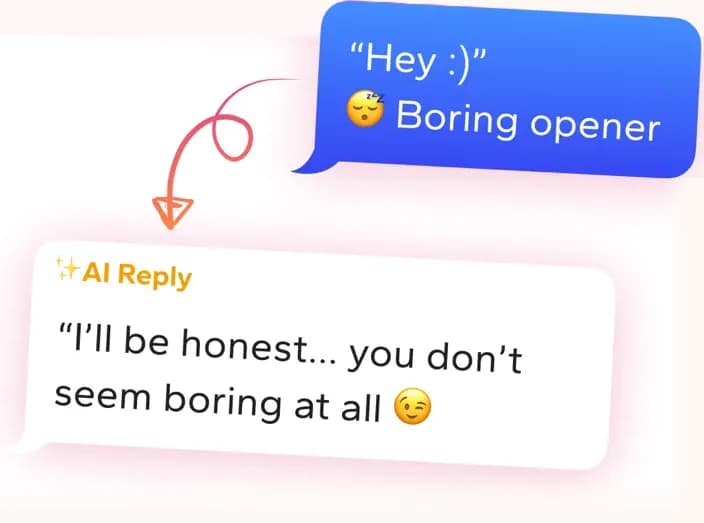
Get replies that sound like you
Screenshot the conversation in WingAI. It reads the vibe and gives you natural replies for this exact situation.
Try for freeWhat 'I'm done' really signals in a relationship
When someone says they're done, they're usually not in a place to hear you out. They've either been building frustration for a while and just hit a breaking point, or they're creating space to cool off and see if you'll chase. The distinction matters but it's impossible to know which one it is from the text itself.
What you can read is that he's made a decision in this moment. Trying to reverse it with logic or emotion almost always backfires. He's told you where his head is. Respecting that statement, even if you disagree with it, is what stops you from looking desperate. It also gives you actual information about how he handles conflict. Pay attention to that.
Keep your reply short and neither defensive nor defeated
Your reply has two jobs. First, it needs to tell him you heard him and you're taking it seriously. Not performing sadness, not fighting back. Just acknowledging the thing he said. Second, it needs to protect your dignity by showing you're not falling apart or chasing him down.
The move is to write something that fits in one or two sentences. No explanations, no questions, no promises to change. Just a calm acknowledgment that lands without making him feel like he needs to respond immediately or comfort you. This also buys you time to figure out what you actually want next, away from the panic of the moment.
Wait before you send anything, then do not double-text
Do not send a reply while you're upset. Write one, sit with it for an hour at least, then read it back. If it sounds like you're trying to convince him or win an argument, delete it and start over. The version of you that texts him in tears is not the version you want representing this moment.
Once you send your reply, do not follow up. Not the next day, not in a week. If he responds, you can reply. If he doesn't, you have your answer about whether 'done' means done or whether he's waiting to see what you do. Either way, sending more messages just confirms that you're the one chasing. Let him make the next move.
Why these replies fail
“Wait, so you're just giving up on us? We've been through so much. I thought you cared about me. Please don't do this.”
It's reactive and begging. It asks him to reverse his decision and makes him the bad guy if he doesn't.
“Okay, I'll change. Whatever you need, just tell me.”
It assumes the problem is fixable by you and sets you up to contort yourself for someone who just said they're done.
“Cool. Good luck with everything.”
It's performatively unbothered, which reads as sarcastic and angry rather than respectful of what he said.
Common mistakes
- Sending a long message explaining why you're good together or what you can change
- Asking him to talk it through right now or listing reasons he shouldn't leave
- Acting unbothered or saying you're fine when you're clearly not
- Responding immediately when you're upset, then sending five follow-up texts
- Asking what you did wrong or what he needs from you to stay
Questions people ask
- Should I ask him why he's done or what I did wrong?
- Not in your first reply. Asking him to explain is asking him to justify his decision, which puts him on the defensive. If he wants to tell you why, he will. For now, let him sit with his own words. You can ask questions later if he responds.
- What if I think he doesn't mean it and is just angry?
- You might be right. But your job is not to test whether he means it by chasing him down. If he's said it out of anger and doesn't mean it, he'll come back. If you chase, he'll feel controlled. Either way, your next move is to wait, not to convince him.
- How long should I wait before reaching out if he doesn't respond?
- At least a week, and only if you have something specific to say that's not an apology or a plea to reconsider. Ideally, you don't reach out at all. If he meant it, you'll just confirm his decision. If he didn't, he knows how to find you.
- Is it bad to tell him I need time to process this?
- That's fine if it's true and you're saying it calmly, but keep it brief. Something like 'I need some time to think' works. But do not say this and then text him every day. Give yourself real space to decide what you want, not just space to wait for him to change his mind.
What people say after using WingAI
“I was skeptical at first. Then I tried it on a dry chat and the replies actually sounded like me, not a chatbot.”
Mazoonx
“She went cold mid-week and I had no idea what to say. The reply I sent felt natural and she picked the chat back up.”
Marcus T.
“I overthink every text. Having three options and picking the one that sounds like me cut that spiral short.”
Sam R.
Get replies that sound like you
Screenshot the conversation in WingAI. It reads the vibe and gives you natural replies for this exact situation.
Try for free