How to respond when he assumes something wrong about you
He made an unfair assumption. Here's how to correct it without sounding defensive or giving him too much energy.
When someone assumes something about you that isn't true, it stings. It means he didn't listen, didn't ask, or decided based on incomplete information. The upset you feel is valid. A good reply corrects the record without letting the assumption take up too much space in your interaction.
The goal isn't to over-explain yourself or prove him wrong. It's to be direct about what's actually true, show that his assumption didn't land, and move forward on better footing. You're not mad at him, but you're not pretending it didn't happen either.
How you respond here signals whether you're willing to let sloppy assumptions become the baseline between you. A clear, calm correction early on prevents resentment from building later.
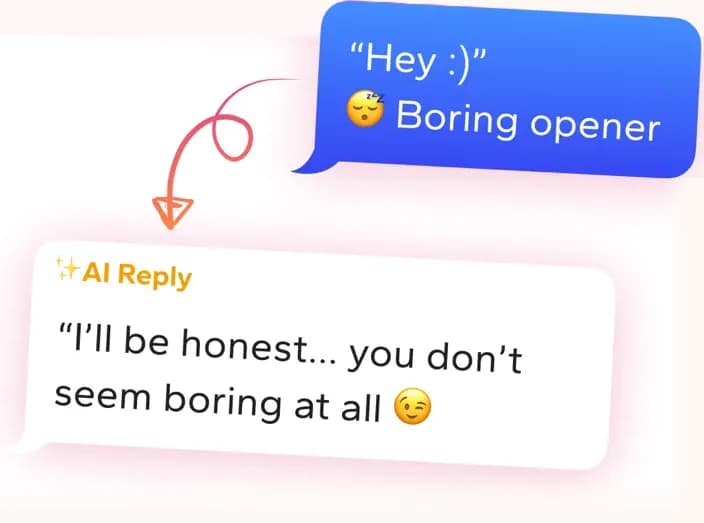
Get replies that sound like you
Screenshot the conversation in WingAI. It reads the vibe and gives you natural replies for this exact situation.
Try for freeRizz AI Screenshot the chat and get the next message for this person.
Laziness or stereotype filling in the gaps
He either made a snap judgment from limited info, didn't pay close attention to what you said, or filled in blanks based on a stereotype. This isn't necessarily malicious. It's lazy. The assumption might be based on your photos, your job, how you talked about one thing, or just a vibe he got wrong.
The upset comes from feeling misread. You've shown him who you are, and he picked a different version instead. One wrong read doesn't mean he's not worth correcting. Some people just need new information to recalibrate.
State one fact about yourself without defending
A good reply does two things. First, it gently contradicts the assumption with a fact or a brief truth about you. Don't perform offense or spend paragraphs defending yourself. Just state what's actually true in a way that's hard to misread.
Second, it shows you're not going to let that assumption sit there between you. You're acknowledging it happened, correcting it, and leaving space for him to respond. Keep it light unless the assumption was actually disrespectful. If it was, your tone can reflect that you noticed.
Reply within hours while he's still thinking
Don't wait overnight to reply. Send it while the conversation is still warm and before the wrong impression hardens into fact. Your reply should come within a few hours, while he's still thinking about you.
Pay attention to how he responds next. Does he get defensive, apologize, or ask a real question to understand you better? That tells you whether this was a one-time miss or a pattern of him not listening. If he doubles down on the assumption or makes it weird, that's information you need.
Why these replies fail
“wow that's really not fair. i'm actually super focused on my career and my friends. i don't party at all, i barely drink, and i spend most weekends reading or hiking. i'm not sure where you got that from but it's kind of offensive that you'd assume that about me”
Over-defending yourself makes you sound insecure and gives the assumption way more power than it deserves.
“lol ok”
Too dismissive and doesn't actually correct anything, so the assumption stays in his head as probably true.
“that really hurt my feelings and i don't appreciate being pigeonholed like that. just so you know, i'm actually a very deep person with real substance”
Turning it into a bigger emotional issue makes him defensive and pulls focus away from the actual correction.
Common mistakes
- Getting defensive and listing all the ways he's wrong, which makes you sound insecure about the assumption.
- Staying silent and letting him think it's true, which sets a pattern of him not really knowing you.
- Over-explaining your life story to convince him you're different, which gives the assumption way too much weight.
- Making it a bigger deal than it is with anger or hurt, which pushes him away instead of correcting course.
- Assuming he meant it as an insult when he might just have missed something, then responding to that invented harshness.
Questions people ask
- Should I call him out for making the assumption or just correct it?
- Correct it directly without announcing that he made an assumption. A light acknowledgment of his misjudgment can work if it fits your tone, but the focus should be on what's actually true about you, not on him getting it wrong.
- What if I'm worried he'll think I'm being defensive?
- Keep your reply short and factual. No essays, no emotion, no repetition. A calm, direct statement about what's true reads as confident, not defensive. Defensive replies are long and explain too much.
- Should I ask him why he thought that?
- Only if you actually want to know and the assumption wasn't mean-spirited. If it was rude, correct it first and see how he responds. You can ask follow-up questions after he's shown he's willing to actually listen.
- What if he doesn't respond or dismisses my correction?
- If he ignores your correction or makes it worse, that's a sign he's not interested in actually knowing you. You've done your job. Don't chase the conversation or try to convince him further. Move your energy elsewhere.
What people say after using WingAI
“I was skeptical at first. Then I tried it on a dry chat and the replies actually sounded like me, not a chatbot.”
Mazoonx
“Used it for a couple hours and set up a date the same night. Not even kidding.”
Nikola2214
“I overthink every text. Having three options and picking the one that sounds like me cut that spiral short.”
Sam R.
Get replies that sound like you
Screenshot the conversation in WingAI. It reads the vibe and gives you natural replies for this exact situation.
Try for free