Respond when he nitpicks something small you did together
He got critical about a minor thing during your date. Here's how to reply without getting defensive or letting it slide.
When someone criticizes you over something small during time together, it signals something worth paying attention to. He might be bothered by a pattern he's noticed, or he might be testing how you respond to conflict. Either way, your reply matters because it sets the tone for how you two handle friction.
A good reply doesn't overexplain, doesn't apologize for existing, and doesn't pretend it didn't happen. It shows you heard him, it clarifies intent if needed, and it moves forward without drama. Stay calm and direct while keeping your dignity intact.
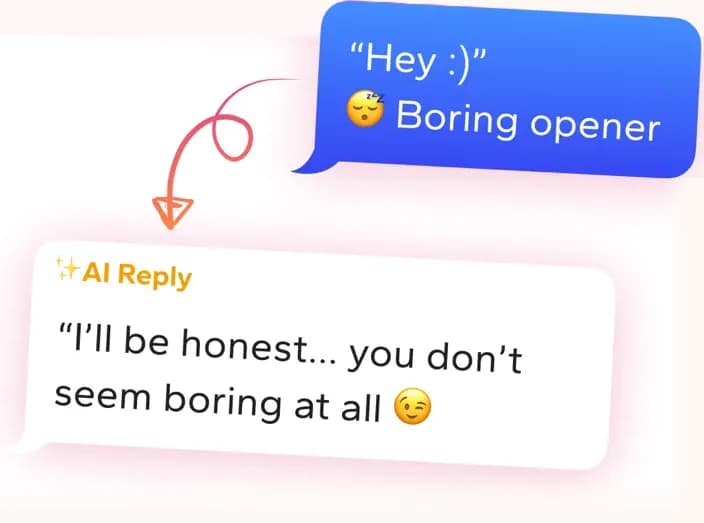
Get replies that sound like you
Screenshot the conversation in WingAI. It reads the vibe and gives you natural replies for this exact situation.
Try for freeRizz AI Screenshot the chat and get the next message for this person.
Criticism over small things early on tells you something
If this is a first or second date, minor criticism is a yellow flag. People usually stay on their best behavior in early stages. Nitpicking about your volume, your outfit, or your word choice means either he's got a controlling streak, he's anxious and taking it out on you, or he's not that interested and looking for reasons to opt out.
If you've been seeing each other for weeks or months, criticism can mean he's comfortable enough to be honest, but it also might mean he hasn't learned how to give feedback kindly. Both need addressing, just differently.
Show you heard him without accepting the frame
Your reply needs to do two things at once. Acknowledge what he said and quietly reject the idea that you did something wrong. Don't defend the behavior itself. Instead, clarify your intent, set a boundary, or note the disconnect between his reaction and the actual thing you did.
If he said you were loud, you might say something like 'I was having fun, but I hear you.' If he said your laugh was annoying, don't apologize for laughing. Acknowledge the feeling, then move on. The move is to be present without becoming small.
Wait a few hours, then send it when you're settled
Reply when you're not angry and not trying to smooth things over out of panic. A few hours gives you space to respond instead of react. Send it during normal hours, not late at night when emotions run higher.
If he doesn't reply within a day or so, don't send a follow-up apology or explanation. That shifts the power to him. If he reaches out later without addressing it, you can decide then whether his behavior pattern is something you want to continue with.
Why these replies fail
“I'm so sorry! I didn't mean to be loud. I'll be quieter next time, I promise.”
This teaches him that criticism works and makes you smaller. It also implies you were actually wrong.
“That's ridiculous. I wasn't being loud and you know it. You're just looking for problems.”
Going defensive escalates the conflict and makes the conversation about who's right instead of whether he's someone worth your time.
“Okay, noted. I guess I'm just too much for you then.”
This is passive-aggressive and puts the burden back on him to reassure you. It also accepts his framing without questioning it.
Common mistakes
- Over-apologizing and shrinking yourself to avoid another comment
- Getting defensive and listing reasons why he's wrong
- Ignoring it to keep the peace, then resenting him later
- Matching his critical tone and starting a fight
- Asking for reassurance that you're not actually a problem
Questions people ask
- Should I apologize even if I don't think I did anything wrong?
- No. A small acknowledgment of his feeling is not the same as apologizing for your behavior. You can say 'I hear that bothered you' without saying 'I'm sorry I did it.' Don't shrink yourself to keep him comfortable.
- What if this becomes a pattern of him criticizing small things?
- That's your signal to step back. One comment is fixable. Repeated nitpicking over minor stuff is a pattern of control or contempt. You get to decide if that's someone you want around.
- Is it ever okay to just ignore what he said and move on?
- Only if it's truly isolated and you really don't care. But usually ignoring it means you're swallowing frustration, which builds resentment. A brief, direct reply clears the air faster.
- How do I know if he's just being honest versus being mean?
- Honest feedback is specific, kind, and comes with the assumption you're good. Mean criticism is vague, harsh, and frames you as the problem. Look at his tone and whether he's trying to help or trying to make you feel small.
What people say after using WingAI
“I overthink every text. Having three options and picking the one that sounds like me cut that spiral short.”
Sam R.
“I was skeptical at first. Then I tried it on a dry chat and the replies actually sounded like me, not a chatbot.”
Mazoonx
“Used it for a couple hours and set up a date the same night. Not even kidding.”
Nikola2214
Get replies that sound like you
Screenshot the conversation in WingAI. It reads the vibe and gives you natural replies for this exact situation.
Try for free