What to text when he got annoyed at your feelings question
He pulled back when you asked about his feelings. Here's how to respond without pushing harder or pretending it didn't happen.
When you ask someone directly about their feelings and they get annoyed, something shifted. He either felt cornered, wasn't ready for that conversation, or doesn't know what he feels yet. The annoyance is real data. It means the question landed wrong, or the timing was off, or he's uncomfortable with that kind of talk.
Your reply needs to do two things at once. Acknowledge that you asked and he reacted poorly. Give him an actual exit ramp instead of making him defend his annoyance or explain himself further. A good response doesn't ignore the tension, but it doesn't interrogate it either.
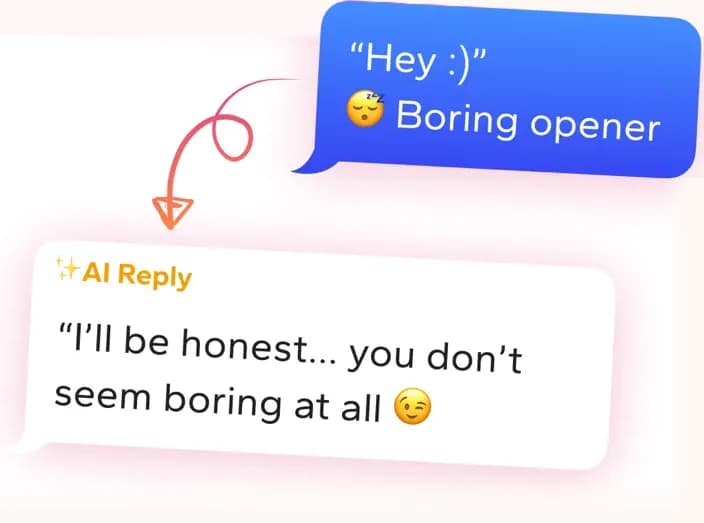
Get replies that sound like you
Screenshot the conversation in WingAI. It reads the vibe and gives you natural replies for this exact situation.
Try for freeRizz AI Screenshot the chat and get the next message for this person.
Annoyance often means you hit a real nerve
When someone gets annoyed at a direct feelings question, it's usually because he hasn't sorted out his own feelings and your question forced him to sit with that discomfort. Or he felt pressured, like you were demanding certainty he can't give. Or he's someone who gets defensive when conversations get emotional.
None of those mean he doesn't like you. But they do mean pushing the same question again won't work. His annoyance is a boundary signal, even if he doesn't realize it. Reading it correctly means you stop trying to get him to answer on your timeline and instead show him you can handle uncertainty without falling apart.
Pull back without disappearing from the conversation
A solid reply does two specific things. First, it releases the pressure. You're signaling that you heard his annoyance and you're not going to keep pressing. Second, it keeps the door open for him to come back to you on better terms. This isn't about letting him off the hook for being rude. It's about not making this moment bigger than it needs to be.
Avoid saying "sorry for asking" because that teaches him your feelings are an inconvenience. Instead, acknowledge the awkwardness and move the energy somewhere else. Show him you can sit with "I don't know" without spiraling. That's actually attractive and makes it safer for him to be honest later.
Wait before you decide if this matters
Send your reply within a few hours of his annoyed response. Don't wait a day or he'll assume you're angry with him. But also don't reply instantly, which looks like you were waiting for his message.
After you reply, give him at least two to three days to come back around. If he doesn't text you in that window, you can reach out once more with something light and unrelated to the feelings conversation. If he's still distant after that second attempt, that's your sign he's not ready to engage or he's not interested. A third text chasing the conversation is you doing his emotional work for him. Stop there and let him prove whether he wants to keep going.
Why these replies fail
“I'm sorry, I shouldn't have asked. I know you don't like serious stuff.”
This makes your emotional needs sound unreasonable and teaches him that annoyance gets you to back off.
“Wow, okay. So you're just going to get mad at me for trying to have an actual conversation?”
This escalates the tension and forces him to defend his reaction instead of moving past it.
“*sends nothing, blocks him on one app, likes another guy's Instagram post*”
Going silent or performative angry looks like you can't handle a single awkward moment and makes him less likely to risk honesty again.
Common mistakes
- Apologizing for asking, which teaches him that your needs are annoying
- Asking him to explain why he got annoyed, which extends the uncomfortable moment
- Pretending it didn't happen and texting something cheerful, which feels dishonest
- Going harder on the original question to force an answer
- Withdrawing completely and going silent, which punishes him for his reaction
Questions people ask
- Does his annoyance mean he doesn't like me?
- Not necessarily. Annoyance usually means he's uncomfortable with the question, the timing, or how direct it was. Some people get defensive around feelings talk. But if this is a pattern where he shuts down whenever you want to connect, that's different information and worth paying attention to.
- Should I bring up the annoyed reaction in my reply?
- Not directly. Don't say "sorry you got mad" or "I know you were annoyed." That makes it a bigger deal. Instead, show through your tone and word choice that you're not dwelling on it. Keep it light and brief.
- What if he never brings it up again?
- If he moves on like it didn't happen, you have a choice. You can let it go and see if the pattern repeats, or you can bring it up once more when things are calm and you're not mid-text. In person is better if possible. But one direct conversation is the limit.
- How do I know if I should keep dating him after this?
- One annoyed reaction isn't a dealbreaker. But pay attention to whether he can eventually have hard conversations, even if they're messy. If he stays defensive or shuts down every time emotions come up, that's a real incompatibility. Give it a couple more chances to see if this was just a bad moment.
What people say after using WingAI
“She went cold mid-week and I had no idea what to say. The reply I sent felt natural and she picked the chat back up.”
Marcus T.
“I overthink every text. Having three options and picking the one that sounds like me cut that spiral short.”
Sam R.
“I was skeptical at first. Then I tried it on a dry chat and the replies actually sounded like me, not a chatbot.”
Mazoonx
Get replies that sound like you
Screenshot the conversation in WingAI. It reads the vibe and gives you natural replies for this exact situation.
Try for free