He cancels then disappears for a week. How to respond.
When he cancels plans and goes silent for days before texting again, your reply matters. Learn what to do and when to stop waiting.
When someone cancels and then vanishes for a week before reaching out, that's a specific pattern. It signals either disorganization mixed with low priority, or someone testing whether you'll accept sporadic attention. The week of silence is doing the work here, not the cancellation itself.
Your reply in that moment sets the frame for what comes next. You're not punishing him or playing games. You're clarifying what you actually expect and whether his follow-up gets a second chance or gets filed away.
A good reply acknowledges the situation without pretending it didn't happen, then makes a small demand. This filters fast. If he's interested, he'll adjust. If he's not, you'll know because he'll either get defensive or fall back into the same pattern.
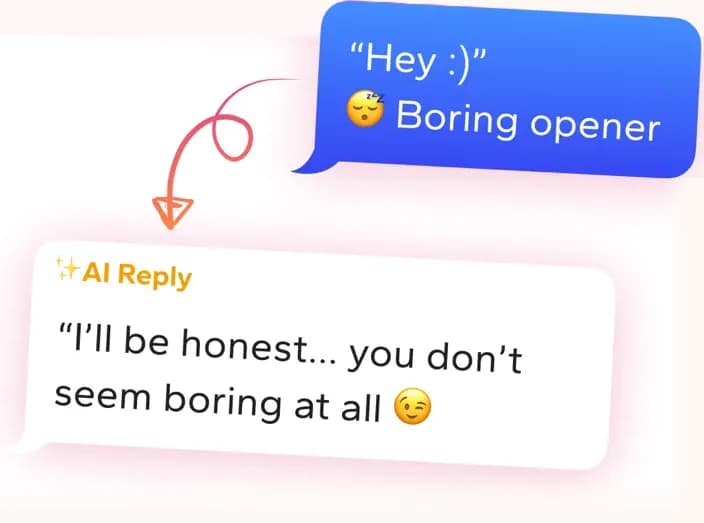
Get replies that sound like you
Screenshot the conversation in WingAI. It reads the vibe and gives you natural replies for this exact situation.
Try for freeRizz AI Screenshot the chat and get the next message for this person.
The week of silence tells you more than the cancellation
A cancellation alone is neutral. People get sick, work explodes, things change. But a cancellation followed by seven days of nothing is intentional. He had a week to send a five-second text saying he wanted to reschedule. He chose not to. That choice is the information.
When he finally texts a week later like nothing happened, he's testing whether you'll accept being treated as a low-effort option. He's checking if you'll fill in the gap with excuses for him or if you'll just move on. Read it as a data point about how he handles plans and commitments, not as a sign he forgot you exist.
Your reply needs to reset expectations without being cold
The move here is to stay unfussy but not forgiving. Acknowledge that a week passed. Don't pretend it's normal. Then attach a small condition to any next step. This works because it's low-drama and factual.
A good reply does a few things. First, it gives him one clean sentence to show you got his message. Second, it introduces a tiny cost to moving forward, like a specific time frame or a location that requires him to actually commit. Third, it leaves room for him to step up without you having to convince him.
Wait for his next move before you reschedule
When he reaches out after a week, don't lock in plans immediately. Send your reply and then wait. Give him three to four days to respond with an actual suggestion. If he doesn't, you have your answer and can stop entertaining the possibility.
If he does respond with a time and place, you can say yes. But if this pattern repeats, a second cancellation followed by silence means you're done. After the first incident, you're teaching him. After the second, you're accepting it. Don't accept it.
Why these replies fail
“Hey no worries at all! Life happens. I'm free whenever works best for you.”
You're removing all friction and signaling that his flakiness won't have consequences, so he'll keep doing it.
“Where have you been? You disappeared for a week after canceling. That's not cool.”
This makes you the emotional manager of the situation and gives him a reason to get defensive instead of adjust.
“I'm always here waiting. Let me know whenever you're ready.”
You're teaching him that disappearing is fine as long as he comes back eventually.
Common mistakes
- Overexplaining your own absence or being overly available to make up for his cancellation
- Acting like it never happened and immediately saying yes to new plans
- Sending a long message about how his cancellation made you feel
- Asking him what happened or why he disappeared
- Double texting or following up before he has a chance to respond
Questions people ask
- Should I bring up that he was silent for a week?
- Not in an accusatory way. You can reference the time gap lightly in your reply, like 'Been a minute.' But don't interrogate him about where he was. Focus on moving forward with a condition, not on relitigating his absence.
- What if he apologizes for disappearing?
- Accept the apology in one short sentence and move on. Don't make him prove he's sorry or make him explain why he vanished. Just name a specific time to meet and let his actions answer whether he means it.
- How many times does this pattern have to happen before I stop responding?
- Once is a mistake. Twice is a pattern. If he cancels and ghosts for a week a second time, stop initiating and let his messages sit for 24 hours before replying, if at all. You're not obligated to keep absorbing this.
- Is it different if he had a real emergency?
- Maybe. But a real emergency doesn't prevent a text in seven days. Real emergencies still leave room for a quick message like 'Still dealing with something, will update you soon.' Silence for a week reads as deprioritization either way.
What people say after using WingAI
“I was skeptical at first. Then I tried it on a dry chat and the replies actually sounded like me, not a chatbot.”
Mazoonx
“Used it for a couple hours and set up a date the same night. Not even kidding.”
Nikola2214
“I overthink every text. Having three options and picking the one that sounds like me cut that spiral short.”
Sam R.
Get replies that sound like you
Screenshot the conversation in WingAI. It reads the vibe and gives you natural replies for this exact situation.
Try for free