How to reply when a girl uses your name in a text
Not sure how to reply when a girl uses your name in a text? Here is what it can mean, how to read the context, and how to answer without making it strange.
Most of the time, a name in a text is a small choice with a small cause. People type a name to get attention in a busy chat, to soften a blunt sentence, to tease, to sound firm, or just because the rhythm of the sentence wanted it. Some use names constantly. Others almost never do. So the first thing to settle is what is normal for her. If she has dropped your name in every other message since day one, it tells you little. If it appears once, out of nowhere, in a message that otherwise reads differently from the rest, that is worth a second look.
What you are trying to achieve is a reply that fits the message she sent. That sounds obvious, but the name tempts people to answer the name instead of the message. You might want to prove you noticed, or to read a big meaning into it and respond to the meaning. Neither helps. Your goal is simply to land her actual point, in her tone, and leave her with something easy to pick up. The name is the packaging. The contents are what she wants answered.
Platform and timing change the texture. In a dating app chat, a name can feel like a step out of the early small talk, especially after a few polite exchanges. Over iMessage or WhatsApp with someone you already know, it may carry nothing at all. A name at the start of a long, careful paragraph often means she wants you to read it properly. A name at the end of a short line can be a tease or a sigh, and punctuation, emoji, and capital letters will usually tell you which. Reply while the thread is still warm, but you do not need to sprint. An ordinary, unhurried answer reads better than a dramatic one.
What backfires is mostly self-consciousness. Pointing at the name out loud makes her feel watched, and she may wish she had not typed it. Copying her by dropping her name into every line looks rehearsed. Jumping to romantic conclusions leads to overly intense replies, like heavy compliments or pet names she never invited. And going dry is no safer. A flat one-word answer to a warm, personal message can feel like a door closing, even if you meant nothing by it.
As for reading what comes back, look at behavior over a few exchanges, not at one word. If her replies get longer, she asks you questions, she brings up plans or small details from your earlier chats, that tells you far more than the name ever did. If her answers stay short and tidy, the name was probably just a habit or a bit of politeness. Neither result is a verdict on you. It is simply information about the pace she is comfortable with, and you can adjust to it without making a fuss.
Check how she normally texts
Scroll back through the thread before you decide anything. Count how often she has used your name before, and in what kind of message. If it shows up in every second text, it is a verbal habit and deserves a normal reply. If this is the first time after days of nameless chat, the shift might mean something, though even then it could be as small as wanting to catch your attention. Compare it with how she treats other things too: does she write in full sentences, use emoji, send voice notes? A name inside a long, thoughtful message carries a different weight than a name tacked onto a quick logistics question. You are looking for a change from her baseline, not a rule.
Answer the message, not the name
Whatever she wrote around your name is the thing that needs a response. If she shared something about a rough week, respond to the week. If she teased you, tease back at the same level. If she asked a question with your name in front of it, answer the question first. You can use her name in return if it falls naturally into your sentence, but skip it if you would have to bend the wording. The test is simple: would your reply still make sense if her name had been left out of her text? If yes, you are answering the right thing.
When the name sounds stern
Sometimes a name arrives with an edge, like a teacher saying it across a classroom. Short sentences, no emoji, a flat tone, and a sudden shift from how she wrote yesterday all point that way. Do not guess in silence and do not get defensive. Read the line again for what she is actually objecting to, and if you can see it, address it plainly and briefly. If you cannot, ask her one calm question about what she means. A short, steady reply de-escalates better than an apology essay or a joke that dodges the topic. Then give her room to answer.
Messages that backfire
“Ooh, you said my name, does that mean you like me?”
It turns a passing detail into a question about her feelings, which puts her on the spot and ignores whatever she was actually saying.
“Hey [her name], hey [her name], what's up [her name]?”
Echoing her name over and over reads as a clumsy imitation of her habit, and it gives her nothing to respond to.
“ok”
She wrote something that took a little care to personalize, and a bare two-letter answer reads as indifference even if you were just busy.
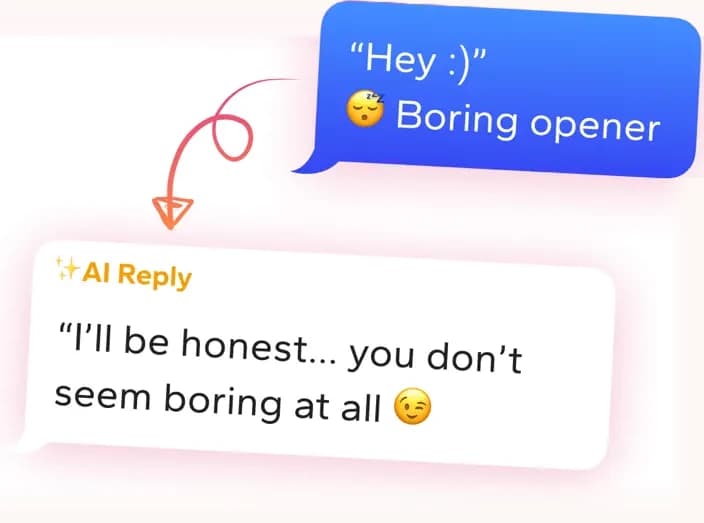
Get replies that sound like you
Screenshot the conversation in WingAI. It reads the vibe and gives you natural replies for this exact situation.
Try for freeCommon questions
- What does it mean when a girl uses your name in a text?
- Usually less than people hope and more than nothing. It can mean she wants your attention, is softening a line, is teasing, or is simply someone who types names. Compare it with how she normally writes and what the rest of the message says before reading anything into it.
- Should I use her name back when I reply?
- Only if it fits the sentence. Using her name is optional, and forcing it in to mirror her can feel staged. Matching her tone and answering what she said does far more than copying one word, so put your effort there.
- How do I respond when someone texts you your name and nothing else?
- Treat it as a prompt, not a puzzle. A short, easy reply that opens the door works well, such as acknowledging you are here and asking what is up in your own words. It is fine to be casual. If context hints at something serious, keep your tone a bit more careful.
- What if she uses my name but sounds cold or annoyed?
- Read the message for the actual complaint and answer that, calmly and briefly. Do not assume the name itself is the problem. If you cannot tell what she means, ask one plain question rather than guessing or getting defensive.
From our users
“I was skeptical at first. Then I tried it on a dry chat and the replies actually sounded like me, not a chatbot.”
Mazoonx
“I overthink every text. Having three options and picking the one that sounds like me cut that spiral short.”
Sam R.
“She went cold mid-week and I had no idea what to say. The reply I sent felt natural and she picked the chat back up.”
Marcus T.
“Didn't think it would be this good. The funny options actually get responses, which is wild.”
Nico_dang
Where people go wrong
- Replying to the fact that she used your name, with comments about it, instead of to the content of her message.
- Reading one use of your name as proof of romantic interest and sending a reply that is far more intense than her text was.
- Dropping her name into every message afterward to match her, which looks planned and makes your texts feel stiff.
- Leaving a personal, warm message sitting for days and then returning with a blank greeting that ignores what she wrote.
Get replies that sound like you
Screenshot the conversation in WingAI. It reads the vibe and gives you natural replies for this exact situation.
Try for free