What to text when your crush leaves you on read
Left on read by a crush? Learn what tone to take, what to include, what to skip, and how to read their answer so your next text keeps your dignity.
Most people who get left on read assume the silence is a verdict. Often it is closer to a pause. A message gets opened while someone is walking into a meeting, half listening to a friend, or in a mood where answering feels like homework. They mean to reply later and the thread slides down the screen. None of that excuses the silence, but it explains why your next text should not treat it as an accusation. Starting from curiosity instead of hurt changes the whole tone of what you write.
What you want from the next message is simple to say and harder to do: give them a reason to answer that costs them nothing, or give yourself a clean way out. Both are fine. The aim is not to win the exchange or to prove you were right to be annoyed. Picture the version of you that has a full week, a few plans, and a mild interest in how this turns out. That person writes short, relaxed texts that do not mention the gap at all, or mention it once with a shrug.
Platform and timing matter more than people admit. On a messaging app with visible read receipts, silence feels loud because you can see the exact moment they looked. On a social platform, a message request can sit unopened for days, so the silence may mean nothing. A reply left unanswered on a Monday morning reads differently from one ignored late on a Friday when they were out. Check when the message landed and what their week probably looked like before you decide how long to wait.
Several habits reliably backfire here. Asking whether they saw your text puts them on the defensive. Apologizing for something you did not do hands them power you never meant to give. Sarcasm about being ignored carries an edge even when you intend it as a joke. A long message explaining how you feel turns a casual crush into a conversation about the relationship before there is one. And stacking several short follow-ups in a row reads as pressure, however friendly each one looks alone.
What comes back tells you more than the silence did. A warm, slightly apologetic answer with a real reason suggests they are interested and just bad at texting, so match their energy without making them feel guilty. A flat, one-word answer suggests they are lukewarm, so keep things light and do not push. A fast reply that skips your question and changes the subject often means they do not want to discuss the gap, which is fine to let go. No reply at all is also an answer, and you can stop there without any speech.
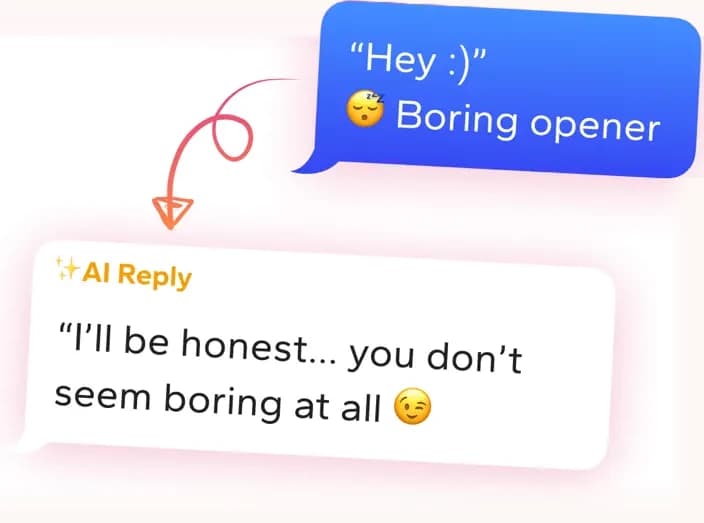
Get replies that sound like you
Screenshot the conversation in WingAI. It reads the vibe and gives you natural replies for this exact situation.
Try for freeRead the pattern before you write
Before drafting anything, look back through the thread. How fast do they usually answer? Do they ever start conversations, or do you always open? Have they suggested plans, or only reacted to yours? A single unanswered message after days of quick, warm exchanges points to a specific moment, like a busy stretch or a message that landed awkwardly. A thread where they take a day to reply every time, and have gone quiet before, is describing a person with low availability for you. Those two situations call for different texts. The first deserves a light, easy nudge. The second deserves a short, calm message that leaves the door open without chasing.
Pick a message angle that costs them little
A good follow-up gives them something simple to react to. One angle is a light callback to something they mentioned earlier, like the trip they were planning or the show they were halfway through, asked about with real curiosity. Another is a fresh, low-stakes topic unrelated to the silence, such as something funny you saw that fits their sense of humor. A third is an honest, brief acknowledgment that the thread went quiet, said warmly and without apologizing or asking for an explanation. In every case, keep it to a line or two, skip the question mark pileup, and write it in the voice you would use with a friend.
What to say if the pattern is clear
When they have left you on read repeatedly over weeks, the useful message is a calm, brief one that sounds settled rather than wounded. Mention that you have enjoyed talking and that you are happy to pick things up if they want to, then leave it there. Do not ask why they have been quiet, and do not set a deadline. Warm and unbothered works better than cool and punishing. After you send it, put the phone down and get on with your week. If they respond with real interest, you can decide how to proceed. If they do not, you have given the situation a decent ending without losing anything.
What not to send
“Okay so I guess you're not interested lol. Sorry if I said something wrong.”
It apologizes for an offense that probably never happened and invites them to either reassure you or confirm your fear, which puts the emotional work on them.
“Wow, I see you read my message. Must be nice to have so much free time to ignore people.”
Pointing at the read receipt with sarcasm turns a quiet moment into a confrontation, and it gives them an easy reason to stay silent.
“Hey?? Are you there? Did you get my text? Please just tell me if you want to stop talking.”
Stacking questions and asking for a formal answer pressures a person who already finds replying difficult, and it sounds like you are waiting by the phone.
Mistakes to avoid
- Sending a second message within hours because the read receipt is nagging you, which gives them no time to answer before you have already moved to chasing.
- Writing about the silence itself, asking why they have not replied or pointing out that they saw it, instead of giving them something fresh and easy to respond to.
- Checking their stories or online status after you have sent a message, then reading meaning into it and drafting a third text you should never send.
Frequently asked
- Is it rude to keep a crush on read, and what does it mean for the conversation?
- It can feel rude, but it often comes from distraction, overwhelm, or not knowing how to answer rather than a plan to hurt you. A one-off silence after a good stretch of chatting usually says little. A repeated pattern across weeks says more about how much space they have for you.
- How long should I wait before texting again after being left on read?
- If it is a first-time silence, give it about three or four days so they have room to respond and you avoid looking anxious. If they have gone quiet on you repeatedly, you do not need to wait that long. Send one calm message and then step back.
- Can I use humor when my crush leaves me on read?
- Yes, if it is warm and truly light. A playful line about something else in your conversation reads as confident. Humor aimed at the silence itself tends to carry an edge, and if you are actually stung, it will show. When in doubt, skip the joke and keep the text simple.
- What if they reply later with an excuse?
- Take it at face value if it is believable and they follow it with real effort, like asking you something or suggesting a plan. Reply warmly and without scolding. If excuses keep coming and the effort does not, trust the pattern over any single explanation.
Real user feedback
“I was skeptical at first. Then I tried it on a dry chat and the replies actually sounded like me, not a chatbot.”
Mazoonx
“I overthink every text. Having three options and picking the one that sounds like me cut that spiral short.”
Sam R.
Get replies that sound like you
Screenshot the conversation in WingAI. It reads the vibe and gives you natural replies for this exact situation.
Try for free