What to text when he goes silent for days and you want answers
Not sure what to text after days of silence? Learn the tone, content and timing that get a real answer without chasing or sounding bitter.
Days of silence can mean many things, and you can't know which one applies to him from the outside. He might be buried in work or a family problem and has let a simple reply snowball into something awkward to answer. He might have cooled off and be avoiding the conversation where he has to say so. He might simply be a slow, patchy texter whose habits clash with yours. Your message doesn't need to diagnose him. It needs to open a door he can walk through honestly.
What you're after is information, not an apology and not a confession. A reply that tells you where he stands, even if the answer stings, is worth more than a flurry of warm words that change nothing. Decide before you write what outcome you could live with. If you could happily continue after a sincere explanation, say so through your tone. If you're already leaning toward walking away, your message can be shorter and cooler, because you're only collecting a final data point.
Timing and medium matter more than people expect. A text sent late at night reads as lonely or irritated, and he'll respond to the mood rather than the content. Mid-evening on a weekday tends to catch people between tasks and in a calmer headspace. Keep it to a few lines, since a long paragraph on a phone screen looks like a grievance, and people who feel accused tend to defend themselves instead of answering. If your thread has a rhythm of voice notes or memes, matching that format keeps the message from feeling like a summons.
The usual way this backfires is by hiding a complaint inside politeness. A message that opens with concern but is really about your hurt feelings gives him an easy exit, because he can answer the concern and skip the point. The reverse also fails. A sarcastic or wounded message makes him spend his reply managing your emotions instead of explaining himself. Over-apologizing for texting at all is another trap, since it tells him you already believe you're the one in the wrong. Stay level, brief and specific about the fact that days went by.
Reading his answer takes patience. A good reply has some detail in it, a reason that sounds like a real week, plus some ownership of the gap and a bit of interest in you. A vague "sorry, crazy time" with nothing after it deserves a calm, direct follow-up at most once. If he turns defensive or flips it to be about how you're too intense, that's information about how he handles mild accountability. If he says nothing, that is also an answer. Give him a couple of days, then stop spending energy on it.
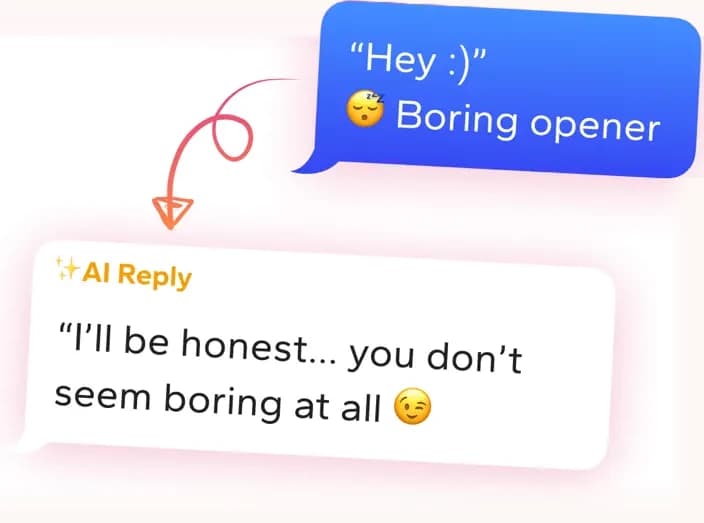
Get replies that sound like you
Screenshot the conversation in WingAI. It reads the vibe and gives you natural replies for this exact situation.
Try for freePick a tone before you type
Warm but unbothered is the target. Imagine how you'd write to a friend who vanished for a week and who you still like: a little dry humor, no drama, no sulking. If you can't hit that tone tonight, wait until tomorrow. A message sent while you're stewing will carry the stewing in word choice even if the words look polite. Read it back and ask whether it sounds like someone with other things going on. If it reads like someone waiting by the phone, cut it down. Fewer words almost always lower the emotional temperature.
Mention the gap and one real detail
Your message should acknowledge that several days passed without contact, stated plainly and without a charge behind it. Pair that with a callback to something specific from your last real exchange, like a trip he was planning, a rough week he mentioned, or a joke the two of you built. The callback shows you remember him as a person, which makes the message feel like a continuation instead of an audit. Then leave a clear opening, such as asking where his head is at or whether he still wants to keep seeing you. Skip anything that demands a long emotional account.
Adjust to how he answers
If he replies with a real explanation and some warmth, meet it in kind, accept it without lecturing, and watch whether his next few days match his words. If he replies with something thin, one short, calm question is fair, such as whether he's still interested in seeing you. If he gets prickly, don't escalate or defend yourself. Give a brief, neutral closing line and step back. If he comes back with enthusiasm and no acknowledgment of the silence, decide whether that matters to you, because it will likely happen again.
Why these don't work
“Hey, haven't heard from you in a few days, hope you're okay! No pressure at all, just checking in :)”
The cheerful wrapper hides the real question, so he can answer the concern and never address why days went by.
“Wow, so we're just not talking anymore? Cool, good to know how little I matter.”
Sarcasm and a guilt trip push him to defend himself instead of explaining, and it gives him a reason to dismiss the whole message as drama.
“I'm so sorry to bother you again, I know you're probably busy, I just wanted to see if maybe we could talk sometime if you want?”
Apologizing for reaching out frames you as the problem and makes any honest reply from him feel optional.
Pitfalls to avoid
- Sending the message late at night or while angry, so the mood of the text overwhelms the actual question.
- Writing a long paragraph that lists every missed text and every feeling, which makes him defend himself instead of answering.
- Accepting a vague 'sorry, been busy' with no detail and acting as though nothing happened, which resets the pattern without addressing it.
People also ask
- How long should I wait before texting after he's been quiet?
- Wait until the silence has stretched past a normal busy patch, usually around three days when you'd been talking regularly. Earlier, you risk reacting to a blip. Much later, you're stewing and the message gets sharper. Pick a calm moment and send it once.
- Should I double text if he hasn't replied to my message?
- No. One clear message is enough, and a second one usually reads as pressure or panic. Give him a couple of days. If nothing comes, you've learned how he handles a direct, polite question, and you can decide what to do with that without sending more.
- What if he says he was dealing with something personal?
- Take it at face value for now and respond with kindness, but watch the follow-through. Real difficulty can make people withdraw. What counts is whether he reconnects, communicates better afterward, and shows interest in the days that follow. Words matter less than the next week of behavior.
- Is it okay to tell him the silence hurt my feelings?
- You can, briefly, if that's honest for you, but keep it to a single calm line. A long explanation of your hurt tends to turn into a debate about whether you're allowed to feel it. A short, even statement leaves room for him to respond with care.
It doesn't sound like a bot
“She went cold mid-week and I had no idea what to say. The reply I sent felt natural and she picked the chat back up.”
Marcus T.
“I overthink every text. Having three options and picking the one that sounds like me cut that spiral short.”
Sam R.
“I was skeptical at first. Then I tried it on a dry chat and the replies actually sounded like me, not a chatbot.”
Mazoonx
“Used it for a couple hours and set up a date the same night. Not even kidding.”
Nikola2214
Get replies that sound like you
Screenshot the conversation in WingAI. It reads the vibe and gives you natural replies for this exact situation.
Try for free