What to text on Hinge when she says she's been busy with family
What to text on Hinge when she says she's been busy with family stuff this week. How to read it, what a good reply does, and when to follow up.
When someone tells you they've been busy with family stuff, they're giving you a reason for the gap, not closing the door. Usually it's a real explanation: a sick parent, a sibling's wedding, kids, a move, a funeral. Sometimes it's a soft brush-off. The fastest way to tell the difference is the detail she gives and how much warmth she puts behind it.
A good reply does three things. It acknowledges what she said without making her explain more, it shows you're still interested in her as a person, and it leaves the ball in her court with something easy to answer. The mistake most people make is treating the family thing as a problem to solve or a hurdle to get past, when it's really just a fact about her week.
Keep it light and short. You're not trying to get the whole backstory or prove you're patient. You're showing that the gap didn't cool you off.
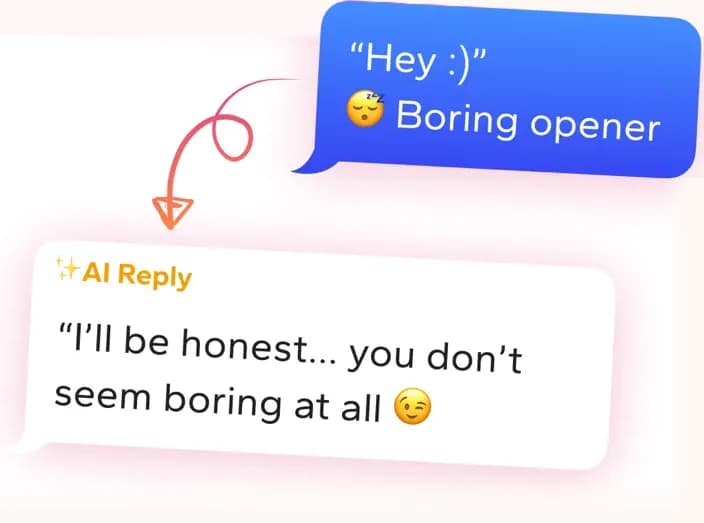
Get replies that sound like you
Screenshot the conversation in WingAI. It reads the vibe and gives you natural replies for this exact situation.
Try for freeHinge AI Screenshot the prompts and get a comment written for that profile.
The week of silence matters more than the text
Read the detail first. A specific, emotional reason like a grandparent in hospital usually means she's telling you the truth and she's a bit overwhelmed. Vague lines like 'just busy with stuff' can mean she's lost interest or is still deciding. Pay attention to whether she came back to you on her own, whether she asked you a question, and how many words she used to explain herself. A person who apologises and then asks about your week is still in it. A person who gives a one-line excuse and stops there may be signalling low energy.
Also notice what she's not saying. She didn't ask to reschedule, she didn't say she's stepping back, and she didn't say she's not up for chatting. Family crises are often the reason someone goes quiet for days, and they're usually glad when the other person doesn't make it harder. You're reading her willingness to re-engage, not the gap itself.
Answer before you get curious
Your first job is to respond to what she actually told you. If she mentioned a sick grandparent, acknowledge that in a human way, one line, and then stop. Resist the pull to ask follow-up questions about the hospital, the diagnosis, or her family dynamics. Those questions feel caring but they put her in the position of managing your interest on top of her worry.
Second, show that the gap didn't change how you see her. This doesn't mean saying you missed her or that you were worried. It means reacting to her as the person you were talking to before, with a bit of the same tone and humour. A quick line that reconnects you to the earlier conversation does more than any apology.
Third, make it easy for her to reply without owing you an update. Leave an open door with something low-effort she can answer in a sentence or ignore for a while. Don't ask for a plan to meet until she's had space to come up for air.
Reply in daylight, not at 2am
Send your reply within a few hours in the daytime. If she's dealing with a sick relative, she's likely checking her phone in short bursts, often in hospital corridors or late at night. A reply that arrives at a sensible hour feels considerate. A message at 2am can read as needy or as though you've been waiting for her to show up. Match the rhythm of how she's been texting, and don't send a flood of messages to make up for the gap.
If she replies, keep the momentum low-key and let her set the pace. If she doesn't reply within a day or two, that's normal when someone is dealing with family stuff. Send one short follow-up at most, a few days later, that's easy to answer and makes no demands, something like checking in or sharing a light thought. If there's still nothing after that, let it sit. Silence during a family crisis is usually not a verdict on you, but two unanswered messages after she's surfaced is a clear signal to stop pushing.
Why these replies fail
“Oh no, I'm so sorry. Is she going to be ok? What's the hospital like, is it the one near you? Let me know if you need anything, I'm happy to come round and help.”
It fires off several questions and an offer of help at someone who has barely had time to breathe, which makes her feel she has to manage your reaction too.
“No worries at all, I totally get it. Life happens. Anyway I was thinking about our chat, we should definitely go for drinks soon, what about Thursday?”
It jumps to a firm date while she's still in the middle of a family emergency, so she has to say no or make time she doesn't have.
“Ah, fair enough, I thought you'd gone off me. Anyway hope your week's ok.”
It turns her explanation into a reproach and makes the conversation about your worry instead of her situation.
Common mistakes
- Asking how her grandma is in a way that demands a long update when she's already stretched thin
- Apologising for things she didn't ask about, or saying you understand when you can't really know
- Sending a long message that makes her feel she owes you a reply straight away
- Going quiet yourself after she apologised, which turns the gap into a standoff
- Pretending nothing happened and jumping straight into a flirty or hypothetical question
Questions people ask
- Should I ask about her family member on Hinge?
- Keep it to one brief line of acknowledgement, such as hoping things are calmer now. Don't ask for details about the illness or the situation. She'll share more if she wants to, and you'll look more thoughtful for letting her decide how much to say. Detailed questions tend to make people feel they have to give you an update.
- How long should I wait before texting again if she's dealing with family stuff?
- Give her a day or two to surface, since she may be stretched thin. If she hasn't replied after you've sent a friendly message, wait a few days before one short follow-up. Keep it easy to answer and don't reference the gap. If there's still silence after that, let it rest and check in once more after a week or so.
- What if she says she's been busy but then doesn't reply to my message?
- Silence after a family excuse is common and doesn't always mean she's lost interest. It might just mean she's still dealing with the situation. Send one short, low-pressure follow-up a few days later. If that also goes unanswered, it's reasonable to stop messaging and leave the match alone.
- Is it okay to suggest meeting up when she's having a hard week?
- Wait until she's had some space and is the one bringing up plans or hinting at them. A suggestion made during a family crisis can feel like pressure, even if you mean well. Once she's more settled, a light invitation with an easy out, like suggesting a coffee or a walk with no fixed pressure, works much better.
What people say after using WingAI
“I was skeptical at first. Then I tried it on a dry chat and the replies actually sounded like me, not a chatbot.”
Mazoonx
“I'm busy and half the profiles give you almost nothing to work with. WingAI gets me a solid first line fast without me staring at the screen for ten minutes.”
Ralph
“She went cold mid-week and I had no idea what to say. The reply I sent felt natural and she picked the chat back up.”
Marcus T.
Get replies that sound like you
Screenshot the conversation in WingAI. It reads the vibe and gives you natural replies for this exact situation.
Try for free