What to text back when she says she's been reading mystery novels
What to text back when she says she's been reading mystery novels lately, plus how to read the signal, what a good reply does, and when to follow up.
When someone says she's been reading a lot of mystery novels, she's usually handing you a small, open door. She's telling you something about what's occupying her attention, and she's leaving it to you whether to walk through. Most people reply to the topic itself, which turns the moment into a book report. The better move is to treat the book as a window into how she thinks, what she enjoys, and what she'd like to talk about next.
A good reply does three things: it acknowledges what she said so she knows you heard it, it gives her a reason to keep talking, and it gives you something of your own to contribute. You're not trying to prove you've read the same books. You're trying to find out what kind of mystery she likes, and whether she's the type who wants to solve things out loud or just wants company while she reads.
The real goal is a conversation that feels like two people comparing notes, not a quiz. If she replies with enthusiasm, you're in a good spot. If she gives a one-word answer, that's also information, and the right response is to lighten up rather than push.
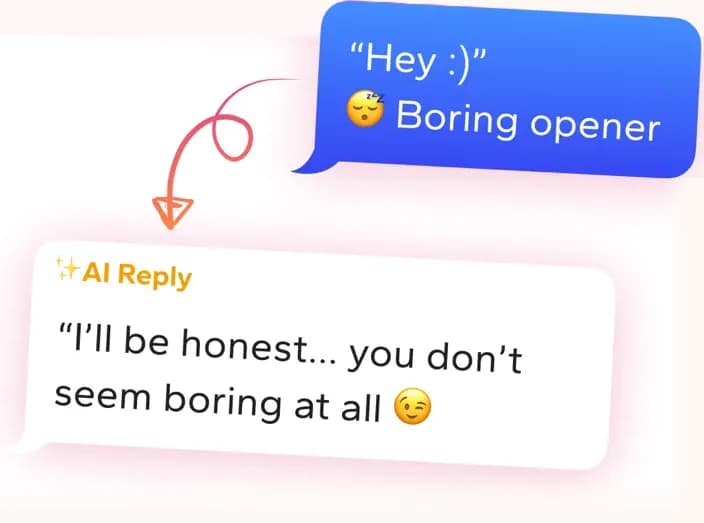
Get replies that sound like you
Screenshot the conversation in WingAI. It reads the vibe and gives you natural replies for this exact situation.
Try for freeRizz AI Screenshot the chat and get the next message for this person.
She's offering the topic, not the plot
When she says she's been reading mystery novels, she's usually signalling a mood or a habit more than a request for literary discussion. Mystery reading tends to be a self-contained pastime. People mention it when they're winding down, when they've been busy, or when they're pleased with themselves for finishing something. The line 'I can't stop until I've guessed the killer' tells you she likes the tension of being right or wrong. The line 'I've been reading a lot lately' tells you it's recent and possibly a bit of an escape. Read her tone. Playful wording means she wants a playful answer. A flat or tired wording means she's just sharing a fact about her week.
The mistake is treating the book as the subject. What you're actually learning is what she does with her downtime, and whether she likes puzzles, suspense, or cozy stories where the solution is almost beside the point. Those are different people. One likes to race ahead, one likes to savour, and one likes the feeling of closing the book at 1am. Your reply should give her room to tell you which one she is, without asking her to justify it.
Ask about her guesses, not the title
The most useful question you can ask about a mystery is one that puts her opinion at the centre. 'Who do you think did it so far?' or 'Are you right or wrong about the killer?' works because she has a stake in the answer and it's easy to respond to. It also shows you're interested in how her mind works, which is more engaging than knowing the book's title. If she's been reading a series, asking which detective she likes best or which one she'd want to have a drink with gives her an easy opening to say something specific.
Your own contribution should be short and honest. If you've read a mystery, say what you thought without needing to be an expert. If you haven't, say you're more of a film person and ask what she'd recommend for someone who gets the ending wrong half the time. A small admission of not being a reader lets her take the lead, and that often makes the exchange warmer than trying to match her knowledge.
Let the thread breathe before following up
Sending the reply at a reasonable time matters more than most people think. Mid-afternoon or early evening on a weekday usually lands better than late at night, when a reply can read as either a come-on or a rushed afterthought. Don't send it within a few minutes of her message unless you're already mid-conversation. Giving it an hour or two makes the exchange feel like conversation rather than a reflex.
If she replies, match her pace. Short message gets a short message. Longer, more detailed reply means she's invested, so you can ask a follow-up question about one specific thing she said. If she doesn't reply within a day, let it go for a while. Mystery readers often disappear into a book for days, so silence doesn't necessarily mean disinterest. One gentle follow-up after three or four days is reasonable, something light that isn't about the book. If there's still nothing, stop. Pushing a third time turns a pleasant exchange into something she'll feel obliged to manage.
Why these replies fail
“Nice, what's the book? I've read a few Agatha Christies.”
It turns her comment into a request for information and then shows off, which gives her nothing to react to except the title.
“Lol so you're basically a detective now”
It's a joke that closes the topic instead of opening it, and it doesn't ask her anything she can answer.
“Mysteries are cool. Anyway what are you doing this weekend?”
It dismisses what she shared and jumps to a generic plan question, which reads as a change of subject rather than interest.
Common mistakes
- Asking for a full plot summary of the book she's reading.
- Claiming you've read the same author or series when you haven't.
- Turning her reading habit into a judgment about how much time she spends on it.
- Replying with a single word or emoji and leaving the thread with nowhere to go.
- Jumping straight to asking her out based on one shared-interest comment.
Questions people ask
- Should I admit I haven't read any mystery novels?
- Yes, if it's true. Saying you're not much of a reader and asking what she'd recommend is a more relaxed opener than pretending. It hands her the expertise, which is often enjoyable for her to share. Keep it short and curious rather than apologetic, and don't pile on excuses about being busy.
- What if she just says 'yeah, I love them' and nothing else?
- Then she's probably not in the mood for a long exchange, or the topic doesn't interest her as much as it sounded. Respond with something light and easy to answer, like asking which author she keeps coming back to. If she gives a short reply again, let the conversation end naturally and try a different topic later.
- How long should I wait before replying to her mystery comment?
- An hour or two is usually enough, and an afternoon or early evening works better than late at night. Replying instantly can feel like you were waiting for it, while a day's delay can make the moment feel cold. Match the rhythm of how she usually texts you.
- Is it okay to bring up mysteries again in a later conversation?
- Yes, if she's the one who keeps mentioning them or if you noticed a specific book she was enjoying. Coming back to it a few days later with a question like 'did you ever figure out who did it?' shows you remembered. Just avoid making it the centre of every conversation, or she may start to feel like she's giving you homework.
What people say after using WingAI
“I was skeptical at first. Then I tried it on a dry chat and the replies actually sounded like me, not a chatbot.”
Mazoonx
“She went cold mid-week and I had no idea what to say. The reply I sent felt natural and she picked the chat back up.”
Marcus T.
“I overthink every text. Having three options and picking the one that sounds like me cut that spiral short.”
Sam R.
Get replies that sound like you
Screenshot the conversation in WingAI. It reads the vibe and gives you natural replies for this exact situation.
Try for free