What to text back when he apologizes for being distant
How to respond when he acknowledges pulling away. Build on the apology without overcommitting or letting it slide.
When someone apologizes for being distant, he's usually trying to reset after ghosting you or going cold. This is a moment where your reply shapes what happens next. A good response acknowledges the apology without erasing what happened, and it keeps things moving without demanding explanations or forgiving too fast.
The goal isn't to accept or reject the apology on the spot. It's to respond in a way that shows you noticed the distance, that you're willing to move forward, but that things need to actually change. Your reply sets the bar for how he treats you going forward.
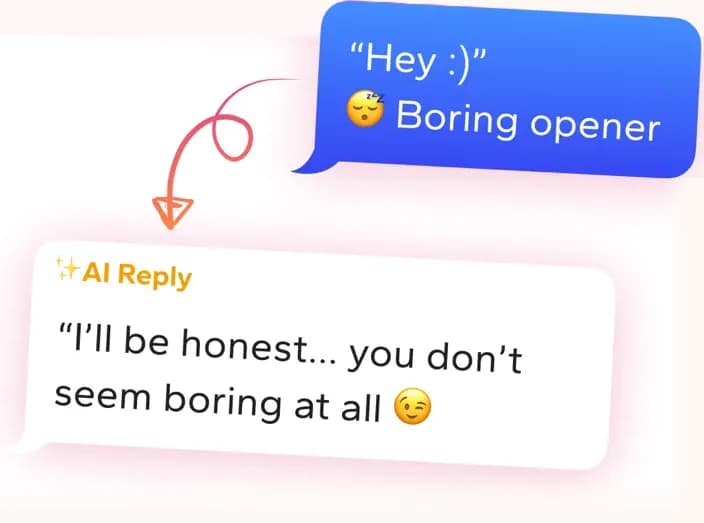
Get replies that sound like you
Screenshot the conversation in WingAI. It reads the vibe and gives you natural replies for this exact situation.
Try for freeRizz AI Screenshot the chat and get the next message for this person.
Distance usually means something shifted in his head
Distant behavior is rarely random. It often signals he got busy, he's unsure about where things are going, he got spooked by something you said, or he's managing another situation. The apology means he's noticed you noticed. What matters now is whether he's apologizing because he feels guilty or because he actually wants to fix his behavior.
A real apology includes some acknowledgment of what he did wrong, not just 'I'm sorry I was distant.' But you don't need to interrogate it. Watch what happens next. A good sign is if he reaches out more consistently over the next few days. A bad sign is if this apology is followed by another quiet spell.
Accept the apology and set a light condition
Your reply should do two things. First, show you heard him and you're not bitter about it. Second, make it clear that the distance mattered and you're moving forward because you want to, not because the apology magically fixes it. This is not about being cold or punitive. It's about being real.
Don't demand a full explanation or a plan for how he'll change. Just respond in a way that says 'okay, I see you, let's see if you mean it.' A simple statement that you appreciate him saying something and that you'd like things to feel different going forward does the job. Then watch his next three messages and calls. Does he actually show up more consistently?
Give him 24 to 48 hours to follow through
Send your reply within an hour or two of receiving his apology. Don't wait three days to respond, which signals you're playing games. Keep it short. After you reply, take a step back and observe.
If he goes quiet again within the next week or two, you have your answer. He was apologizing for the moment, not committing to different behavior. If he's messaging more, making plans, and staying engaged, he meant it. Don't bring up the distance again unless it becomes a pattern. One distant spell and one apology is normal. A second cycle is a sign you're dealing with someone who can't follow through.
Why these replies fail
“It's totally fine, don't worry about it! You've been busy I get it.”
This absolves him too quickly and signals that pulling away doesn't actually affect you or matter.
“Ok well I just want to know why you were distant in the first place so we can talk about it”
Demanding an explanation turns his apology into the start of a heavy conversation instead of a reset.
“Cool, yeah I noticed. So when do you want to hang out?”
This skips over the apology entirely and leaves him unsure if you actually accepted it or just moved on.
Common mistakes
- Saying 'it's fine' or 'no worries' too quickly, which erases the impact and signals you'll accept flaky behavior
- Asking 'why were you distant?' which turns the reply into a therapy session and puts pressure on him to perform
- Over-validating with 'I appreciate you saying that so much' which makes the apology seem like it fixed everything
- Going silent to 'test' if he'll chase, which just creates more distance and wastes time
- Launching into your own needs before giving him space to show he means it
Questions people ask
- Should I ask him why he was distant?
- Not in your first reply. An apology doesn't require you to interrogate it. If he wants to explain, he will. If you really need to understand later, bring it up after you've seen him actually change his behavior for a few weeks. Asking immediately turns your reply into therapy.
- What if his apology feels half-hearted?
- A half-hearted apology is still an apology. Respond politely but briefly, then watch what he does. A real shift in his behavior over the next week matters more than perfect wording now. If nothing changes, you have your answer and can move on.
- How long should I wait before I assume he didn't mean it?
- Two weeks is a fair test. If he goes distant again within that window, or if he's less engaged than he was before the distance, the apology was more about easing his guilt than changing his actions. At that point, you can decide if you want to address it or walk away.
- Is it okay to bring up the distance if he does it again?
- Yes, but only once. The second time you notice a pattern, you can say something direct like 'I notice you pull away sometimes, and I need more consistency than this.' If he does it a third time, that's a trait, not a mistake. You'll know what you're dealing with.
What people say after using WingAI
“I was skeptical at first. Then I tried it on a dry chat and the replies actually sounded like me, not a chatbot.”
Mazoonx
“She went cold mid-week and I had no idea what to say. The reply I sent felt natural and she picked the chat back up.”
Marcus T.
“I overthink every text. Having three options and picking the one that sounds like me cut that spiral short.”
Sam R.
Get replies that sound like you
Screenshot the conversation in WingAI. It reads the vibe and gives you natural replies for this exact situation.
Try for free