What to Text an Emotionally Unavailable Man
Not sure what to text a man who runs hot and cold? Learn the tone, content and timing that work, plus what to skip and how to read his reply.
A man who is emotionally unavailable usually shows it in patterns you can observe: replies that arrive hours late, conversations that stay on logistics and jokes, bursts of warmth followed by days of nothing. The reasons vary. He may be recovering from a breakup, wary of closeness, stretched thin by work, or simply not looking for a relationship. You can't know which from the outside, and you don't need to. What you can read is his behavior, and that is the only thing your text can respond to.
Your aim here is modest and practical. You are not trying to coax him into opening up or prove you are easy to be close to. You want a message that tells him you noticed the pattern, leaves you looking steady, and gives you usable information about what he does next. A good text costs you little. If it lands badly, you have lost nothing you weren't already losing by waiting in silence.
Timing and medium matter more than most people expect. Texting is where his inconsistency is most visible, because a late-night reply or a three-word answer is easy to dissect. It is also where you are most tempted to write too much. Send your message at an ordinary hour, not at midnight after a rough evening, and keep it short enough to read at a glance. A paragraph arriving after a quiet stretch reads as pressure, whatever words it contains.
What backfires is usually emotion dressed up as a question. Messages that ask him to explain himself, reassure you, or define what this is hand him a task he may not be ready for, and the common result is a vaguer reply or none. Fake breeziness fails differently. If you say you are fine with any pace while you are quietly counting hours, he gets permission to keep doing exactly what bothered you. Anger fails too, since it gives him something to defend against instead of something to consider.
When he does reply, judge the reply by what it contains, not by how warm it sounds. A specific answer, an apology tied to a real change, or a concrete plan is movement. A joke that sidesteps your point, a vague promise to catch up soon, or a flood of attention that vanishes within days tells you the pattern is intact. Match his effort rather than exceeding it, and decide how much room he gets based on a few weeks of conduct, not one good exchange.
Aim for calm and low pressure
The tone you want sounds like someone mentioning the weather, not filing a complaint. Think relaxed, a little dry, and brief. Write as if you have a full week and his answer is welcome but not required. Skip anything that reads as a verdict on him or on the relationship. If you catch yourself drafting a message that explains your feelings in detail, cut it down to the single observation underneath. A steady tone does most of the work, because it tells him you are not asking him to rescue you from anxiety.
What belongs inside your message
Anchor the text in something concrete from your last real exchange, such as a plan you mentioned, a show he recommended, or a story he told. That gives him an easy, low-stakes way to respond. You can add a plain acknowledgment that it has been quiet, stated as a fact without blame, and a light opening for him to pick things back up. Avoid stacking several topics. One reference and one open door is plenty. The message should be easy to answer in a sentence, since a heavy question tends to get postponed.
Adapting to what he sends back
If he answers with real specifics, meet them in kind and keep the pace gentle, since one good reply is a data point and not a trend. If he answers warmly but vaguely, respond pleasantly and wait to see whether action follows the words. If he apologizes and explains at length, take it politely without turning it into a conversation about the relationship. If he says nothing, do not follow up with a second message. Stop initiating for a while and see whether he reaches out on his own, then judge by how often and how clearly he does.
Messages that backfire
“I feel like you're pulling away and it's making me really anxious. Can we talk about what's going on with us?”
It asks a man who already keeps things surface-level to analyze the relationship and manage your anxiety in one reply, which makes a vague answer or silence the likeliest result.
“No worries at all if you're busy, totally fine, text me whenever you feel like it!”
You are not fine with the gap, so the message hides the point and gives him an easy pass to keep disappearing without any consequence.
“You always do this. You act interested and then vanish. If you don't want to talk just say so.”
The pattern you name may be accurate, but the accusing tone gives him something to defend against, so the conversation becomes about your tone instead of his behavior.
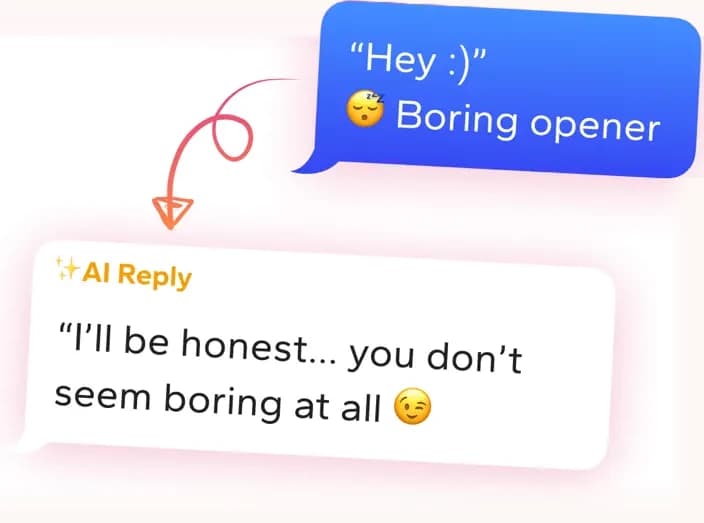
Get replies that sound like you
Screenshot the conversation in WingAI. It reads the vibe and gives you natural replies for this exact situation.
Try for freeCommon questions
- Should I ask him straight out if he's emotionally unavailable?
- It rarely helps. The label gives him something to argue with or deny, and his answer tells you less than his conduct does. Watch how often he initiates, whether he follows through on plans, and whether conversations ever go beyond logistics. Those patterns answer the question without a confrontation.
- What if he says he's just bad at texting?
- He may be telling the truth, so test it instead of arguing it. Notice whether he makes time for plans, calls, or in-person meetups when he wants to. If he is reliable elsewhere and only flaky in messages, shift the way you connect. If he is inconsistent everywhere, the explanation doesn't change what you are experiencing.
- How long should I wait before I stop texting him?
- After you have sent one clear message, give it a full day or two. If a week or more passes with no real effort from him, you have your answer without needing a formal one. Stop initiating and put your attention elsewhere. If he comes back, judge him by what he does.
- Is it ever worth messaging him again after he goes quiet?
- Once, if you want to. Wait a couple of weeks and send something light that carries no expectation. If he responds with real interest, you can reassess. If he stays vague or silent, let it go. Repeating the cycle teaches both of you that the pattern costs him nothing.
From our users
“I overthink every text. Having three options and picking the one that sounds like me cut that spiral short.”
Sam R.
“I was skeptical at first. Then I tried it on a dry chat and the replies actually sounded like me, not a chatbot.”
Mazoonx
Where people go wrong
- Sending several follow-up texts after one unanswered message, which stacks pressure on top of the silence and makes him less likely to reply.
- Treating one warm, attentive day as proof he has changed, then dropping your own boundaries before he has shown anything consistent.
- Writing a long, emotional message at night and sending it before you have slept on it, so the tone is raw and the request is hard to answer.
Get replies that sound like you
Screenshot the conversation in WingAI. It reads the vibe and gives you natural replies for this exact situation.
Try for free