What to Text a Hinge Match Who Is a Sound Engineer and Jazz Regular
What to text a Hinge match who's a sound engineer and goes to every local jazz show. Practical moves, timing, and mistakes to avoid.
Her profile is doing a lot of the work for you. A sound engineer who goes to every local jazz show is telling you three things: she notices how music sounds, she spends her free time in small rooms with live players, and she likely has opinions about the scene. Most people reply to that with "I love jazz too" or a generic question about her favorite artist. Both are weak because they could be sent to anyone with a music tag on their profile.
A good first message points at something specific she would only know from doing the job or going to the shows. That might be a question about how a venue sounds, a club she clearly knows, or a detail from her photos or prompts. The goal is to give her a real thing to answer, so the conversation starts with her expertise rather than your interest in jazz.
Keep the message short and easy to answer. She should be able to reply in one line from her phone between sets or during a gig. Your job is to make it easy for her to talk about the thing she knows best.
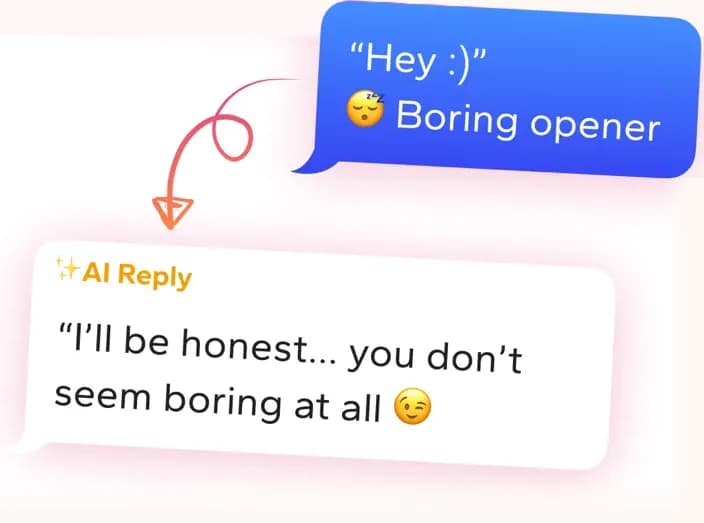
Get replies that sound like you
Screenshot the conversation in WingAI. It reads the vibe and gives you natural replies for this exact situation.
Try for freeHinge AI Screenshot the prompts and get a comment written for that profile.
Read the job before you read the music
Being a sound engineer is a specific job that most people know nothing about. Her profile is telling you she spends evenings listening critically to live rooms, which means she has a relationship with venues, bands, and acoustics that is more technical than a fan's. That is where the interesting conversation is. The music is the shared subject, but the job is what makes her distinct.
So look for the detail that only someone doing the work would mention. A specific room, a time she mentions working a set, a photo of gear, a line about load-in. Those are the openings. If the only thing you can point to is "you like jazz," you are reading the surface. Go back to the photos and prompts and find the one thing that shows she is a professional with opinions, then ask about that.
Ask about the room, not the record
Once you have a specific detail, the best question is usually about how something sounded or how a place works. Questions about a room give her space to be an expert without having to explain her taste. A question about a favorite album pushes her into a list. A question about why a particular venue sounds the way it does lets her talk about what she notices when she is working.
Keep it to one question. Make it concrete enough that she can answer in a sentence and still feel like you actually read her profile. Avoid questions that require her to defend a music opinion, because that can turn into a debate before the conversation has started. You want her to feel like she is explaining something she knows well, not being quizzed.
Let the first exchange stay small
A good first conversation about live music can go in a lot of directions, and the temptation is to propose a show right away because you both obviously go to shows. Hold off. Her reply will tell you whether she wants to keep talking about the work, the scene, or the music, and that should decide what you say next.
If she answers with enthusiasm and asks you something back, you can start to share a bit more about your own experience with live rooms. If she answers briefly, match that length and let the topic close naturally. Suggesting a specific night out makes sense once she has shown she is interested in talking, and it works better when it is tied to a band or room she mentioned rather than a generic "we should go to a show."
Why these replies fail
“Hey! I love jazz too, what's your favorite album?”
It names a shared interest with no detail and asks a question she has likely answered many times.
“Sound engineer, that's so cool. Do you ever go see live music or is it all work?”
It treats her job as a novelty and asks a broad question that gives her nothing specific to respond to.
“Saw you're into jazz, we should get drinks at a show sometime this week, Friday or Saturday?”
It jumps to a date plan before she has said anything about the music, so it reads as a pickup line rather than a conversation.
Common mistakes
- Saying you love jazz with no detail, which tells her nothing about you or the shows
- Asking a generic question like "what's your favorite jazz album" that she has answered a hundred times
- Treating her job as a fun fact instead of asking about the actual work
- Sending a long message that asks her to plan a date before she has said anything back
- Replying to her music opinions with a list of your own without leaving room for her to respond
Questions people ask
- Should I mention that I also like jazz?
- Only if you can add something specific, like a venue you go to, a musician you have seen, or a reason you started going. Saying you like jazz on its own is what almost every match will say, so it does not help you stand out. The detail is what gives her a reason to answer.
- What if she has not replied after I messaged her about a show?
- Give it a few days before you follow up, since people who work nights and gigs often reply in bursts. If you do send a second message, keep it light and do not repeat the same question. If she still does not reply after that, let it go.
- Is it okay to ask her to come to a gig I am playing or attending?
- It can be, but only after the conversation has been going for a bit and she has shown interest in talking. Be clear about the specific night, the venue, and the act, and make it easy for her to say no. Asking too early can feel like you are angling for a plus one rather than getting to know her.
- How do I keep the conversation going if she is clearly knowledgeable?
- Ask follow-up questions about her experience rather than trying to match her expertise. Questions about how she got into the work or what she notices in a room tend to keep people talking. Avoid correcting her or offering your own technical take unless she asks for it.
What people say after using WingAI
“I was skeptical at first. Then I tried it on a dry chat and the replies actually sounded like me, not a chatbot.”
Mazoonx
“I'm busy and half the profiles give you almost nothing to work with. WingAI gets me a solid first line fast without me staring at the screen for ten minutes.”
Ralph
“She went cold mid-week and I had no idea what to say. The reply I sent felt natural and she picked the chat back up.”
Marcus T.
Get replies that sound like you
Screenshot the conversation in WingAI. It reads the vibe and gives you natural replies for this exact situation.
Try for free