What to text a guy who ghosted you
Not sure what to text a guy who ghosted you? Learn the tone, timing and content that give him an easy way back in, and what to skip so you keep your dignity.
A guy who goes quiet mid-conversation is usually not plotting anything. More often he hit a small patch of discomfort, a message that needed a thoughtful answer, a flicker of waning interest, a busy week that turned into an awkward gap, and picked avoidance because it cost him nothing in the moment. That does not excuse it, but it changes what a text can realistically accomplish. You are not correcting a misunderstanding. You are offering a door, and he decides whether to walk through it.
So decide what you are after before you type anything. If the goal is an answer, an apology, or proof that he feels bad, a text will not deliver it, and you will spend days scanning your phone for something that never arrives. If the goal is simply to leave one easy path open and then get on with your life, a message can do that well. The best version reads like a small, warm nudge from someone who has a full week ahead and happened to think of him.
Timing and platform shape how that nudge lands. A message sent on a Tuesday afternoon feels like a passing thought. The same words at midnight on a Saturday read as loneliness. If the conversation lived on Hinge or Bumble, a quick note there feels proportionate, while jumping to his phone number or Instagram DMs can feel like cornering him. Give it at least a week so the gap is long enough that a reply costs him nothing and a lack of one costs you little.
Most backfires come from the same place: the sender is secretly trying to extract something. Asking why he vanished, pointing out the silence, sprinkling in a joke that is really a jab, or hinting that you have been fine without him all create pressure. He senses the hook and ignores the message. Teasing lines built to make him feel the loss of you tend to read as bait, and heavy, wistful lines read as a plea. Warm, specific, and light beats both. A small callback to something he mentioned, a trip, a show, a half-finished plan, gives him something easy to answer without addressing the ghosting at all.
How he responds tells you most of what you need. A quick, friendly reply with no mention of the gap means he is willing to pick things up lightly, so match his energy and see whether his follow-through improves. A reply that apologizes and offers a real explanation deserves a measured welcome, not instant forgiveness. A one-word answer is a polite no. Silence after your message is a clear one. Either way, you sent a single clean attempt, and the rest is his to handle.
Pick your message angle
Three angles tend to work. The first is a light callback: reference something specific he told you, like a concert he was planning or a restaurant he swore by, and ask about it casually. It gives him a topic instead of a verdict to deliver. The second is a short, honest acknowledgment: you noticed things went quiet, you are fine either way, and you are around if he wants to chat. Keep it free of apology and free of accusation. The third is a simple fresh start, a friendly check-in with no reference to the silence at all. Choose the one that matches how you actually feel, because forced cheerfulness is easy to spot over text.
Keep the tone relaxed, not performed
Aim for the energy of texting a friend you have not seen in a while. That means short sentences, plain words, and no emotional build-up. Skip the long preamble about how you have been thinking things over. Skip anything that tries to sound breezy through effort, like piled-up emojis or exaggerated casualness, because overdoing it reads as anxious. One or two lines is plenty. Read it aloud before sending. If it sounds like you are trying to land an impression, trim it. If it sounds like something you would say while walking past his street, send it.
Skip the lines that backfire
Anything that fishes for a reaction tends to land badly. Cheeky lines that tease him about disappearing, or ones built to make him wonder what he is missing, come across as testing him, and he will not owe you a response to a test. Equally, lines that say you cannot stop thinking about him hand over more emotional weight than a one-sided message can carry. Questions that demand an explanation put him on trial. Avoid mentioning how long he has been silent, how many days you counted, or what you assumed. The less your message asks of him, the more likely it gets read and answered.
What not to send
“Hey, I'm not sure what happened between us, but I just want you to know that I'm here if you want to talk about it. You don't have to shut me out.”
It asks him to process his disappearance emotionally, and the phrase about shutting you out frames him as the problem before he has said a word.
“So I guess you're just done with me then? That's cool, I'm used to it.”
It accuses him and plays the martyr, which gives a guy who already avoided conflict a strong reason to avoid this one too.
“Hey stranger! I know you probably don't want to hear from me, but I miss you and I think we should give us another shot. Let me know?”
It stakes a whole relationship on one reply, which is exactly the kind of weight someone who ghosted is trying to dodge.
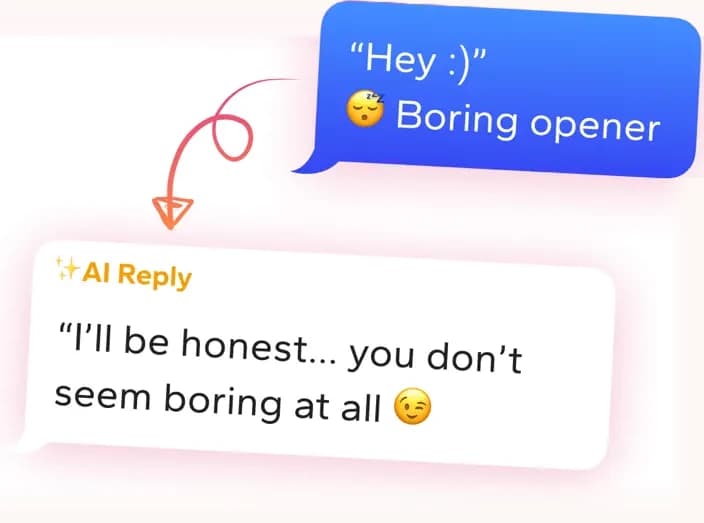
Get replies that sound like you
Screenshot the conversation in WingAI. It reads the vibe and gives you natural replies for this exact situation.
Try for freeFrequently asked
- Should I ask him why he ghosted me?
- No. A why question demands an explanation he has already shown he would rather skip, so it makes a reply less likely. It also turns a light message into a confrontation. Take that question to a friend, who can actually help you work through it.
- What if I send a message and he still doesn't reply?
- Treat that as his answer and stop. A second text erases the clean boundary you set and starts to look like pressure. Mute or archive the chat, tell yourself the attempt is done, and put your energy toward people who respond to you.
- How long should I wait before I text him?
- At least a week. The pause lets the sting settle so you can tell whether you want to reach out or just want relief. It also makes the message feel like a passing thought instead of a reaction to the silence.
- What if he responds after I text him?
- Take it slowly. One reply does not undo the pattern he already showed you. Respond warmly if you want to, keep your expectations modest, and pay attention to whether his follow-through improves over the next few exchanges.
Real user feedback
“I overthink every text. Having three options and picking the one that sounds like me cut that spiral short.”
Sam R.
“I was skeptical at first. Then I tried it on a dry chat and the replies actually sounded like me, not a chatbot.”
Mazoonx
Mistakes to avoid
- Sending the message late at night or right after a bad day, when the real motive is loneliness or anger rather than curiosity about how he is doing.
- Using teasing or wistful lines meant to make him feel the loss of you, which come across as needy or as bait and give him an easy reason to ignore it.
- Following up a second or third time, or checking whether he read it, which turns one clean attempt into a pattern of chasing.
Get replies that sound like you
Screenshot the conversation in WingAI. It reads the vibe and gives you natural replies for this exact situation.
Try for free