How to reply when someone calls you a good girl
Not sure what to say when someone calls you a good girl? Learn how to read the tone, match it, and reply in a way that keeps things playful and comfortable.
Being called a good girl lands differently depending on who says it, where, and how well you know each other. Between friends it can be a joke about you finishing your homework early. From someone you have been flirting with for a week, it carries a flirtatious charge. From a stranger on an app or a coworker, it can feel presumptuous. Before you write anything, take a second to decide how you feel about the phrase coming from this person, because your honest reaction is the best guide to your reply.
You have more freedom here than most advice admits. Some people enjoy the phrase and want to play with it. Others find it mildly patronizing, or fine from one person and grating from another. None of those reactions is wrong. Your goal is a reply that fits how you actually feel while keeping the exchange pleasant enough that you can steer it wherever you want next. That might mean leaning in, turning it into a joke, or gently setting a boundary.
The medium matters a lot. In text, there is no tone of voice to soften or sharpen the phrase, so a short, light reply reads as relaxed while a long, careful one reads as flustered. A voice note or an in person moment gives you a laugh, a raised eyebrow, a pause, and those do plenty of work before you say a word. If you are replying to a message, you also have time, which tempts people to overwrite. A single line with some personality usually beats a paragraph of explanation.
A few things tend to go wrong. Over-thanking turns a light moment into a formal one. Apologizing or arguing with the phrase can make the other person feel scolded for a compliment they meant kindly. Copying the same phrase straight back at them often sounds like a script. And if you are uncomfortable but laugh it off anyway, they have no way of knowing, so the phrase keeps coming. Honest and short beats polished and vague every time.
Watch what happens after you reply. If they laugh, build on your joke, or ask you something, the tone is working for both of you. If they go quiet or switch topics fast, you may have misjudged the mood, or they may simply be busy, so give it a little room before you read anything into it. If they push the phrase harder after you have shown discomfort, that tells you something real about how they handle your limits. A friendly, direct line like "I'd rather you didn't call me that" is a complete answer, and the right person will adjust without making it awkward.
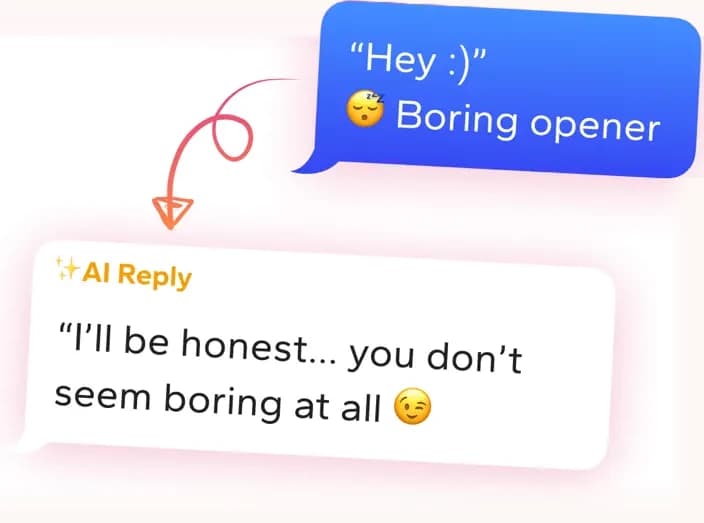
Get replies that sound like you
Screenshot the conversation in WingAI. It reads the vibe and gives you natural replies for this exact situation.
Try for freeReading the tone before you answer
Look at the history before the phrase appeared. Were you already trading jokes, or did it arrive out of nowhere? Was it attached to something you did, like finishing a project, remembering a detail, or showing up on time? Praise tied to a specific action is usually warmer and less loaded than the phrase dropped into a flirty exchange. Notice the punctuation and emoji too, since a winking face and a flat sentence feel very different. If you cannot tell, a light reply that works in both readings, such as a playful shrug of a joke, buys you time to see where they take it.
Playful replies that keep it light
Humor works best when it is specific to the moment. If the compliment followed something you did, tease about that, like acting smug about the thing itself or pretending the praise has gone to your head. Mock confidence is a reliable tone, because it shows you took the compliment well without taking yourself too seriously. Mention something they did that deserves equal recognition, which turns it into a shared joke. Keep it short, one or two sentences, and end on a note that invites them to reply, maybe a question about their day or the plan you were discussing.
When you would rather not hear it
If the phrase bothers you, you are allowed to say so, and you do not owe anyone a joke first. Pick a tone that matches the relationship. With a friend, a quick line about preferring your actual name works. With a date, a calm sentence stating that it is not your thing, followed by a change of subject, keeps things from getting heavy. With a boss or client, redirect to the work and keep it neutral. You do not need to justify or explain. Watch how they respond, since quick adjustment is a good sign and repeated use after you asked is information worth taking seriously.
Messages that backfire
“Aww thank you so much, that really means a lot to me!”
It treats a passing, playful phrase like a heartfelt tribute, which makes the exchange stiff and leaves the other person with nowhere easy to go.
“Please don't call me that, it's really demeaning and you should know better.”
If you do want to set a limit, this jumps straight to a lecture, so even a reasonable boundary lands as an attack on someone who may have meant a small compliment.
“Haha yeah I guess, I'm not that good though, I'm actually pretty messy lol.”
Brushing off the phrase with self-criticism invites them to reassure you and shifts the conversation to your flaws instead of the moment you were in.
Where people go wrong
- Thanking them at length, which turns a light moment into a formal one and leaves the conversation with nowhere to go.
- Laughing it off when you are actually uncomfortable, so the other person has no idea it bothered you and keeps using the phrase.
- Pasting the same words back at them, which reads as a script and skips the chance to say something specific to the moment.
Common questions
- Is it okay to not like being called a good girl?
- Yes. Plenty of people enjoy it and plenty find it patronizing or too familiar, and both are fair. How you feel depends on who says it, the setting, and your history with them. You can say you prefer something else and still be friendly about it.
- How do I reply by text without sounding awkward?
- Keep it short and reply in the same tone they used. One light line, such as a joke about the thing you did or a bit of mock pride, reads as relaxed. Long replies, heavy thanks, or over-explaining are what make a text feel awkward.
- What if a coworker or someone I barely know says it?
- You can stay neutral and steer toward the topic at hand, or state calmly that you would prefer your name. Both are reasonable. If it keeps happening after you have said so, document it and consider raising it with a manager or HR.
- Should I say it back to them?
- Only if it fits and you would be comfortable hearing it too. A mirrored phrase often sounds scripted. A specific, friendly comment about something they did usually lands better and keeps the exchange from feeling like a swap.
From our users
“I overthink every text. Having three options and picking the one that sounds like me cut that spiral short.”
Sam R.
“She went cold mid-week and I had no idea what to say. The reply I sent felt natural and she picked the chat back up.”
Marcus T.
“I was skeptical at first. Then I tried it on a dry chat and the replies actually sounded like me, not a chatbot.”
Mazoonx
Get replies that sound like you
Screenshot the conversation in WingAI. It reads the vibe and gives you natural replies for this exact situation.
Try for free