What to say when she's scared of disappointing you
She's worried about letting you down. Here's how to reply and actually ease her mind instead of making it worse.
When a woman tells you she's scared of disappointing you, she's usually signaling two things at once: she likes you enough to care what you think, and she's worried she can't live up to something. Maybe you've built momentum fast. Maybe you seem to have high standards. Maybe she's been hurt before and is defensive about failing someone again.
Your reply matters because it can either lock her deeper into that anxiety or actually release her from it. Most guys either dismiss her worry, which makes her feel unheard, or over-reassure her, which can feel needy or like you're trying to convince her. A good reply acknowledges the worry without making it your job to fix it.
The move is simple: give her permission to be human. Lower the stakes. Show her that disappointing you isn't actually the catastrophe she's constructed in her head. That's what makes her breathe again.
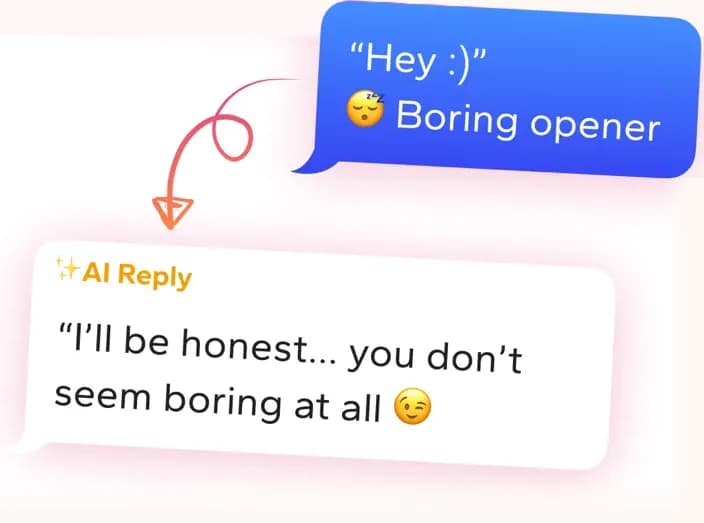
Get replies that sound like you
Screenshot the conversation in WingAI. It reads the vibe and gives you natural replies for this exact situation.
Try for freeRizz AI Screenshot the chat and get the next message for this person.
She's already investing more than she's comfortable with
When she says she's scared of disappointing you, she's usually already emotionally ahead of where she wanted to be. Something about you or the pace of things has made her care more than her usual guard allows. That fear lives in the gap between how much she likes you and how much control she feels she has over the outcome.
She's not asking for a pep talk. She's telling you there's a mismatch. Either things moved fast, or you seem like someone with a clear picture of what you want, or she's been hurt before and is bracing for it to happen again. The worry is real. It's also information. She's telling you she sees a future worth protecting and she's scared of screwing it up.
Your reply has to shrink the stakes
Don't defend yourself or her. Don't make promises. Instead, pull back the pressure she's imagining. Show her that being disappointed by someone is just part of dating, not a relationship-ending crime. You can do this by staying light, by being specific about what you actually want from her, which is usually just her as is, or by naming the thing without drama.
The second job is to stay calm. If you panic-reassure or over-explain, you signal that you're actually fragile and need her to perform well. She'll feel more pressure, not less. A short, steady reply lands so much harder than a long one here. You're showing her through your tone that this is normal and manageable, not a crisis.
Send it soon and then step back
Reply while the message is still fresh. Don't wait hours. A quick response shows you're not spiraling about what she said and you're not using silence as punishment. Keep it short enough that she can read it without bracing for impact.
After you send it, don't follow up with more reassurance or check-in texts. Let her sit with your reply. She'll either feel calmer and start opening up more, or she'll spiral differently. Either way, your second message doesn't fix it. If she goes quiet after your reply, give her a day or two. Then text her something normal and unrelated. If she's still pulling back after that, she's processing something bigger than your words can solve and space is the only move.
Why these replies fail
“you could never disappoint me, you're amazing”
It's so reassuring it actually puts pressure on her. Now she has to live up to being 'amazing' or she'll let you down in a new way.
“why would you think that? what did i do? im not like that”
It makes her feel like she messed up by being honest and forces her to defend feelings she's already anxious about.
“me too tbh, i get it”
Turning it into mutual anxiety makes the situation about both your insecurities instead of what she's actually trying to tell you.
Common mistakes
- Saying 'you could never disappoint me' makes it feel like you're setting yourself up to get hurt and puts pressure on her to perform perfectly
- Going into a long reassurance speech signals that you're fragile and need managing, which reverses the dynamic
- Asking 'why would you think that?' puts her on the defensive and forces her to justify her own feelings
- Pivoting to your own insecurity. 'Well I'm scared of disappointing you too' makes it about you when she's being vulnerable
- Saying nothing and just moving on makes her think you didn't take her seriously or that she messed up by saying it
Questions people ask
- Should i ask her what she's worried about disappointing me with?
- Not in your first reply. Let her lead that conversation. If you ask, she'll feel like she has to explain and justify her feelings. A simple reply that eases the pressure usually prompts her to open up on her own. Then you can ask follow-up questions if the conversation goes there naturally.
- What if i'm actually worried about being disappointed too?
- Keep that out of your reply. This moment is about her vulnerability, not your fear. You can address your own concerns later if the relationship develops. Right now, she's testing whether it's safe to care about you. The safest thing you can do is handle this calmly and without making it about what you need from her.
- Does a short reply make it seem like i don't care?
- No. A short, steady reply shows you take it seriously enough that you don't need to overcomplicate it. A long reassurance spiral makes it seem like you're nervous about her reaction. Short and clear always wins here.
- How long should i wait before texting her something normal again?
- If she responds positively to your reply, you can follow up normally the same day. If she goes quiet, wait until the next day. Then send something unrelated to the worry, like a photo or a normal question about her day. This signals you're not dwelling on the anxiety either.
What people say after using WingAI
“I overthink every text. Having three options and picking the one that sounds like me cut that spiral short.”
Sam R.
“I was skeptical at first. Then I tried it on a dry chat and the replies actually sounded like me, not a chatbot.”
Mazoonx
“My openers used to be boring. Now I reference something from her profile and people actually write back.”
Aiden K.
Get replies that sound like you
Screenshot the conversation in WingAI. It reads the vibe and gives you natural replies for this exact situation.
Try for free