What to say when she says she's sad
How to reply when she tells you she's sad: the tone to aim for, what to include, what to skip, and how to read where she goes next.
When she tells you she's sad, she has handed you something small and a bit risky. Saying it out loud to another person, even over text, costs her something. Maybe she wants company. Maybe she only wants to have said it. She probably hasn't decided which, and a good reply leaves that decision with her.
Your aim is to make her feel noticed without making her feel managed. That means the tone should be warm and steady, closer to a friend who pulled up a chair than a counselor who opened a file. You are not trying to cheer her up, diagnose the problem, or prove you are a good guy. You are trying to show you read her words and took them seriously.
Text changes the math. She can't see your face, so a flat or rushed reply reads as cold, and an overwrought one reads as alarm. Keep the length modest, roughly the size of what she wrote. If she sent one line, a paragraph back feels like pressure. Timing matters too. Replying within a couple of hours shows you care. Replying in ninety seconds with a wall of feeling shows you are anxious. Late at night, soften the tone further, because sadness lands heavier then and she may be too tired to explain anything.
What backfires is the stuff that sounds kind but moves her out of the moment. Silver linings tell her she shouldn't feel this way. Advice tells her you heard a problem instead of a person. Matching her with your own bad day turns the spotlight around. Stacking sad emojis or exclamation points makes the message feel performed. Even a heavy opener like asking what is wrong can feel like a demand for a report she hasn't written yet. Include something specific from what she said, such as the day she mentioned, the thing she'd been dreading, or the detail she dropped, so she knows the message wasn't a template.
Her response tells you what comes next. If she opens up, stay with her, ask one question at a time, and resist the urge to fix. If she answers briefly or changes the subject, follow her lead without pushing, because that is a decision, not a rejection. If she goes quiet, let it be, and come back later with something ordinary and light. Sadness often needs a day to settle, and your steadiness afterward does more than any single message.
Why a short, warm reply wins
A sad message from her often took effort to send. A reply that matches its size respects that effort. Aim for a sentence or two that acknowledges the specific thing she said, then stops. Long paragraphs make her feel she now has to manage your reaction on top of her own mood. Short and warm tells her you are calm, which is the thing she most needs from someone she just confided in. Leave out the dramatic punctuation and the stack of sad faces. Plain wording that sounds like you on a normal day reads as more caring than anything dressed up for the occasion.
Using what she already told you
The most convincing proof you listened is a detail only she could have given you. If she mentioned a rough week at work, a conversation with her sister, or a thing she'd been looking forward to that fell through, point lightly to that. You are not interrogating her about it. You are showing the message landed on you specifically. Keep the reference simple and let her decide whether to expand. If she gave you nothing but the word sad, then acknowledge that plainly and leave the door open without guessing at causes. Guessing wrong makes her feel misread, and she then has to correct you while already low.
Reading her answer and following it
Her next message tells you how much room she wants. Longer replies with detail mean she wants company, so stay present, ask one question at a time, and let silences exist. Brief replies like thanks or I'm okay mean she got what she needed, so drop it without making a point of dropping it. A joke from her usually means she is ready to lighten up, and you can follow it gently. If she goes quiet for a day or two, don't chase. When you do return, keep it ordinary, a normal plan or a normal topic, so contact with you feels easy rather than like another emotional task.
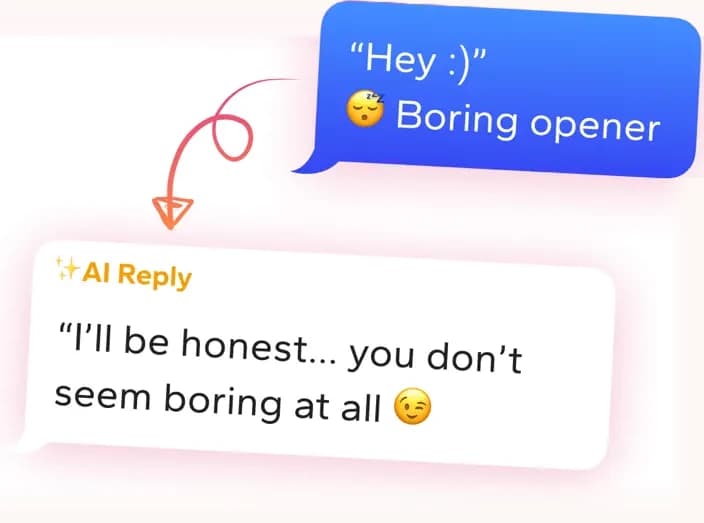
Get replies that sound like you
Screenshot the conversation in WingAI. It reads the vibe and gives you natural replies for this exact situation.
Try for freeWhy these replies fail
“Aww that sucks :( Let me know if you need anything!”
It could have gone to anyone, and the offer hands her the work of asking for help right when she has least energy for it.
“Do you want to talk about it? I'm here for you no matter what.”
It points at no detail from what she said, so the invitation feels like a script and she has to decide immediately whether to unpack everything.
“I'm sorry you're going through this. It's going to be okay. You're stronger than you think.”
It jumps to reassurance she didn't ask for, which tells her the feeling is a problem to shut down instead of something you heard.
Questions people ask
- What if she doesn't want to talk about it after she says she's sad?
- Let it be. A short reply like I'm fine or just needed to say it means she got what she wanted from telling you. Don't push or ask again that day. Your acknowledgment already did its job, and she can return to the topic whenever she chooses.
- How long should I wait before checking in again?
- Give it three or four days, longer if she has been quiet. Skip questions like are you still sad, because they put her mood on trial. Bring up something ordinary, like a plan or a shared joke, so contact feels easy and the sadness can fade without being the main subject.
- Should I share a time I felt sad too?
- Not in your first reply. Starting with your story moves the attention to you right when she needs it on her. Later, if she opens up and the conversation deepens, a brief honest comparison can help. Keep it short and hand the focus back to her.
- What if she seems sad a lot?
- One low moment tells you little, but a pattern over weeks deserves a calm, private conversation, held later and in person if you can. Say what you've noticed without diagnosing her. Don't try to be her only support, and encourage her to lean on other people too.
Common mistakes
- Replying instantly with a long, emotional message, which makes her feel she now has to reassure you about how you took the news.
- Pointing out a silver lining or offering a fix, which tells her you heard a problem to solve instead of a person who is hurting.
- Following up the next day with how are you feeling now, which turns her sadness into something she owes you progress reports on.
What users say
“I overthink every text. Having three options and picking the one that sounds like me cut that spiral short.”
Sam R.
“I was skeptical at first. Then I tried it on a dry chat and the replies actually sounded like me, not a chatbot.”
Mazoonx
“Used it for a couple hours and set up a date the same night. Not even kidding.”
Nikola2214
Get replies that sound like you
Screenshot the conversation in WingAI. It reads the vibe and gives you natural replies for this exact situation.
Try for free