What to say when she's had a rough week and wants to vent
How to respond when she says she's had a rough week and just wants to vent a little, without fixing it, derailing it, or going cold.
When someone says they've had a rough week and just want to vent a little, they are asking for presence, not a solution. The phrase "just want to vent" is a signal about what kind of response will land. She is telling you the category of help she wants before you have a chance to offer the wrong one.
Most people who send this message are testing whether you can listen without taking over. A good reply shows you heard the specifics, invites her to keep going if she wants to, and leaves the door open for her to move on whenever she's ready. It does not need to be long or clever.
What a good reply achieves is trust. She learns that she can bring you the messy version of her day without it turning into a project. That is the thing that makes people want to keep talking to you.
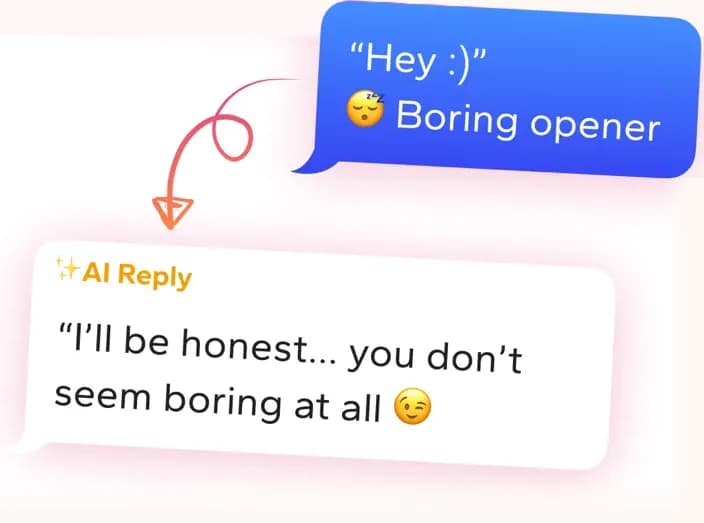
Get replies that sound like you
Screenshot the conversation in WingAI. It reads the vibe and gives you natural replies for this exact situation.
Try for freeRizz AI Screenshot the chat and get the next message for this person.
She is asking for permission, not a plan
The phrase "if that's ok" or "just want to vent a little" tells you she is aware she is about to put weight on you. She is checking whether you have the room for it. Read it as a request for a listening partner. The fact that she qualified it with "a little" also means she is probably not planning to unload everything, so don't treat the first message as the whole story.
The specifics she gives you are the most useful part. "Work's been a nightmare" is vague, so you can ask about one concrete thing without pushing. Her tone matters too. Short, lowercase, a bit flat usually means tired and want to be heard. Longer, detailed, with exclamation marks may mean she is already partway through venting and wants you to catch up.
Let her set how deep it goes
Early in a match or a new dynamic, she may be measuring how you handle emotional content. Taking the vent seriously without treating it as a crisis gives her a clean read on you. You want to be the person who says the right amount, not the one who matches her intensity or pulls back into lightness too fast.
If she has told you the one thing that went wrong, respond to that one thing. If she has listed five things, pick the one that sounds most annoying and show you understood why it got to her. That is usually enough for her to keep going or to feel finished.
Reply in daylight, not at 2am
If she sent this in the evening after a long day, a reply within an hour or so reads as attentive. If she sent it late at night, a shorter reply is fine and you can leave the deeper follow-up for the morning. Replying with a long, emotional paragraph at 2am can feel intense, and she may not be in a state to receive it.
If you do not reply for a few hours because you were busy, send something that acknowledges it rather than leaving her hanging. If she goes quiet after you respond, let it sit for a day before checking in. Ask how the thing she was stressed about turned out, once, and then drop it. If she does not respond to that, don't push. She has told you enough about what she needs.
Why these replies fail
“oh no, that sounds awful. have you tried talking to your manager about it?”
It jumps to a fix before she has finished venting and signals you wanted to solve it rather than hear it.
“ugh same, my week was even worse lol”
It turns her vent into a competition and moves the focus onto you.
“k. hope you feel better”
It reads as cold and dismissive, which makes her regret opening up.
Common mistakes
- Jumping straight to advice or a fix before she has finished venting
- Asking a string of probing questions that turn her vent into an interview
- Making it about your own similar bad week
- Going quiet or sending a one word reply that reads as bored
- Being so sympathetic that it feels performed or over the top
Questions people ask
- Should I ask what happened or wait for her to tell me?
- Ask one open question that gives her room, like what was the worst part, and then listen. Asking for every detail turns venting into an interview. If she gives you a short answer, let it be short. She will tell you more if she wants to.
- How long should my reply be if she just wants to vent?
- Usually two or three sentences. Reflect the specific thing she said, show you understood why it bothered her, and invite her to keep going if she wants. A long paragraph can feel like you are performing sympathy, and a one word reply can feel dismissive.
- What if she says she's fine after venting?
- Take her at her word and keep the tone light. You can say something like glad you got it off your chest and move to something else. Don't circle back to the stressful topic unless she brings it up again.
- Is it too early to be this supportive?
- Supportive and intense are different things. You can be warm and present without making big promises or sharing heavy stories of your own. Keep your response proportionate to what she shared, and let the level of openness grow over time.
What people say after using WingAI
“I overthink every text. Having three options and picking the one that sounds like me cut that spiral short.”
Sam R.
“I was skeptical at first. Then I tried it on a dry chat and the replies actually sounded like me, not a chatbot.”
Mazoonx
“I'm busy and half the profiles give you almost nothing to work with. WingAI gets me a solid first line fast without me staring at the screen for ten minutes.”
Ralph
Get replies that sound like you
Screenshot the conversation in WingAI. It reads the vibe and gives you natural replies for this exact situation.
Try for free