What to Say When She Has a Big Presentation Tomorrow
She's got a big presentation at work tomorrow. Here's how to reply so she feels supported without making it about you, and when to follow up.
When someone says they have a big presentation tomorrow, they are telling you about something that is taking up their head right now. They are not asking you to solve it. They want to feel that the thing they just mentioned landed with you, and that you are not going to treat it as small or make it about your own evening.
The reply that works is short, specific to what she told you, and leaves room for her to keep talking if she wants to. Generic good-lucks read as a reflex. Long messages full of advice read as you taking over. Asking a question about the presentation, when you know enough to ask a real one, shows you were paying attention.
This is also a low-stakes moment to show you remember details. If she mentioned the topic, the audience, or how nervous she was, bring one of those back. That single detail does more than any amount of enthusiasm.
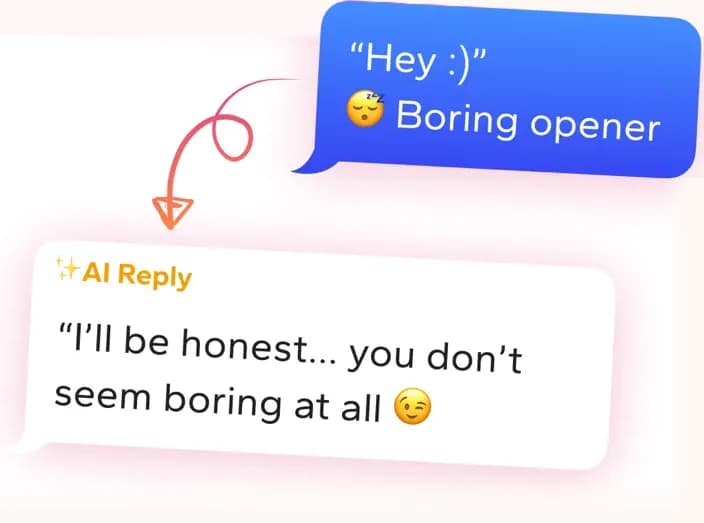
Get replies that sound like you
Screenshot the conversation in WingAI. It reads the vibe and gives you natural replies for this exact situation.
Try for freeRizz AI Screenshot the chat and get the next message for this person.
She is telling you what is on her mind
A line like 'big presentation tomorrow, haven't finished the slides' is almost always a status update. She is nervous, she is busy, and she is saying it because she wants it to be in the conversation. She is not asking for a plan. Read the message for the emotional weight. 'Ugh' and 'might be a long night' tell you she is stressed and a bit fed up. A message that is flat and factual tells you she is managing it and just wants to share.
Pay attention to whether she is asking you anything. If she closes with a question, answer it. If she does not, you can reply without one, and that is often better, because it gives her space to keep the focus on her work rather than on a conversation she now has to steer.
Show you heard the specific thing
The reply has to show that you noticed what she told you. Pick the detail that carries the most weight. Here that is probably the unfinished slides and the morning deadline, or the regional leads, which tells you the stakes are higher than a normal meeting. Name that detail back in a few words, with some warmth. Keep the sentence short, because a long supportive paragraph starts to feel like a performance.
After that, leave the door open without pushing through it. One light line that signals interest in how it goes is enough. You are not trying to be the person who fixes her anxiety. You are the person who was paying attention while she was anxious.
Let the night be hers
Once you have acknowledged the presentation, the reply should stop. Do not stack a second topic on top, and do not ask what she is doing afterwards or whether she is going to bed soon. She may be heads down for hours. A text that keeps pulling her into conversation at the exact moment she is trying to finish work can read as needy, even when it is meant kindly.
If you want to be useful, you can offer one practical thing that costs her nothing to ignore, such as being available later if she wants to decompress. Make it clearly optional. If she takes you up on it, good. If she does not, you have still shown up without making her manage your expectations.
Why these replies fail
“Good luck tomorrow! You've got this 💪”
It is a generic cheer that could go to anyone, so it shows no sign that she was heard.
“Oof, sounds stressful. Have you tried making the slides simpler? Usually less text works better, and you could just do the key numbers.”
It offers unrequested advice on her work, which turns a moment of sharing into a problem she has to deal with.
“Damn, that's rough. What are you doing after? I'm free if you want to hang out once you're done.”
It pulls her attention toward plans and her availability while she is still in work mode, and makes her respond to your question before she has finished her task.
Common mistakes
- Sending a generic good luck with no reference to what she actually said
- Offering unsolicited advice on how to prepare or what to change in the slides
- Turning the reply into a question about your own plans or what you are doing tonight
- Asking her to message you afterwards in a way that makes her feel she owes you an update
- Going quiet for the rest of the evening, so she has no sign you noticed at all
Questions people ask
- Should I wish her good luck or say something more specific?
- Something more specific, if you can. A generic good luck is fine as a fallback, but it reads as a reflex. Pull in one detail she gave you, like the audience, the topic, or the fact that the slides are not finished, so she can tell you actually read her message.
- Is it okay to ask how it went the next day?
- Yes, but time it for when she is likely to be free, usually the afternoon or evening after the presentation. Ask one open question, such as how it went or whether it went the way she wanted. If she gives you a short answer, let that be the end of it for now rather than asking follow-ups.
- What if she does not reply after I send something supportive?
- Assume she is busy. A presentation day eats the evening, and silence is not a verdict on you. Do not send a second message to check that she saw the first. Wait until the next day, then ask how it went. If she answers warmly, the conversation is still alive. If she is still quiet after a day or two, let it sit and see what she sends next.
- Should I wait until she messages me to say how it went?
- Not usually. If you wait for her to bring it up, she may not, because she is tired or has moved on. A short check-in the next day, framed as an open question, lets her choose how much to say. Just avoid making it feel like she has to report back to you.
What people say after using WingAI
“I overthink every text. Having three options and picking the one that sounds like me cut that spiral short.”
Sam R.
“I was skeptical at first. Then I tried it on a dry chat and the replies actually sounded like me, not a chatbot.”
Mazoonx
“Didn't think it would be this good. The funny options actually get responses, which is wild.”
Nico_dang
Get replies that sound like you
Screenshot the conversation in WingAI. It reads the vibe and gives you natural replies for this exact situation.
Try for free