What to Say When She Says She Has a Big Presentation
She's got a big presentation and needs to focus. Here's how to read it, what your reply should do, and when to follow up without crowding her.
When she tells you she has a big presentation and needs to focus, she is doing two things at once. She is giving you information about her week, and she is quietly asking you to make it easy for her to disappear for a bit without it feeling like a problem. Most people read this as a rejection or a sign of low interest. Usually it is neither. It is a normal boundary from someone who has real work pressure.
What a good reply achieves is simple: it shows you heard her, it takes the pressure off her to keep texting, and it leaves a small, easy thread open for later. You are not trying to be the reason she relaxes or the reason she performs well. You are trying to be the person she is glad to hear from once the presentation is done.
The mistake is treating the message as a test. If you respond with questions about the presentation, jokes that need an answer, or a long wish-you-luck paragraph, you are asking her to spend energy she has already allocated elsewhere.
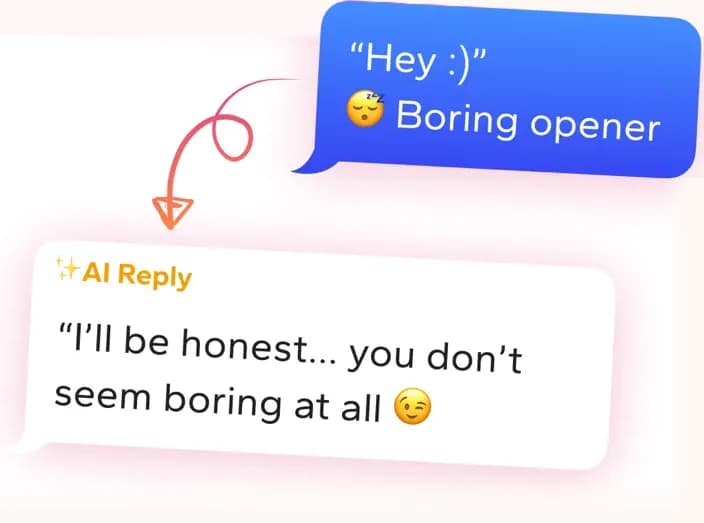
Get replies that sound like you
Screenshot the conversation in WingAI. It reads the vibe and gives you natural replies for this exact situation.
Try for freeRizz AI Screenshot the chat and get the next message for this person.
Reading a focus message as logistics, not a verdict
A line like 'I've got a big presentation and need to focus' is mostly a scheduling note. She is telling you the next few days will be thin on replies, and she is doing you a small courtesy by saying so instead of going silent. That is actually a good sign about how she handles things. It means she is comfortable enough to name her limits.
What would change the read is the surrounding context. If she has been warm and asking about you, the focus message is probably just timing. If the conversation was already thin, with one-word replies and long gaps before this, then it may be a soft way of cooling things, and you should read the next week's pattern before deciding anything. Look at how she writes, how often she starts threads, and whether she asks you things back.
Let her have the week without owing you a reply
Your reply has to make it easy for her to step away. That means you do not ask her to report back, you do not ask her to rate how it went in advance, and you do not put a question at the end that she has to answer before she can focus. A statement that acknowledges the work and leaves the thread open is enough.
The second job is to keep yourself from becoming a source of stress. Showing that you are fine with a quiet week is what makes the eventual reconnection feel relaxed rather than obligatory. If your reply reads as slightly hurt, the presentation becomes something she has to manage around your feelings too.
The silence after the presentation is the real signal
After you send a short reply, the default is to leave her alone for the week. Do not send anything during the presentation itself, and do not check whether she has finished at the exact moment you expect. If she has said when it is, you can send one light message the day after, something like a simple check-in about how it went, phrased as an opening rather than a question she must answer in detail. If she responds warmly, you can carry on normally.
If she replies briefly or not at all after the presentation, wait another few days before trying again, and keep the second attempt lighter than the first. If there is still no real engagement after two attempts spread over about a week, stop initiating. Let her come back to you, and if she does not, the focus line was the end of the conversation, not the start of a longer silence you need to fix.
Why these replies fail
“Good luck!! Can't wait to hear how it goes, I'm sure you'll crush it. Text me the second you're done.”
It demands a reply after the presentation and adds emotional pressure before she has finished the work.
“Oh no, that sounds stressful. Are you presenting to clients or your team? What's it about?”
It asks her to explain the work at the exact moment she said she needs to focus, so it undoes the point of her message.
“Ok, I'll leave you alone then. Let me know when you have time to talk again.”
It reads as a bit hurt and hands her the job of reassuring you, which is extra work during a busy week.
Common mistakes
- Asking detailed questions about the presentation that she has to answer
- Sending several follow-up messages before she has replied
- Turning the reply into a long good luck speech that needs acknowledging
- Reading her focus as a signal that she has lost interest and sending a guilt-tinged message
- Making plans for after the presentation before she has mentioned wanting to
Questions people ask
- Does 'I need to focus' mean she is losing interest?
- Usually not on its own. It is most often a plain statement about time and attention. Look at the wider pattern: whether she has been asking you things, starting conversations, and replying with real length before this message. If that pattern is steady, the focus line is just timing. If the whole conversation has been drifting, the week of quiet will tell you more than this one message.
- Should I text her before the presentation to wish her luck?
- A short, low-pressure line is fine, as long as it does not need a reply. Something that acknowledges the work and does not ask anything of her works well. Skip any follow-up question, and do not send a second message if she does not respond, since she is likely busy.
- How long should I wait before texting her after the presentation?
- One day after the presentation is a reasonable time to send a light check-in, especially if she told you when it was. Give her the day to recover. If she does not reply warmly, wait a few more days before trying again, and keep the second message even lighter than the first.
- What if she never responds after the presentation?
- After two light attempts spread over roughly a week with no real engagement, stop initiating. Let the silence stand as the answer. If she comes back on her own later, you can respond normally. Continuing to send messages after that point usually makes the situation worse, not better.
What people say after using WingAI
“I overthink every text. Having three options and picking the one that sounds like me cut that spiral short.”
Sam R.
“I was skeptical at first. Then I tried it on a dry chat and the replies actually sounded like me, not a chatbot.”
Mazoonx
“I'm busy and half the profiles give you almost nothing to work with. WingAI gets me a solid first line fast without me staring at the screen for ten minutes.”
Ralph
Get replies that sound like you
Screenshot the conversation in WingAI. It reads the vibe and gives you natural replies for this exact situation.
Try for free