What to Say When She Says She's Been Working Double Shifts
She's been working double shifts and has less time to text. Here's how to read it and what a good reply does, plus timing and when to let it go.
When someone says she's been working double shifts lately, she is usually telling you two things at once. The first is the obvious one: her time and energy are limited right now. The second is quieter: she wants to explain a gap or a slow reply without it being read as disinterest. Most people say this because they feel they owe an apology for going quiet, or because they are tired and want the other person to understand why they are short on words.
What a good reply does here is take the explanation at face value, show you heard the real cost (she is tired and stretched thin), and make it easy for her to keep talking without having to manage a schedule. It should not turn her tiredness into a test of how much you care, and it should not pile on questions that require effort to answer.
The bad reply is the one that treats the double shifts as a problem to solve or as proof the connection is fading. Either way, she ends up doing more work than she has energy for.
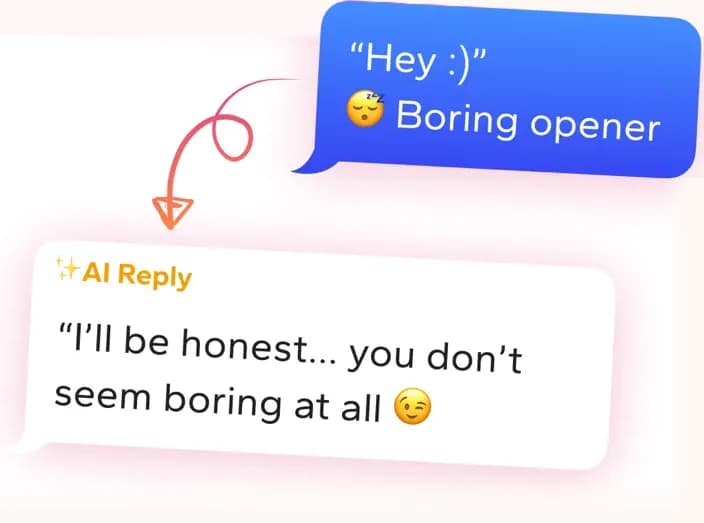
Get replies that sound like you
Screenshot the conversation in WingAI. It reads the vibe and gives you natural replies for this exact situation.
Try for freeRizz AI Screenshot the chat and get the next message for this person.
Read the apology as a request for patience
When she mentions the double shifts, she is almost always apologizing for something without quite saying it. The apology might be for slow replies, for cancelling plans, or for seeming distant. The useful read is that she wants to be understood, not that she is pulling away. Pay attention to how she frames it. If she says sorry, she is aware it looks like distance and she cares how that lands. If she says it neutrally, she is just giving you the context. Both readings point the same direction: she is tired and she does not want you to take her quiet personally.
The other thing to notice is what she left out. She did not say she wants to stop talking, and she did not ask you to back off. She gave you a reason. That reason is information about her capacity this week, not a verdict on the connection. If she had wanted distance, the usual signal is a shorter message with no effort at all, not a paragraph about her schedule.
Give her a way back in without a schedule
Because she is stretched thin, the easiest thing you can do is make the next step cheap for her. Acknowledge the shifts in a sentence, show that you are not keeping score, and leave her a low-effort way to continue. A question with a short answer works better than one that needs thought. Avoid anything that asks her to fit you into a calendar she has no room in.
It also helps to make your own message something she can read in thirty seconds without feeling she owes a long reply. She should be able to answer with a word or a single line and still have the conversation feel alive. If she responds warmly, you can build from there. If she responds briefly, that is her capacity showing, and matching her length is the right call.
Reply in daylight and let the silence work
Timing matters more here than people expect. If she is working nights or long days, a message sent when she is likely exhausted (late evening after a shift, or very early morning) can read as an imposition even if the words are fine. Try to send during a time she is probably between things, like a lunch break or the afternoon before a shift. You do not have to know her schedule exactly. A rough sense is enough.
After you reply, give it a real gap before you follow up. A day or two is normal when someone is working double shifts, and a week of silence is not unusual either. If she does not reply, do not send a second message asking if she is okay or if you did something wrong. One more light message a few days later is fine, something that does not need an answer. If there is still nothing after that, stop. She has told you why she is quiet, and a long silence in that context usually means the week got away from her, not that she is ghosting you.
Why these replies fail
“Double shifts?? That's rough. Are you okay? I feel like we haven't talked in forever and I'm starting to wonder if I did something.”
It turns her explanation into an emotional question she now has to manage while exhausted, and it makes her feel responsible for your worry.
“Wow, you must really be a hard worker. Anyway, are you free Thursday? I was thinking we could do that new place downtown, let me know.”
It moves straight to a plan she has no energy to commit to, and the compliment lands as a way of changing the subject without really hearing her.
“No worries! Just let me know when you have time. I'll be here.”
It is so vague that it puts the burden on her to restart the conversation later, and it leaves her wondering whether you are actually still interested.
Common mistakes
- Reading the slow replies as a sign she's losing interest and asking about it directly
- Sending a long message that asks her to plan something she has no energy to think about
- Skipping over the shifts entirely and talking about yourself
- Following up three or four times while she's on a run of long days
- Making a joke about her being a workaholic when she's clearly worn out
Questions people ask
- Is it a bad sign if she says she's working double shifts?
- Usually not. Someone who is working double shifts is often just short on time and energy, and saying so is a way of explaining the gap. The sign to watch is what happens after. If she keeps engaging when she has a free moment, the interest is still there. If replies shrink to nothing over several weeks with no effort on her side, that is a different picture, but one mention of a busy week is not enough to read anything into.
- Should I ask her when she'll have time to hang out?
- Not yet, and not directly. Asking when she is free forces her to check a schedule she is already overloaded with. Acknowledge the shifts first, keep the conversation light, and let her bring up plans once she has a day off. If you want to suggest something, keep it small and easy to say yes or no to, like a coffee near her place rather than a full evening out.
- How long should I wait before texting again if she's been slow?
- Wait at least a day or two before following up, and longer if she mentioned a particularly heavy stretch. A message sent too soon after a slow reply can feel like pressure. Your next message should be light and not require an answer. If you have sent one thoughtful follow-up and still hear nothing for a week or more, that is your signal to stop reaching out for now.
- Should I just wait until her shifts end?
- You do not need to pause your life, but you should expect slower replies during the busy period. Keep your messages short and warm, and avoid anything that needs a lot of back and forth. Once she mentions a day off or a shift ending, that is a natural point to suggest something small. Until then, it is fine to keep the conversation going at her pace.
What people say after using WingAI
“I was skeptical at first. Then I tried it on a dry chat and the replies actually sounded like me, not a chatbot.”
Mazoonx
“She went cold mid-week and I had no idea what to say. The reply I sent felt natural and she picked the chat back up.”
Marcus T.
“I overthink every text. Having three options and picking the one that sounds like me cut that spiral short.”
Sam R.
Get replies that sound like you
Screenshot the conversation in WingAI. It reads the vibe and gives you natural replies for this exact situation.
Try for free