What to say when she won't share her schedule early
She doesn't like giving out her schedule early? Here's how to read it and what a good reply actually does, without pushing for plans.
When someone says she doesn't really like giving out her schedule early, she is usually reacting to a specific thing: you asked for a day, a time, or a plan before you two had much of a rhythm. It often reads as a boundary about pressure, not a verdict on you. Some people also keep their week loose on purpose because they don't want to be committed before they know who they're committing to.
A good reply accepts the boundary in one line, then gives her something easier to say yes to than a calendar. The point is to keep the conversation warm and moving while removing the feeling of being pinned down. If you make her defend her preference, you turn a small comfort into a negotiation.
The real test is whether she stays engaged after you let go of the schedule question. If she keeps replying with the same warmth, the boundary was about timing. If the conversation thins out the moment you stop pushing, that tells you something useful too.
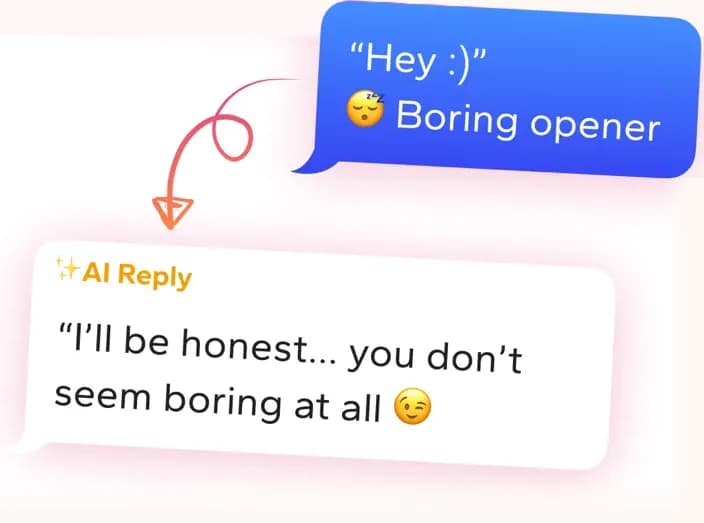
Get replies that sound like you
Screenshot the conversation in WingAI. It reads the vibe and gives you natural replies for this exact situation.
Try for freeRizz AI Screenshot the chat and get the next message for this person.
Read the boundary against how fast things have moved
Her message is almost never about the calendar itself. It is about how much she is being asked to commit to with someone she has known for a short time. Four days of texting and a request for a fixed day reads as more pressure than you intended, even if the request felt casual to you. Look at how much she has been volunteering. If she has been sharing details about her week, her friends, and her interests without being asked, the boundary is probably narrow and about the plan. If she has been answering in short bursts and dodging your questions, the schedule line is one more sign she wants to keep things light for now.
Pay attention to the wording. "I don't really like" is a preference she is stating about herself, which means she is not rejecting you. A flat no would sound different. Treat her words as information about her pace, and let that set how fast you ask for anything concrete next.
Answer before you get curious about the reason
Your reply has to accept her boundary without asking why it exists. The moment you ask what happened or whether something is wrong, you hand her a task she didn't sign up for. A good reply names what she said in plain words, confirms you're fine with it, and leaves her no reason to explain. Then it moves the conversation onto something she already wants to talk about. That could be something from her last message, a thing you noticed in her profile, or a question about her week that doesn't require a commitment. The aim is to show her that a no on planning doesn't cost her your interest. Keep it short enough that she doesn't feel the need to respond to the boundary itself, because a long reply makes the boundary feel like a topic.
Avoid turning your reply into a counteroffer. Suggesting a shorter plan, a coffee instead of dinner, or a day after she's free can still read as the same request in smaller form. Let the schedule question disappear for now and see whether she brings it back.
Let a week of silence speak before you follow up
After you reply, the next signal is her timing and length, not the words in her message. If she answers within a day with the same energy, you can keep texting normally and let planning come up naturally later. If she takes several days or replies with one line, she probably needs more space, so match her and don't chase. Sending a second message soon after the first, especially one that circles back to plans, usually reads as pressure again. A single follow-up about something she mentioned is fine after a day or two of quiet. Give it one more reasonable chance around the end of the week, then stop. If the conversation is still going but never reaches a plan, that is a real answer too, and you can decide whether that pace works for you. If she goes quiet for good, don't send a message asking what happened. Let the thread end, and move on without reading it as a rejection of your character.
Why these replies fail
“Totally fair! Can we at least lock in one night next week though? I'm free most evenings.”
It accepts her words and then immediately asks for the exact thing she declined, just in a smaller form.
“Oh okay, is everything alright? You seemed a bit off yesterday.”
Asking whether she's okay turns her preference into a problem she has to explain or reassure you about.
“Ha okay noted, I'm a planner so this is going to be hard for me lol. Anyway how was your day?”
It makes the boundary about your own struggle, which asks her to manage your feelings before she can move on.
Common mistakes
- Pushing again with a different framing, like asking for just one evening
- Asking her to explain why she won't plan ahead
- Going quiet or getting noticeably cooler to signal you're annoyed
- Sending a long paragraph about how you like to be organized
- Treating the boundary as proof she isn't interested
Questions people ask
- Does her not sharing her schedule mean she's not interested?
- Not on its own. Plenty of people keep their week loose because they don't want to commit before they know someone well. What matters more is how she engages with you otherwise. If she is still answering warmly, asking you questions, and sharing things about her day, the schedule preference is most likely about pace. If the replies get shorter and the conversation stops moving whenever you stop pushing, that is a clearer signal of low interest.
- Should I ask for a plan with a smaller ask, like just a coffee?
- Wait until she brings up meeting, or until the conversation has built up enough that a plan would feel natural to both of you. A smaller ask sent right after she set a boundary still reads as the same request. Give it a few more days of normal texting first, and let her be the one to suggest meeting or pick a time, even loosely.
- How long should I wait before I bring up plans again?
- Let the conversation run for a while and see whether she raises plans herself. If she hasn't by the time you've been texting for a couple of weeks and the replies are steady, it is reasonable to bring it up lightly once. Keep it casual and not tied to a specific day, so she can respond without having to refuse anything.
- What if she says she doesn't like planning but then never gets around to meeting?
- That pattern is worth taking seriously. Someone who keeps the conversation going but never moves toward meeting may be comfortable with texting alone for now. You can decide whether that works for you. If it doesn't, it's fair to say you'd like to meet at some point and ask whether she's interested in that. Keep it to one clear question and accept whatever she answers.
What people say after using WingAI
“I was skeptical at first. Then I tried it on a dry chat and the replies actually sounded like me, not a chatbot.”
Mazoonx
“Used it for a couple hours and set up a date the same night. Not even kidding.”
Nikola2214
“I overthink every text. Having three options and picking the one that sounds like me cut that spiral short.”
Sam R.
Get replies that sound like you
Screenshot the conversation in WingAI. It reads the vibe and gives you natural replies for this exact situation.
Try for free