What to say when she mentions being hurt by someone from a dating app
How to respond when she opens up about past dating app trauma. Build trust without minimizing her experience or overstepping.
When someone mentions they've been hurt by someone they met on a dating app, she's testing whether you can hold that vulnerability without flinching. This isn't a dating problem she needs you to solve. It's a signal about her caution and a question about your character.
A good reply does two things at once. It shows you take what happened seriously, not like it's just part of dating, and it positions you as different from whoever hurt her, without you having to say so directly. The move is to acknowledge the weight of it and then move forward with clarity about how you'll interact with her.
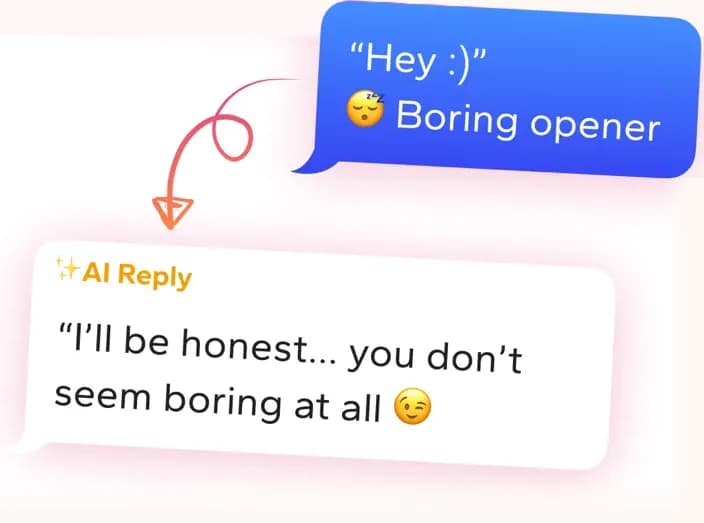
Get replies that sound like you
Screenshot the conversation in WingAI. It reads the vibe and gives you natural replies for this exact situation.
Try for freeRizz AI Screenshot the chat and get the next message for this person.
She's telling you she's been careless about trust before
When someone mentions they were hurt by someone from a dating app, they're not just venting about a bad date. They're admitting they opened up to someone who didn't earn it, or they misjudged someone's intentions. That stings differently than a normal breakup because it involves the specific vulnerability of meeting a stranger.
This also means she's watching how you respond. Does dismissing her experience bother you. Do you blame her for trusting the wrong person. Do you use it as ammo later. Her mention is a small test of your capacity to hear bad things without judgment.
Validate the situation, then show direction
Your reply needs to do two things in sequence, not at the same time. First, name what actually happened to her in a way that shows you understand the specific shape of it. You're not going general about 'the dating world' or defending yourself preemptively. Second, move into how you'll interact with her going forward. This isn't about promises. It's about concrete clarity on what you'll actually do when you say something, or how you'll handle uncertainty between you.
The first part takes maybe one sentence. The second part is the real substance. You're not trying to erase what happened to her. You're showing her what different looks like.
Wait until the conversation has room for it
Don't reply to this in the first message where she mentions it, if you can help it. Let it exist in the conversation for a bit. If she brings it up in passing during a longer thread, you can address it naturally. If she drops it as a standalone message, wait until the next day or until you're both actively texting.
The reason is timing. If you pivot immediately to addressing her hurt, it can feel like you're trying to fix it or move past it instead of just hearing it. Give her enough space that your response doesn't feel like a reflexive reaction. If she doesn't bring it up again, don't resurrect it. Some people mention hard things once and then move forward. That's not avoidance. That's their pace.
Why these replies fail
“That's awful. I'm so sorry that happened to you. I would never treat you like that.”
The last sentence makes it about you and your character instead of what she experienced, which feels like you're asking for credit.
“Ugh, dating apps are the worst. So many toxic people on there. Anyway, what are you doing this weekend?”
You acknowledged it but immediately moved on, which signals you don't think it's actually important or worth your attention.
“What did he do exactly. That's so messed up. Guys like that ruin it for the rest of us.”
Asking for details makes you sound like you're gathering information, and generalizing about other men centers the problem on gender instead of his choices.
Common mistakes
- Attacking the other person makes it about him, not about her experience
- Over-apologizing for men in general sounds performative and centers your guilt instead of her hurt
- Jumping straight to reassurance without acknowledging what she went through
- Asking for all the details of what happened as if you need to investigate it
- Moving on too fast or making a joke to lighten the mood, which signals you don't take it seriously
Questions people ask
- Should I ask her what happened so I can understand better?
- Only if she seems like she wants to talk about it. If she mentioned it in passing, she's probably already processed it. If she's actively opening up about it across multiple messages, then a direct question works. But lead with acknowledgment first, not curiosity.
- How do I show I'm different without sounding like I'm trying too hard?
- Don't state it. Show it through what you actually do. If you say you'll text her Thursday, text Thursday. If you're unclear about where things are going, be clear instead of vague. Consistency across small things is far more convincing than any speech about your character.
- What if she seems really guarded after mentioning it?
- That's normal and not your problem to fix. Keep your replies clear and low pressure. Stick to what you say you'll do. Guardedness usually melts on its own when someone proves they're reliable. Don't try to talk her out of being careful.
- Is it okay to mention my own dating app disappointments?
- Only if it actually applies and only after you've acknowledged hers. Men's frustrations with dating apps usually land differently than women's. Keep it brief and don't make it a competition about who had it worse.
What people say after using WingAI
“I overthink every text. Having three options and picking the one that sounds like me cut that spiral short.”
Sam R.
“I was skeptical at first. Then I tried it on a dry chat and the replies actually sounded like me, not a chatbot.”
Mazoonx
“My openers used to be boring. Now I reference something from her profile and people actually write back.”
Aiden K.
Get replies that sound like you
Screenshot the conversation in WingAI. It reads the vibe and gives you natural replies for this exact situation.
Try for free