What to say when she mentions dealing with personal stuff
How to respond when she brings up personal problems or stress without overstepping or disappearing.
When she mentions personal stuff, she's doing two things at once. She's telling you something real about her life right now, and she's testing whether you're someone who can handle it. Early dating usually stays light. So this message is a signal that she either trusts you or she needs to know if you're worth trusting.
A good reply doesn't try to fix her problem or pretend it doesn't matter. It also doesn't disappear or get weird. You acknowledge it, show you're listening, and stay present without making it about you or turning into her therapist.
The tone matters more than the words. You're saying: I see this is real for you, I'm not running, and I'm not going to make this about getting you to cheer up or owe me attention.
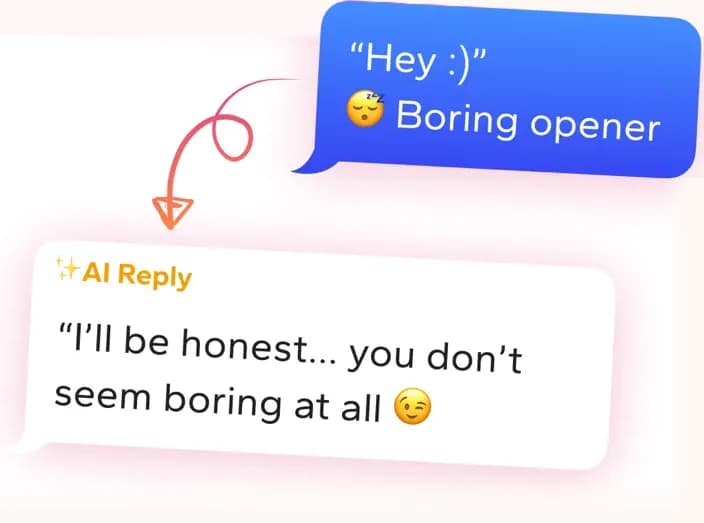
Get replies that sound like you
Screenshot the conversation in WingAI. It reads the vibe and gives you natural replies for this exact situation.
Try for freeRizz AI Screenshot the chat and get the next message for this person.
She's testing whether you disappear when things aren't easy
Personal stuff is the first filter. Some people ghost the second someone mentions real life, and she's checking if you're one of them. She's not asking for your life coach energy or a therapy session. She just told you something true instead of keeping the convo light and surface level.
What she's really watching for: Will you bail? Will you get uncomfortable? Will you make it weird? Will you suddenly demand emotional labor from her? A solid reply says no to all of it. You stay put, you keep the tone warm, and you don't pretend you didn't hear her.
Acknowledge it once, then don't force her to talk about it
Your reply needs to land two things. First, show that you actually heard her and her stuff matters. A one-liner dismissal tells her you didn't. Second, give her control over what comes next. Don't interrogate her about it or act like now you're suddenly her confidant.
This means a short, direct acknowledgment followed by enough space for her to either open up or move on. If she wants to vent, she'll do it. If she just needed to mention it and move past it, let her. The move is: I'm here, this registers with me, no pressure either way.
Wait for her to bring it up again before checking in
After your reply, sit in it for a bit. Don't send three follow-ups asking how she's doing or if things got better. That flips the power dynamic. You become the one asking her for emotional updates, and she has to manage your concern on top of her actual problem.
If she mentions it again in a future text, then you can go a little deeper. If she doesn't, that's fine. She told you she was dealing with something and you didn't freak out or disappear. That's the whole job. If she goes dark for a few days, don't take it personal. Give it time. When things settle, she'll text back.
Why these replies fail
“Oh no, do you want to talk about it? I'm here for you”
Sounds like you're offering therapy services and puts pressure on her to process it with you when she may not be ready or want to.
“That sucks. Anyway, what are you up to this weekend?”
Acknowledges then immediately dismisses it, like you didn't really hear her or think it mattered.
“Yeah man, family is rough. My parents have been terrible to me my entire life, so I get it”
Hijacks her moment to make it about your stuff and centers your pain instead of staying with hers.
Common mistakes
- Going into advice mode or trying to solve it for her when she just needs acknowledgment
- Responding with 'sorry to hear that' and nothing else, which reads as dismissive
- Turning it around to your own problems or trauma instead of staying with her
- Disappearing or going silent because you think giving space means ghosting
- Asking a ton of follow-up questions like you're interviewing her about it
Questions people ask
- Should I ask her to tell me more about what's going on?
- Not in your first reply. Let her volunteer. A gentle acknowledgment without questions gives her room to open up if she wants to. If she brings it up again, then you can ask one or two real questions, but lead with listening, not interrogation.
- What if she doesn't text back for a few days after mentioning it?
- That's normal. She might be busy dealing with it, or she needed to tell you but isn't in the headspace to text. Don't send follow-ups. When she's ready, she'll text. If it's been over a week with zero contact, one low-pressure message is fine. After that, accept the fade.
- How do I know if this is serious or if she's just venting?
- You don't at this stage. Don't guess. Just respond as if it matters to you, because to her it does. If it's a bigger deal, she'll tell you more. If it's surface-level venting, your solid reply still lands the same way.
- Should I try to make her feel better or cheer her up?
- No. Don't send memes, jokes, or pep talks to distract her. Acknowledge what she said is real, then leave it alone. If she wants a mood lift, she'll ask or steer the conversation that way herself.
What people say after using WingAI
“I overthink every text. Having three options and picking the one that sounds like me cut that spiral short.”
Sam R.
“I was skeptical at first. Then I tried it on a dry chat and the replies actually sounded like me, not a chatbot.”
Mazoonx
“I'm busy and half the profiles give you almost nothing to work with. WingAI gets me a solid first line fast without me staring at the screen for ten minutes.”
Ralph
Get replies that sound like you
Screenshot the conversation in WingAI. It reads the vibe and gives you natural replies for this exact situation.
Try for free