What to say when he texts you that he's nervous about meeting in person
He told you he's nervous about meeting. Here is the tone to take, what to include, what to skip, and how to adjust once you see how he answers.
When someone texts that he's nervous about meeting, he is usually doing a small, risky thing. He has handed you a soft spot and is waiting to see what you do with it. Some people say it to lower the pressure on themselves, so a mediocre first impression feels forgiven in advance. Others say it because the nerves are loud and they can't keep it in. Either way, the message is less a request for help than a quiet check on whether you are safe to be a little exposed around.
Your goal is narrow. You want him to feel that his honesty landed fine, and that the plan to meet is still on and still welcome. That means a warm, brief acknowledgment, a steady tone, and some forward motion. You are not trying to cure anything, diagnose where the jitters come from, or prove how great you are. If your reply makes him feel handled, he will feel more watched, not less.
Timing matters more over text than people expect. If the meetup is days away, his nerves have room to grow, and a calm, prompt reply keeps them from snowballing. If it is tonight or tomorrow, a long emotional exchange can make the whole thing feel heavier than a coffee or a walk should. Match the size of your message to how close the date is. Far off, you can be a bit more playful. Close in, keep it plain and practical.
The replies that backfire tend to fall into a few patterns. Heavy reassurance reads as if you think his fear is a problem to be argued away. Probing questions turn a passing comment into an interview about his inner life. Joking at his expense stings because he just showed you something tender. And mirroring with your own long confession shifts attention to you and leaves him managing your feelings too. A light, specific, kind response avoids all of these.
How he answers tells you what to do next. If he relaxes, jokes back, or offers a time and place, you have your signal to build the plan and stop discussing nerves. If he repeats the worry or adds apologies, don't pile on comfort. Stay even, keep it short, and nudge toward something concrete. If he goes quiet for a day or more, don't send a chain of follow-ups. One easy, low-pressure message later is plenty, and his response to it will tell you how he really feels about meeting.
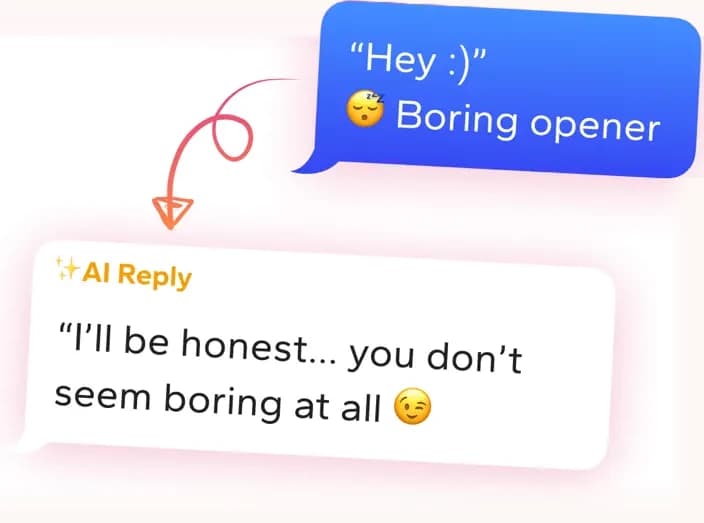
Get replies that sound like you
Screenshot the conversation in WingAI. It reads the vibe and gives you natural replies for this exact situation.
Try for freeAcknowledge it in a few words
Give his nerves a quick, warm nod and leave it there. Something that says you heard him and that it's fine is enough. You can point to a detail from earlier in your chat, like a thing he's been looking forward to or a shared joke, so he feels your interest is tied to him specifically and not to some performance he's afraid of botching. Tone should be relaxed, a little amused if that fits how you two already talk, never solemn. Skip the long paragraph. A brief message tells him the admission was not a big deal to you, which is exactly what he hopes to learn.
Point the message at the plan
After the short acknowledgment, steer toward the meetup itself. If a date and place already exist, mention something low-stakes about it, like a spot you're curious about or how little you need from the evening. If nothing is set, suggest a specific day and a simple setting. Casual, short, daytime options tend to lower the sense of being on stage. Concrete details shrink uncertainty, and uncertainty feeds nerves. Keep your wording easy, with no pressure to agree instantly, so he can say yes without feeling cornered by his own confession.
Adjust to what he sends back
Read his reply for energy, not just words. If he loosens up, matches your humor, or starts sorting out logistics, follow his lead and stop revisiting the nerves. If he doubles down on worry or apologizes, keep your next message calmer and shorter than the last, and keep moving toward a plan. If he mentions wanting to postpone, stay friendly and open, offer one alternative, and avoid sounding hurt. If he goes silent, let a day pass before one light check-in. Your steadiness across all of these is what makes meeting you feel safe.
Questions people ask
- Should I tell him I'm nervous too?
- Only if it's brief and light, and only if it comes naturally. A quick shared admission can even things out, but a long confession shifts the focus to you. If you do mention it, keep it to a few words and move straight on to the plan.
- What does it mean when someone says he's anxious to meet you?
- Usually it means the meeting matters to him and he's worried about how it will go. It can also mean plain jitters about meeting someone new. Context decides it. If he's still planning and replying warmly, it reads as investment, not reluctance.
- What if he keeps bringing up his nerves?
- Stay calm and keep each reply shorter than the last. Acknowledge it once, then steer toward a concrete plan. Repeated reassurance can feed the worry. If it continues, suggest meeting somewhere low-key and brief so the anticipation stops growing.
- Should I still plan the date if he's nervous?
- Yes, unless he asks to wait. Offer a specific, easy option like a short daytime meetup. A clear plan reduces the unknowns that fuel nerves. If he wants a delay, respond kindly and suggest one alternative without pressing.
Why these replies fail
“Omg don't be nervous, there's literally nothing to worry about, it's going to be amazing!”
Insisting there's nothing to fear brushes aside what he just admitted and makes him feel he has to perform being fine.
“What exactly are you nervous about? Is it me? Is it dating in general?”
Questioning the source turns one honest line into an interrogation and makes him defend feelings he only wanted to mention.
“Lol okay so you're gonna be a mess then, can't wait to see it”
Teasing him right after he showed a soft spot punishes the honesty and gives him a reason to be guarded next time.
Common mistakes
- Writing a long, emotional reply that treats a passing comment like a crisis and makes the meetup feel heavier than it is.
- Asking him to explain or analyze his nerves, which forces him to defend something he only wanted to mention.
- Waiting a day or more to respond because you can't find the perfect words, which leaves his worry unanswered and growing.
What users say
“I overthink every text. Having three options and picking the one that sounds like me cut that spiral short.”
Sam R.
“I was skeptical at first. Then I tried it on a dry chat and the replies actually sounded like me, not a chatbot.”
Mazoonx
“Used it for a couple hours and set up a date the same night. Not even kidding.”
Nikola2214
Get replies that sound like you
Screenshot the conversation in WingAI. It reads the vibe and gives you natural replies for this exact situation.
Try for free