What to say when he apologizes for mixed signals and uncertainty
He's apologizing for confusing behavior and says he's figuring himself out. How to respond without letting him off the hook.
When a guy apologizes for mixed signals and adds that he's 'trying to figure himself out,' he's doing two things at once. He's acknowledging the mess he created, which is good. But he's also asking for patience and a reset without fully committing to change. This is a moment where your reply sets the tone for what comes next.
A good reply doesn't pretend the apology solves anything. It also doesn't reject him outright. Instead, it holds him accountable while leaving room for him to actually figure it out, separately from you. The move is to acknowledge the apology, state what you need to see, and create space without waiting around. This prevents you from becoming his emotional lab where he 'figures himself out' while you sit in limbo.
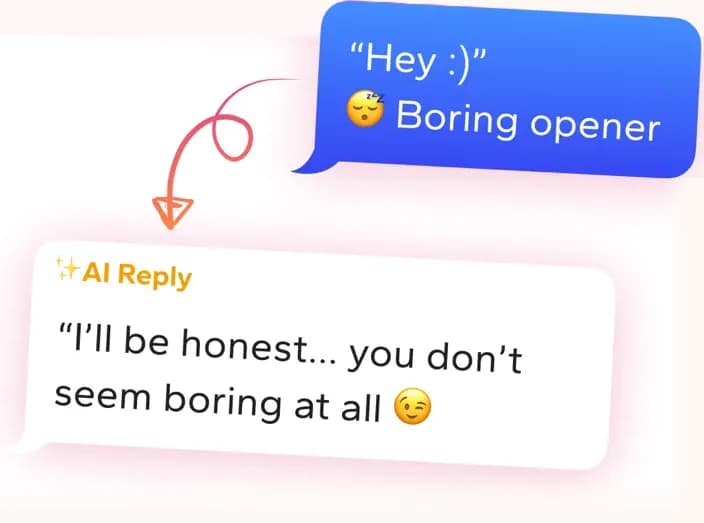
Get replies that sound like you
Screenshot the conversation in WingAI. It reads the vibe and gives you natural replies for this exact situation.
Try for freeThe 'figuring myself out' softener tells you something
When someone apologizes for mixed signals but frames it as self-discovery work in progress, they are asking for a probation period rather than a real restart. This is different from an apology paired with a concrete change. 'I'm figuring myself out' means the situation that hurt you is still active and unresolved on his end.
This doesn't make him a bad person. But it does mean he is not in a position to give you clarity or consistency right now. The apology is real. The uncertainty is also real. Your job is to recognize both and decide whether you want to be around someone in that state, not to help him resolve it faster by being patient and available.
Your reply needs to separate his process from your decision
A strong reply does three things. First, it acknowledges the apology without dismissing what happened. Second, it clearly states what you need going forward, not what he needs. This might be consistency, honesty, or just space. Third, it removes you from the role of waiting room. You are not pausing your life while he figures things out.
The reply should feel like you are making a choice, not accepting a provisional arrangement. He gets credit for apologizing. He doesn't get a free pass to keep you uncertain while he works through his stuff. Both of these things can be true in your message.
Send it once and let the follow-up tell you what you need to know
Reply within 24 hours while the apology is fresh. Keep it short so there's no room for him to negotiate or explain further. Once you send it, stop responding to that thread. If he comes back with a real change in behavior over the next week or two, you will see it in his actions, not his words.
If you don't hear from him, that tells you he was hoping the apology would buy him time, not that he was serious about figuring things out. If he does message you back, it should not be another explanation. It should be him showing up differently. Don't respond to text walls about his situation. Only respond when his behavior matches what you said you needed.
Why these replies fail
“Hey no worries at all! I know you're going through stuff. Take whatever time you need, I'm here for you.”
This removes your boundary entirely and signals you will wait around while he figures himself out, which is exactly what he was hoping for.
“Okay so what are you trying to figure out exactly? I want to understand where you're coming from.”
This puts you in support mode, asking about his process instead of stating yours, and extends the conversation in a way that keeps you invested in his clarity.
“I appreciate the apology but honestly I can't keep doing this. Don't contact me again.”
This closes the door completely before he has a chance to actually change, which may be what you want, but it doesn't give him the option to step up if he's ready.
Common mistakes
- Accepting the apology as resolution and jumping back into texting like nothing happened
- Saying 'take all the time you need' which signals you'll wait indefinitely
- Turning it into a therapy session about his stuff instead of yours
- Making it easy for him by saying 'don't worry about it' when you were actually hurt
- Asking what he's figuring out, which puts you in support mode instead of decision mode
Questions people ask
- Should I ask him what he's figuring out or just leave it alone?
- Leave it alone. Asking him to explain his internal process puts you in the role of therapist and shifts focus to understanding him instead of your own needs. Let his actions show you what he's figured out.
- How long should I wait to see if he actually changes?
- Give it two to three weeks of actual interaction before you decide anything. One good text doesn't count as change. Watch for consistency in how he shows up, whether he follows through on plans, and if he's still flaky or distant.
- What if he comes back and says he's figured it out now?
- Believe actions, not words. Ask yourself if the behavior actually shifted or if he just promised better. One good week doesn't erase a pattern. Real change is boring and consistent, not dramatic.
- Is it okay to stay friends if the romantic thing doesn't work out?
- Only if there's real distance first. Trying to be friends immediately after mixed signals usually means one person is still hoping for more. Give it at least a few months before you consider that.
What people say after using WingAI
“I overthink every text. Having three options and picking the one that sounds like me cut that spiral short.”
Sam R.
“I was skeptical at first. Then I tried it on a dry chat and the replies actually sounded like me, not a chatbot.”
Mazoonx
“Didn't think it would be this good. The funny options actually get responses, which is wild.”
Nico_dang
Get replies that sound like you
Screenshot the conversation in WingAI. It reads the vibe and gives you natural replies for this exact situation.
Try for free