What to say when he reveals fear of being hurt again
He's opened up about past relationship trauma. Learn how to respond in a way that honors his vulnerability without taking on his emotional baggage.
When someone tells you they're scared of being hurt like before, they're doing two things at once. They're being vulnerable, which is good. But they're also testing whether you'll run, dismiss them, or try to fix it. This is a moment where your reply sets the tone for how safe he feels with you.
A solid reply doesn't minimize his fear or promise him a guarantee you can't keep. It also doesn't become a therapy session where you're suddenly responsible for healing his past. The goal is to show you heard him, stay steady, and keep moving forward without making this conversation the center of the relationship.
His words matter, but they're not a prediction. People who've been hurt often default to protecting themselves. Your job is to respond in a way that shows you're different without having to say it directly.
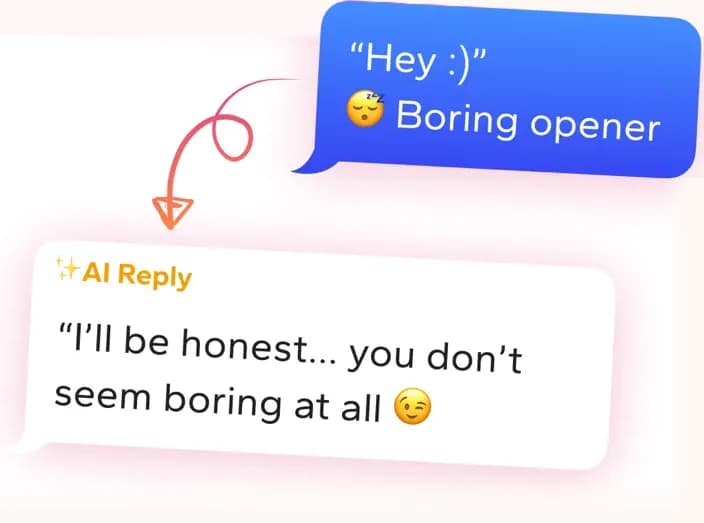
Get replies that sound like you
Screenshot the conversation in WingAI. It reads the vibe and gives you natural replies for this exact situation.
Try for freeRizz AI Screenshot the chat and get the next message for this person.
He's testing whether you'll stay steady
This isn't just emotional venting. He's watching to see if you panic, get defensive, or suddenly try to become his therapist. People who've been hurt learn to read how others respond to their wounds. If you react with shock or overwhelm, he'll assume you can't handle him. If you go quiet, he'll assume you're judging him or losing interest.
What he needs is someone who can sit with what he said without making it a bigger deal than it is. He's not asking you to fix his past. He's telling you something real exists in him, and he's checking if you'll stay in the conversation.
Acknowledge him without taking the weight
Your reply needs to do two jobs. First, show you actually heard what he said and it landed with you. Don't brush past it or act like it's no big deal. Second, stay grounded instead of trying to be his savior. This means you can validate his fear without promising to be different from every person who came before, and without asking him to process his trauma with you right now.
The move is simple: recognize what he shared, name something concrete about how you see him or this, and keep it short. Long replies can feel like you're trying too hard to convince him you're safe. That actually does the opposite.
Wait for him to open more before digging into his past
Don't ask about his ex or what happened unless he brings it up first. He told you he's scared. That's the information he chose to give. Asking for the full story right now can feel like you need details to decide if he's worth the risk, which puts pressure on him to convince you.
If this relationship moves forward, he'll tell you more when he's ready. Your job in this moment is to respond to what he actually said, not to investigate. If he wants to talk more, he'll keep going. If he doesn't, let it breathe. A follow-up text after a few days showing you're still interested will say more than any question about his past.
Why these replies fail
“I promise I would never hurt you like that. You can trust me.”
You're making a promise about your own behavior that nobody can guarantee, which can feel desperate and puts pressure on him to believe you.
“That sounds really painful. Do you want to talk about what happened? I'm here for you.”
You're shifting into therapist mode and asking him to process his past with you right now, which can feel like a lot of pressure and makes the conversation about his wound instead of about you two.
“Okay well everyone gets hurt sometimes, so you'll be fine.”
You're minimizing what he shared and making it sound like his specific fear is no different from anyone else's, which tells him you didn't really hear what he was saying.
Common mistakes
- Overcompensating with 'I would never hurt you' or promises you can't control
- Turning it into a long reassurance text that makes it all about calming his anxiety
- Asking for details about his ex or past pain when he didn't volunteer them
- Going silent because you're afraid of saying the wrong thing
- Treating his fear as a red flag instead of a normal human reaction to past damage
Questions people ask
- Should I reassure him that I'm not like his ex?
- Not directly and not yet. Comparing yourself to his ex puts you in a position where you're trying to prove you're different, which is his job to figure out over time. Show him through your actions instead. A simple acknowledgment of what he said is enough for now.
- What if I don't know how to respond and I'm worried about saying the wrong thing?
- Short and honest is better than long and perfect. You can say something like 'I hear you' or 'That makes sense' and ask what he needs from you right now. Asking is better than guessing, and it shows you care about getting it right.
- How long should I wait before reaching out again after he says this?
- Let him respond to your first reply. If he goes quiet after you've replied, give it a day or two, then send something light or unrelated to show you're still interested in him. Don't make your next message about his fear. Move forward naturally.
- Is this a sign the relationship won't work out?
- No. People who've been hurt often say this early on because they're being honest about their defenses. It's actually useful information. How he handles his own fear and how you handle his honesty matters more than the fear itself.
What people say after using WingAI
“I overthink every text. Having three options and picking the one that sounds like me cut that spiral short.”
Sam R.
“I was skeptical at first. Then I tried it on a dry chat and the replies actually sounded like me, not a chatbot.”
Mazoonx
“Used it for a couple hours and set up a date the same night. Not even kidding.”
Nikola2214
Get replies that sound like you
Screenshot the conversation in WingAI. It reads the vibe and gives you natural replies for this exact situation.
Try for free