What to Say When He Says This Won't Work Out
He said it won't work out, and now you have to answer. Here's the tone, content and timing that protect your dignity and leave room for an honest conversation.
When someone tells you he doesn't think this is going to work out, the sentence can mean very different things. Sometimes it is a settled conclusion he has been carrying for weeks. Sometimes it is a flinch, said in a bad mood or after an argument, by a person who is overwhelmed and reaching for the exit. Sometimes outside pressure is behind it: a job, a move, an ex, a family situation he has not explained. You cannot tell which from the words alone, and your reply should not pretend you can. It should work whichever one is true.
Your aim is modest and realistic. You are not trying to win him back in one message, and you are not trying to punish him. You want to show that you heard him clearly, that you are steady, and that you will not argue for a place he has said he does not want. That leaves you with your self-respect whatever happens next. It also gives him room to be honest, which pleading never does, because people who feel pressured tend to dig into whatever they said first.
Timing and channel shape this more than people expect. A text that lands during a heated stretch is read through that heat, so a reply sent in the first rush of hurt will carry more edge than you intend. Give yourself a gap long enough to write something you would still stand behind the next morning, but do not turn the silence into a strategy or a power play. If he said it by text, a short text back is fine. If he said it in person or on a call and followed up in writing, match the seriousness of what happened. Do not answer a long, careful message with a single flippant line.
Most replies go wrong in a handful of predictable ways. Interrogating him for reasons turns your message into a cross-examination, and he will either defend himself or go quiet. Apologizing for things you may not have done hands him a verdict he never asked for. Sarcasm and sudden coldness feel satisfying for a minute and then read as proof the whole thing hurt more than you admitted. A wall of paragraphs explaining how you feel gives him a lot to react to and no easy way to respond kindly.
What he does next tells you more than your message can. If he softens, clarifies, or says he spoke too fast, you can decide calmly whether you want to hear more. If he agrees and says little, believe him and let the conversation end gracefully. If he goes silent, do not decode it hour by hour. Silence after a message like this is usually information about his capacity right now, not a puzzle about your wording. Notice whether his follow-up matches his first statement, and let consistency, not mood, decide what you do.
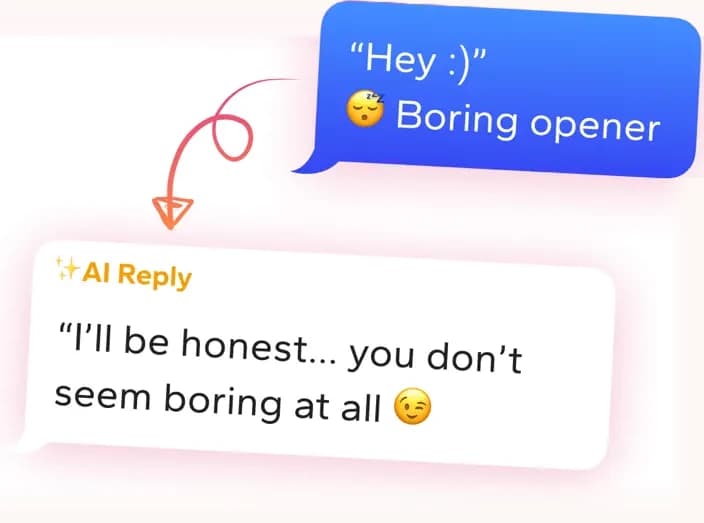
Get replies that sound like you
Screenshot the conversation in WingAI. It reads the vibe and gives you natural replies for this exact situation.
Try for freeWhat not to send
“wait what?? where is this coming from, we were fine yesterday, you can't just say that”
It opens with shock and challenge, which pushes him to defend a statement he may only half mean instead of explaining it.
“ok no worries, honestly I was getting bored too, good luck with everything lol”
Pretending it does not matter reads as a retaliation line, and it closes off any chance he had of walking back an impulsive comment.
“I'm so sorry for whatever I did, I'll change anything you want, please just tell me what to fix”
It accepts blame for a decision he has not explained and hands him control over the whole conversation.
Match his tone, then stay steady
Read how he said it before you write anything. A short, flat message deserves a short, even reply. A long, apologetic one deserves warmth and a little more room. Your message should sound like you on a calm day, not you in the first hour of hurt. Acknowledge what he said in plain words, mention that you would rather he be honest than string things along if you mean it, and stop. Leave out arguments about how good things were. Those belong in a conversation, if he wants one, not in the first reply. Keep the length close to his so neither of you feels outweighed.
Include one honest line about you
A reply with no feeling in it can come across as a shrug, and that is not the goal. One honest sentence about where you stand works well: that it is disappointing to hear, or that you were taken a bit by surprise. Say it without blame and without asking him to fix it. That tells him you are a person with a reaction, not a wall, while still asking nothing of him. If you want to leave a door open, a light acknowledgment that you are willing to talk if he wants to is enough. Do not attach a deadline or a condition.
Adjust once you see his answer
His second message is where you learn what the first one meant. If he explains something specific, such as stress, timing, or doubt about the distance, respond to that point calmly and offer a call or a meeting instead of trading paragraphs. If he doubles down kindly, thank him for being straightforward and let it end there. If he gets defensive, do not match it. If he says nothing, one message was your turn, so do not add a second. Take a day, then decide on your own terms whether you want closure or simply distance.
Mistakes to avoid
- Sending a long, emotional message within minutes, which tends to say more than you meant and gives him far more to react to than he asked for.
- Treating his statement as an opening bid and arguing for the relationship before he has said anything about why he feels this way.
- Sending follow-up messages after the first one because the silence feels unbearable, which blurs the clear tone you started with.
Frequently asked
- Should I ask him why he thinks it won't work out?
- Not in the first reply. A reason is useful, but asking straight away can sound like you are negotiating. If you still want to understand after a day or two, ask once, kindly, and preferably on a call. Be ready to hear an answer you may not like.
- Is it okay to show I'm hurt in my reply?
- Yes, in small doses. One honest sentence that this is disappointing is fine and often helps. What backfires is blame, pleading, or a long account of your feelings. Keep it short enough that he can respond kindly instead of defensively.
- What if he says he spoke too soon after I reply?
- Take it seriously, but do not rush back in. Ask what changed and listen for specifics, not just apologies. A call is better than a text thread for this. Decide whether his explanation matches how he has behaved, and give yourself time before agreeing to anything.
- What should I do if he goes quiet after I reply?
- Leave it alone. Sending follow-ups after one clear message weakens it and keeps you stuck. There is no reliable timetable for what silence means, so stop measuring it. Spend your energy on your own routine, and decide for yourself whether you want to reach out later for closure.
Real user feedback
“I was skeptical at first. Then I tried it on a dry chat and the replies actually sounded like me, not a chatbot.”
Mazoonx
“Used it for a couple hours and set up a date the same night. Not even kidding.”
Nikola2214
“I overthink every text. Having three options and picking the one that sounds like me cut that spiral short.”
Sam R.
Get replies that sound like you
Screenshot the conversation in WingAI. It reads the vibe and gives you natural replies for this exact situation.
Try for free