What to say when he disrespects you in a text
He sent something rude and you're deciding how to answer. Here is the tone, content, and timing that sets a clear boundary without a fight.
Start with what is probably happening on his end. A disrespectful text often comes from carelessness, a bad mood, or a habit of testing how much slack you will give. Sometimes he meant it as a joke and misjudged. Sometimes he knew exactly what he was doing. You cannot tell from the outside, and your reply does not need to decide. It only needs to address what the words did when they landed.
Your aim is narrow. You want him to understand that this particular comment crossed a line, and you want to leave room for him to behave differently. You are not trying to win, make him feel guilty, or extract an apology on the spot. A message built around those goals turns into a debate about his intentions, and he will happily argue intentions all night. A message built around the boundary leaves him with little to argue about.
Text changes the situation in useful ways. He cannot interrupt you, soften his tone mid-sentence, or watch your face and adjust. What you write is the whole performance. That also means every extra word is a place for him to grab. Hurt feelings, long justifications, and rhetorical questions all give him material to respond to instead of the original comment. Keep the message plain, steady, and short enough to read at a glance. Specific wording about what he said works better than a broad verdict on his character.
What tends to backfire is heat in either direction. Sarcasm reads as playing along with the dig. Cold silence can look like you did not notice or do not mind. Flirty banter, however tempting as a way to stay likable, tells him the comment was fine and you enjoyed it. A sweeping ultimatum before he has had one chance to correct himself closes a door you may not want closed. Over-apologizing for being sensitive undercuts the whole point. Aim for the tone of someone mildly unimpressed and entirely serious.
His response shows you far more than your message did. A real acknowledgment, even a clumsy one, is a good sign. Deflection, jokes about you being dramatic, or an apology that arrives with a but attached tell you he is protecting himself instead of listening. You do not need to answer every reaction. If he gets defensive, you can restate the boundary once in a single line or let it stand. Then watch his behavior over the next few conversations, because that is the only evidence that counts.
Name the exact thing he did
Vague reactions leave him room to misread you. Pick the specific quality of his comment, such as dismissive, mocking, or condescending, and say that plainly. Refer to the actual remark so he cannot claim confusion about which part bothered you. Skip commentary on his character, his upbringing, or what kind of man he is. That invites a fight about who he is instead of a decision about what he does next. Keep the tone level, like you are reading a fact off a page. If he said something about your job, your friends, or your appearance, pointing to that topic by name makes the message land harder than any adjective.
State what you expect going forward
A boundary needs a forward direction, otherwise it sounds like a complaint. Include a clear statement that this kind of comment is not something you will accept, phrased in the present tense and without a threat attached. You are describing your own limit, not predicting his punishment. Avoid asking him to explain himself or promise anything, because requests for explanations hand him the chance to talk his way sideways. Leave the next step in his hands. If he is interested in you and capable of adjusting, he will. If he is not, you will find out quickly, and the brevity of your message makes that easy to see.
Adjust to how he answers
If he apologizes plainly, you can accept it in a sentence and move on without rehashing. If he apologizes with a qualifier, such as saying you took it the wrong way, you do not owe a debate. Acknowledge nothing more than that you heard him, or restate your limit once. If he mocks the message or calls you sensitive, do not defend your feelings. You have already said what you needed to. Silence after that is a fine reply. If he goes quiet entirely, resist the urge to chase him with clarification. Let his next move, or lack of one, tell you what you wanted to know.
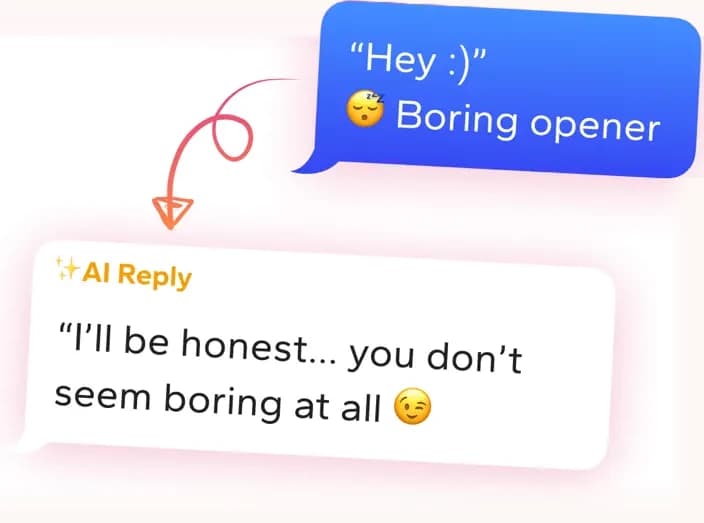
Get replies that sound like you
Screenshot the conversation in WingAI. It reads the vibe and gives you natural replies for this exact situation.
Try for freeWhy these replies fail
“wow. i can't believe you'd say that to me. i'm really hurt. i thought you were different”
It turns the focus onto your pain and his hidden character, which lets him respond with apologies about your feelings instead of owning the comment.
“haha you're so rude, i like a guy who teases me, keep it coming”
Playing along with the dig tells him the disrespect worked as charm, so he has no reason to stop and may escalate.
“that was out of line and i honestly don't know why i keep putting up with this from you, you always do this and i'm so tired of it, so explain yourself”
Piling on past grievances and demanding an explanation turns a clear boundary into a trial, and he will argue the history instead of the comment.
Questions people ask
- Should I reply right away or wait until I cool down?
- Reply within a few hours if you can, once you are calm enough to be brief but still mean it. Replying instantly while angry tends to produce long, emotional messages. Waiting days makes the boundary look like an afterthought and lets him assume you were fine with it.
- What if he says he was just joking?
- A joke can still be disrespectful, and you can say so in one line. You do not need to prove his intent. If you told him it landed badly and he keeps insisting it was a joke, that response is information about how he handles your limits.
- Is it okay to just stop replying instead of saying anything?
- Yes, if the comment was bad enough that you do not want to continue. Silence is a legitimate answer. If you want to see whether he can change, though, a short direct message gives him a fair chance, and silence gives him nothing to learn from.
- What if I'm worried I'm overreacting?
- Ask whether you would be comfortable if a friend received that text from someone they were dating. If it made you feel small, mocked, or brushed off, that is enough reason to respond. A calm, short reply is not an overreaction, however minor the comment seemed to him.
Common mistakes
- Answering with sarcasm or a joke to keep things light, which tells him the comment was acceptable and gives him a reason to repeat it.
- Writing a long message that explains your history, your feelings, and your standards, so the actual boundary gets buried and he picks the easiest part to argue with.
- Following up with extra texts when he is slow to answer, which turns a clear statement into a pursuit and weakens the point you just made.
What users say
“I was skeptical at first. Then I tried it on a dry chat and the replies actually sounded like me, not a chatbot.”
Mazoonx
“She went cold mid-week and I had no idea what to say. The reply I sent felt natural and she picked the chat back up.”
Marcus T.
“I overthink every text. Having three options and picking the one that sounds like me cut that spiral short.”
Sam R.
Get replies that sound like you
Screenshot the conversation in WingAI. It reads the vibe and gives you natural replies for this exact situation.
Try for free