What to say when he hurt you and you need a response
How to reply when he's done something wrong. Address the hurt directly, set a boundary, and give him a real chance to fix it.
When someone hurts you, your first instinct is often to either blow up or stay silent. Neither works. A good reply acknowledges what happened, makes clear why it matters, and leaves room for him to actually respond to you instead of just react.
The point isn't to punish him or test whether he cares. It's to tell him what you need so he can choose to step up. If he doesn't, you'll know. If he does, you've got real ground to build from.
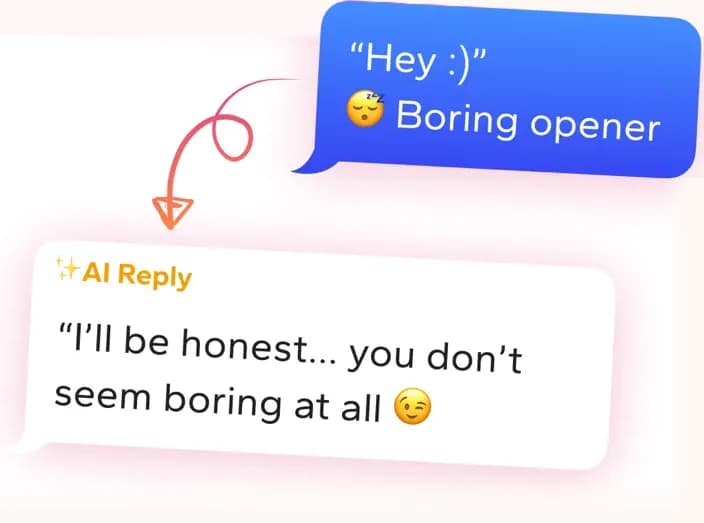
Get replies that sound like you
Screenshot the conversation in WingAI. It reads the vibe and gives you natural replies for this exact situation.
Try for freeRizz AI Screenshot the chat and get the next message for this person.
He's either defensive or doesn't realize the impact yet
When someone hurts you, they're usually in one of two states. Either they know what they did and are bracing for backlash, or they don't understand why you're upset. Your message will land differently depending on which one he is. Read the context: did he dismiss you when it happened, or did he just move on like nothing went wrong?
If he was dismissive, he's already defensive. If he seemed oblivious, he needs the information before he can care. Either way, your job is to give him the specific truth, not make him guess or defend himself against something unspoken.
Name what happened, then why it mattered
A reply that works does two separate things. First, it tells him exactly what he said or did. Not a label like 'you were mean,' but the actual thing: what words he used, what action he took, what he chose not to do. Second, it explains the impact. What did that do to you? How did it make you feel or what did it make you question?
He needs both pieces. The specific action anchors him in reality instead of his own memory of it. The impact tells him why this isn't just you being sensitive. Then leave a tiny bit of space for him to respond, not defend.
Send it when you're steady, not at 2am or mid-spiral
Timing matters. If you write this right after it happened, you're still flooded. Wait long enough that you can say it clearly without shaking or crying or typing in all caps. That usually means a few hours, sometimes a full day.
Send it at a normal hour when he's likely to actually read it and think about it, not dismiss it as drama. Then wait for his response. If nothing comes back in 24 to 48 hours, send one follow-up that's a question, not a restatement. If he ghosts after that, you have your answer about whether he's worth more time.
Why these replies fail
“you always do this and frankly it's exhausting. you never listen to me.”
Starts with a pattern complaint instead of the specific thing he just did, which makes him argue about whether he 'always' does it instead of facing what actually happened today.
“fine. whatever. if you don't care, just say so.”
It's sarcasm with a question hidden inside. He can't reply to it because it's not a real statement, just a trap to see if he'll chase you.
“when you said my job was pointless it really hurt me and now i'm wondering if you even respect me as a person.”
Jumps straight from one comment to a huge existential doubt about the relationship, which makes the issue feel bigger than it is and forces him to defend the entire relationship instead of just addressing the moment.
Common mistakes
- Staying vague about what hurt you ('you know what you did') so he can apologize to the idea of wrongdoing instead of the actual thing
- Leading with anger or sarcasm before stating the hurt, which makes him defensive instead of reflective
- Asking if he cares or if the relationship matters instead of just saying what you need
- Sending multiple follow-up messages before he's had time to process and respond
- Mixing in complaints about other things he's done, which dilutes the current issue
Questions people ask
- Should I wait for him to apologize first, or tell him he hurt me?
- If he hasn't acknowledged it, you need to tell him. Don't wait for an apology that might not come. Being clear about what hurt you gives him the actual information he needs to choose whether to step up. Waiting just leaves you stuck.
- What if he says I'm overreacting or too sensitive?
- That's him being defensive instead of listening. You can respond once more with 'I'm not asking you to feel the same way about it, just to understand why it landed the way it did for me.' If he won't meet you there, that tells you something real about how he handles things going wrong.
- How do I know if this is worth a conversation or if I should just let it go?
- If it's still bothering you hours later, it's worth saying something. You're not overreacting by speaking up. The question isn't whether your feelings are justified. It's whether this person is someone who'll listen when you tell him something mattered to you.
- Should I give him an out by saying 'I know you didn't mean to'?
- No. Don't soften it by excusing his intentions. You don't know what he meant. Just tell him what happened and why it hurt. Let him decide if he wants to clarify his intent or make it right. That's his move.
What people say after using WingAI
“I overthink every text. Having three options and picking the one that sounds like me cut that spiral short.”
Sam R.
“I was skeptical at first. Then I tried it on a dry chat and the replies actually sounded like me, not a chatbot.”
Mazoonx
“I always freeze on the first sentence. This gets me past that blank box so I actually hit send.”
joejoe4567
Get replies that sound like you
Screenshot the conversation in WingAI. It reads the vibe and gives you natural replies for this exact situation.
Try for free