What to say when she'd rather keep chatting on the app
She wants to stay on the app before swapping numbers. Here's how to read that, what your reply has to do, and when to follow up without pushing.
When someone says she'd rather message on the app first, she is usually telling you two things at once. She likes the idea of getting to know you, and she isn't ready to hand over a number to someone she has barely talked to. Both are normal. The problem is that most people hear the second part as a rejection and start negotiating for the number, which makes her more cautious.
A good reply accepts the app-first preference without making it a contest. It keeps the conversation moving on something she actually cares about, so that the number becomes the obvious next step rather than a request. You are not trying to win the number in one message. You are trying to make the conversation good enough that staying on the app stops feeling like a limit.
The practical goal is simple: one clear, relaxed reply that shows you heard her, then a conversation that gives her a reason to want to continue. If she gets curious about you, the number follows on its own.
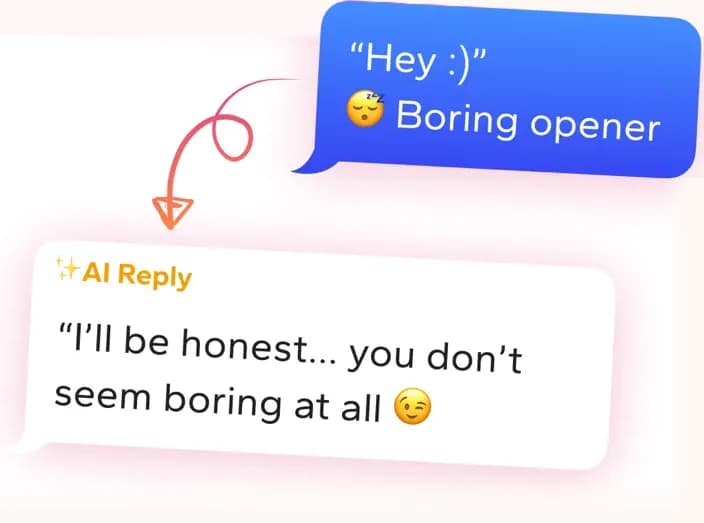
Get replies that sound like you
Screenshot the conversation in WingAI. It reads the vibe and gives you natural replies for this exact situation.
Try for freeRizz AI Screenshot the chat and get the next message for this person.
Read the preference as a pace signal
Hearing "I'd rather stay on the app" is information about speed, not about you. People who say this usually have a few reasons: they match with a lot of people, they've had a bad experience giving out a number, they like the slower build, or they simply want to see how the conversation holds up first. Her profile tells you more than the sentence does. If her prompts are detailed and she answers your messages with real effort, she is interested in talking and just wants the conversation to carry more weight before it moves. If her replies are short and she has stopped asking you questions, the preference may be a polite way of cooling off. Notice which of those you are looking at before you decide how hard to push.
Your reply should answer her and then give her something to talk about
The first job of your reply is to make it obvious you heard her and are fine with it. A casual "sure, no problem" does this better than any explanation. The second job is to hand her a reason to keep going. Pick something specific from her profile or from earlier in the chat and ask a question that she can answer in a few sentences. Good questions open a small story: a place she mentioned, a playlist you could argue about, a plan she has for the weekend. The third job is to keep your energy low. You are not building a case. You are showing that the conversation is fun on its own terms, so that the number becomes something she might offer once she is curious, rather than something she has to decide on while being asked.
The week of silence matters more than the text
Send your reply in the same part of the day she usually talks, and avoid replying at odd hours that suggest you are chasing. If she goes quiet after you respond, wait at least a day before you send anything else, and give it more time if the last exchange ended on a good note. One follow-up is reasonable if the conversation was going well and she took a while to reply. Make it a fresh question or a small observation, not a reminder that you're waiting. If there is still no reply after that, leave it. Stop after two unanswered messages in a row, and do not send anything that asks her to explain herself. If she comes back later, pick up where you left off without mentioning the gap.
Why these replies fail
“Totally fair, but honestly it's way easier to just text. What's your number?”
It treats her preference as an obstacle to solve, so she has to defend it again.
“Ha okay, playing hard to get I see. Let's see if you can keep up with me on here.”
It turns the moment into a challenge and implies she is being manipulative, which makes her less likely to share anything.
“Ok sure.”
It answers her with nothing, so the conversation dies and she is left wondering whether she offended you.
Common mistakes
- Asking for the number again in the next message, which turns a preference into a standoff.
- Making a joke about her being cautious or hard to get, which reads as pressure.
- Going cold or sending a one-word reply, which makes her feel she said the wrong thing.
- Sending a long paragraph about why it would be easier on text, which feels like an argument.
- Switching to a new platform or asking for her Instagram as a workaround.
Questions people ask
- Is it a bad sign if she won't give her number after a few days?
- Not on its own. Lots of people keep matches on the app for a week or two before they share a number, especially if they match with many people. Look at the quality of the conversation instead. If she is asking you questions and making plans to talk again, the number will likely come. If replies are getting shorter and she stops initiating, that tells you more than the number ever would.
- Should I just move the conversation to Instagram instead?
- Probably not. Asking to switch to another platform is usually read as the same request in a different outfit. If she has said she prefers the app, respect that for now. You can still build the conversation there and let her decide when to share more. Pushing a different channel tends to make people more guarded.
- How long should I wait before asking for her number again?
- Give it at least several days and only if the conversation has been warm in the meantime. Ask only when she has been the one to suggest a plan or asked a personal question, because that is a sign she wants to go further. Asking again immediately after she said no, or with nothing new happening, will usually push her back.
- What if she says she wants to stay on the app but then stops replying?
- Send one short follow-up with a fresh question, then leave it for a few days. If she replies, keep the conversation light and let it develop. If there is no reply after two messages, stop. Continuing to message after that signals pressure, and it is better to let the match end cleanly than to leave it hanging with extra texts.
What people say after using WingAI
“I overthink every text. Having three options and picking the one that sounds like me cut that spiral short.”
Sam R.
“I was skeptical at first. Then I tried it on a dry chat and the replies actually sounded like me, not a chatbot.”
Mazoonx
“My openers used to be boring. Now I reference something from her profile and people actually write back.”
Aiden K.
Get replies that sound like you
Screenshot the conversation in WingAI. It reads the vibe and gives you natural replies for this exact situation.
Try for free