What to say when he apologizes for ghosting then ghosts again
He's back with an apology but already proved he'll disappear twice. How to reply without wasting more time.
This is not a first disappearance. He ghosted, came back with an apology, gained trust back, and ghosted again a month later. That's a pattern, not a mistake.
When someone does this twice, the apology matters less than the behavior. He either can't stay consistent or doesn't respect your time enough to be honest. A good reply stops treating this like a one-off mishap and responds to what's actually happening: he's shown you who he is.
Your message needs to be clear enough that he understands the cost of his pattern, not angry enough that you sound reactive. You're not forgiving him again. You're closing a door he's already walked through twice.
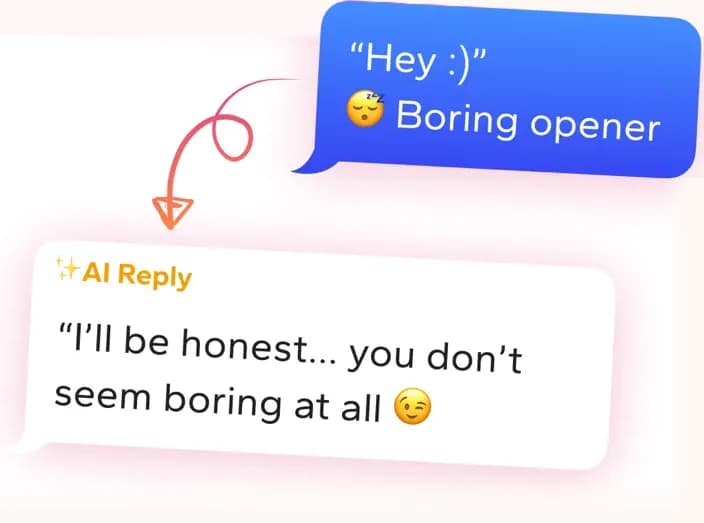
Get replies that sound like you
Screenshot the conversation in WingAI. It reads the vibe and gives you natural replies for this exact situation.
Try for freeRizz AI Screenshot the chat and get the next message for this person.
Second ghosting is a different message than the first
The first time he ghosted, you didn't know if it was a fluke, a personal crisis, or just how he operates. The apology gave you a reason to believe it mattered to him.
Now he's shown you the same pattern twice. That's information. It means the apology last time was either hollow or he means it but can't follow through. Either way, he's demonstrated that his words about caring and commitment don't match what he actually does. A single ghosting can be forgiven. A repeat is a choice.
Your reply stops rewarding the cycle
What he's hoping for is another reset. He says sorry, you accept, you both move on, he ghosts again in a month or two. This works in his favor because each apology buys him another chance without any real consequence.
A good reply breaks that cycle by making clear that a second disappearance isn't recoverable. It doesn't need to be harsh. It needs to be final. Your message should confirm that this pattern has ended the connection, not restart it.
Say it once and don't engage after
Send one message that's direct and brief. Don't write a novel about what he did wrong or leave room for negotiation. Once it's sent, he may try to re-engage, offer another apology, or ask for another chance. Do not reply to those. Silence after your message is the punctuation that makes it real.
If he reaches out a third time days or weeks later, you don't owe him a response. You already told him where you stand.
Why these replies fail
“I appreciate the apology but I'm not sure we should keep doing this if you're going to disappear again. I need someone I can actually count on.”
This leaves the door open by saying 'if you disappear again' instead of acknowledging he already did.
“This is the second time. I don't think I can trust you anymore. I'm done.”
Too angry and declarative. It invites him to argue or convince you otherwise rather than letting him sit with the consequence.
“I'm glad you reached out, but I need some time and space to think about whether I can forgive this.”
Suggests forgiveness is still on the table if he does enough. He'll see this as a reason to try harder rather than a goodbye.
Common mistakes
- Accepting the apology and moving forward as if this is the first time it happened
- Writing a long explanation of how his behavior hurt you, which just invites another apology cycle
- Asking him why he did it, giving him a chance to explain or promise it won't happen again
- Leaving the door open with 'maybe we can reconnect later' instead of a clear ending
- Responding emotionally in the moment rather than waiting until you're sure about what you want
Questions people ask
- Should I tell him exactly why his behavior is a dealbreaker?
- No. Keep it short. A long explanation comes across as trying to convince him to understand, which invites debate. A simple statement that it's over is harder to argue with and doesn't give him material to apologize against.
- What if he doesn't respond to my message?
- Good. That's the end. No follow-up needed. If he was going to respond meaningfully, he would have stayed consistent the first time.
- Is there any chance this works out if I give him another shot?
- Statistically, patterns repeat. People who ghost twice are showing you they have a habit of it. A third chance doesn't change that unless he's done serious work on it, which he hasn't mentioned or demonstrated.
- Should I block him so he can't message me again?
- Only if seeing his name makes you want to respond. If you can ignore future messages without struggling, leave it open. Blocking sometimes feels good momentarily but isn't necessary if your resolve is solid.
What people say after using WingAI
“I overthink every text. Having three options and picking the one that sounds like me cut that spiral short.”
Sam R.
“I was skeptical at first. Then I tried it on a dry chat and the replies actually sounded like me, not a chatbot.”
Mazoonx
“She went cold mid-week and I had no idea what to say. The reply I sent felt natural and she picked the chat back up.”
Marcus T.
Get replies that sound like you
Screenshot the conversation in WingAI. It reads the vibe and gives you natural replies for this exact situation.
Try for free