What to say when he keeps making excuses about calling
He's always busy or his phone died. Learn when to call out the pattern and when to walk away.
When someone says they want to call but repeatedly doesn't, they're showing you something real. The excuses might be true once. Twice is a pattern. Three times is a choice. A good reply does two things: it stops pretending the barrier is logistical, and it gives him one clear chance to step up or confirm what he's actually doing.
The mistake most people make is asking for reassurance or offering solutions. 'No worries, we can text' or 'Just call whenever' teaches him the excuses work. Your reply needs to be direct enough that he can't hide behind another scheduling problem.
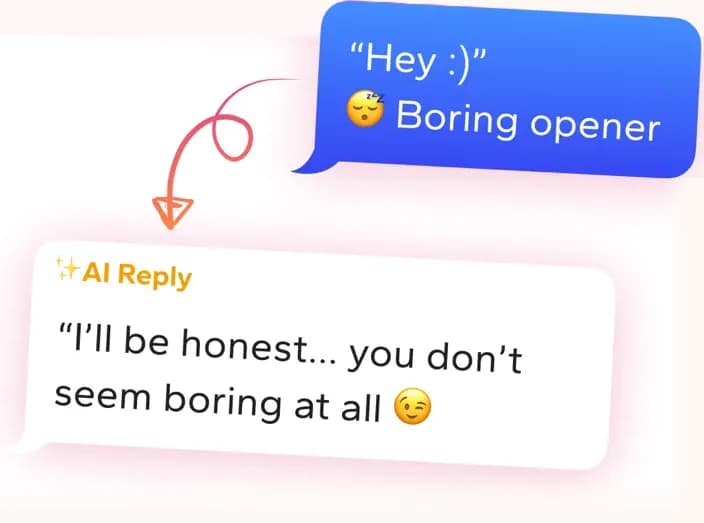
Get replies that sound like you
Screenshot the conversation in WingAI. It reads the vibe and gives you natural replies for this exact situation.
Try for freeRizz AI Screenshot the chat and get the next message for this person.
Excuses that repeat are about priority, not circumstance
A person who wants to call you will call you. Not eventually. Not when things calm down. Actually will. Work is always crazy for someone. Phones die for everyone. If he's calling other people or managing to do other things but the call to you keeps not happening, the barrier isn't external.
Read the pattern, not the reason. One broken plan is bad luck. Two in a row is a signal. Three or more is a decision. After the second excuse, he knows you're waiting and he's choosing not to prioritize it. Your reply needs to acknowledge that you see the pattern, not just hear this one excuse.
Make him choose between stepping up or staying still
A strong reply does two moves. First, it names what's actually happening. Not accusatory, but concrete. 'I notice this keeps happening' or 'This is the third time' works better than repeating his excuse back to him. Second, it gives him one specific ask that's hard to excuse away. 'Call me Tuesday at 8' lands differently than 'Whenever you're free.' A real day and time removes the scheduling escape hatch.
His response tells you everything. If he commits and does it, the pattern is broken. If he makes another excuse or goes quiet, you have your answer about where you rank. A good reply isn't mean, but it stops playing along with the fiction that logistics are the problem.
Send once, then watch what he does, not what he says
Send your reply when you're calm and can stick to it, not when you're frustrated. Give him a real window to respond. Three to five days is reasonable. If he confirms the specific day you offered, mark it in your phone. If he doesn't show up, that's a second failure and the pattern is confirmed.
Don't send a follow-up text asking why he didn't call or checking if he still wants to. Don't soften the boundary. If he ghosts the reply entirely, that's also data. After a clear boundary and a broken commitment, or two or three excuses in a row with no follow-through on a specific plan, stop waiting. He's already told you what he's willing to do.
Why these replies fail
“No worries! We can just text, I don't mind. Talk soon!”
You're solving the problem for him and teaching him the excuses work, so they'll keep happening.
“This is the third time you've said you'd call and didn't. Do you even actually like me?”
It switches to seeking reassurance from him instead of setting a boundary, and gives him a chance to comfort you rather than change his behavior.
“Your phone died? That sucks. Happened to me last week. Just call whenever you can!”
You're commiserating instead of confronting, and 'whenever' leaves the same gap that keeps getting filled with excuses.
Common mistakes
- Accepting the excuse and offering an alternative way to connect, which signals the behavior is fine
- Asking 'Are you actually interested?' which gives him room to reassure you instead of change
- Waiting longer between messages to show you're cool with it, which just trains him to wait you out
- Bringing up old excuses one by one to 'prove' he's lying, which turns it into an argument instead of a boundary
- Suggesting solutions like 'Call me during your commute' which moves the burden back onto you
Questions people ask
- Should I believe him if his excuse sounds real?
- Once, yes. Twice, maybe. Three times, no. Belief isn't the issue. Real people with busy lives and dead phones still make calls to people who matter. If you're not getting called, you're not in that category right now. Respond to the pattern, not the excuse.
- What if I seem too demanding by asking for a specific call time?
- You're not being demanding. You're being clear. Someone who wants to talk to you will see a specific time as a gift, not a test. Someone who's stalling will feel caught. That difference matters. His reaction shows you what you need to know.
- How many excuses should I accept before I stop waiting?
- Two is the limit before naming the pattern. If he breaks a specific commitment after that, you have your answer. Don't wait for a fifth or sixth excuse hoping this time is different. The pattern won't change unless something changes.
- What if he says he'll call and then doesn't again?
- That's the confirmation you needed. He's shown you twice now that his words don't match his actions. Stop responding to what he says and trust what he's doing. At this point, stepping back is the right move, not another message.
What people say after using WingAI
“I overthink every text. Having three options and picking the one that sounds like me cut that spiral short.”
Sam R.
“I was skeptical at first. Then I tried it on a dry chat and the replies actually sounded like me, not a chatbot.”
Mazoonx
“Used it for a couple hours and set up a date the same night. Not even kidding.”
Nikola2214
Get replies that sound like you
Screenshot the conversation in WingAI. It reads the vibe and gives you natural replies for this exact situation.
Try for free