What to Say After He Says Sorry
How to reply when he apologizes. Accept or reject clearly, show what changes, and decide if you're moving forward.
When a guy apologizes, he's testing whether you'll accept it and stay engaged. Your reply does real work: it either opens the door back or closes it. A good response isn't about being nice or forgiving on command. It's about being honest about what you need to move past this, and whether he's actually showing that.
Most people either shut down completely or jump straight back to normal like nothing happened. Both avoid the actual moment. The middle ground is to acknowledge his apology, name what matters going forward, and let him know where you stand. That takes maybe two sentences but it resets the whole conversation.
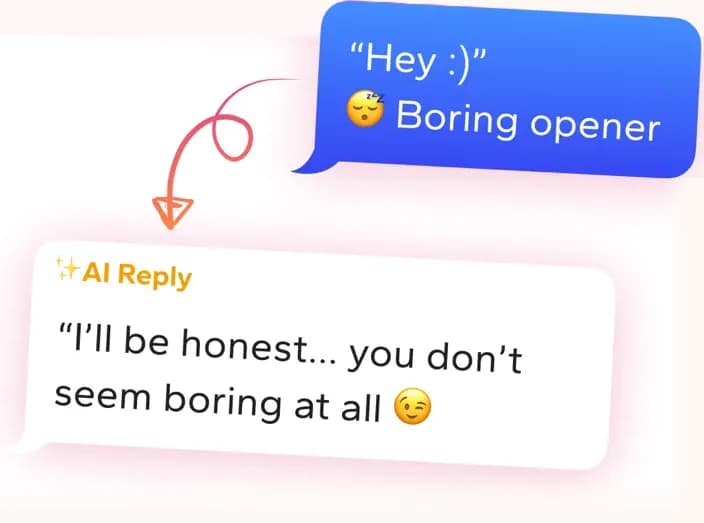
Get replies that sound like you
Screenshot the conversation in WingAI. It reads the vibe and gives you natural replies for this exact situation.
Try for freeRizz AI Screenshot the chat and get the next message for this person.
What his apology is actually testing
An apology followed by a question (can we talk, want to grab coffee, etc.) is him checking if you're still there. He's not looking for absolution. He wants to know if the door is open enough for a conversation. The speed and warmth of your reply tell him everything about whether you're moving forward or done.
This matters because your response sets the tone for what comes next. If you're cold, he'll either push harder or pull back. If you jump back in, he learns that apologies reset things instantly with no actual change. The goal is to signal that you're willing to engage, but only if something shifts.
The two moves that matter in your reply
First, accept or reject the apology directly. Not by saying 'it's fine' (it buys you nothing). Say something that acknowledges what he did and that you heard it. Second, tell him what you actually need from him before things feel normal again. It can be a conversation, time, or a specific change in behavior. Don't be vague here.
Then decide if you're willing to have that conversation right now or if you need to wait. Timing matters because replying when you're still upset usually prolongs things. Waiting too long sends a message too. The goal is to move toward resolution on your terms, not his schedule.
Waiting longer than you want to is usually smarter
The instinct is to reply fast, especially if you do want to talk to him. Don't. Wait at least a few hours, ideally until the next day. This does two things: it gives you time to decide what you actually want, and it signals to him that an apology doesn't automatically get your immediate response.
If he follows up quickly or keeps texting, don't reply to the second message. Stick with your first reply once it's ready. If he goes silent after your response, that's information. It means the apology was about getting back in, not about actual change. Give him 48 hours to follow through on whatever you asked for, then move on.
Why these replies fail
“It's fine, don't worry about it. Want to hang out later?”
Skips the actual acknowledgment and jumps straight back to normal, which teaches him apologies end things instantly without any change.
“Yeah whatever, I guess we can talk. But you really hurt me and that was messed up and you know it.”
Turns your reply into a counterattack disguised as acceptance, which keeps the conflict alive instead of resolving it.
“I don't know if I can trust that you actually mean it. You've said this before.”
Puts the burden on him to prove himself rather than you deciding whether to move forward, which hands him control of the next step.
Common mistakes
- Accepting immediately without naming what you need to change going forward, which teaches him apologies end the conversation instantly
- Listing his mistakes back at him, which turns your reply into an argument instead of a reset
- Staying cold or vague to punish him, which keeps the tension alive instead of resolving it
- Over-explaining why you were hurt, which shifts focus to managing his feelings instead of yours
- Asking if he's sorry or making him prove it, which puts the burden back on him instead of you deciding
Questions people ask
- Should I accept his apology right away or make him wait?
- Accept it directly and fairly quickly (same day or next morning), but do it on your own timeline, not his. Waiting days sends a punishment message. What matters more is telling him what has to change before things feel normal again.
- What if he apologized but didn't say what he was sorry for?
- Don't fill in the blank for him. Ask him to be specific about what he's apologizing for. If he can't name it, the apology is incomplete and you don't have enough to move forward. This pushes him to actually think about what he did.
- How do I respond if I'm not actually ready to forgive him yet?
- Say that directly. 'I hear you, and I appreciate the apology. I need some time before I'm ready to talk about this.' That's honest and keeps the door open without forcing yourself to move faster than you actually can.
- What do I do if he says sorry but then does the same thing again?
- You have your answer about whether he meant it. Stop accepting apologies as progress. Tell him once more clearly that you need to see actual change, not just words. If it happens a third time, you're not moving forward, you're spinning.
What people say after using WingAI
“I overthink every text. Having three options and picking the one that sounds like me cut that spiral short.”
Sam R.
“I was skeptical at first. Then I tried it on a dry chat and the replies actually sounded like me, not a chatbot.”
Mazoonx
“Used it for a couple hours and set up a date the same night. Not even kidding.”
Nikola2214
Get replies that sound like you
Screenshot the conversation in WingAI. It reads the vibe and gives you natural replies for this exact situation.
Try for free