What to reply when she says she's working late all week
She's slammed at work and mostly unreachable this week. Here's how to read it and what to say back so the conversation doesn't fizzle out.
When someone tells you she's working late all week, she's giving you two pieces of information at once: her schedule is full, and she's warning you ahead of time that replies will be slow. That's considerate. It means she isn't ghosting you, she's giving you context. Most of the damage in these situations comes from the sender reading the delay as a verdict on her interest.
A good reply does three things. It acknowledges what she said without making a big deal of it, it signals you won't pester her, and it leaves a light door open for when things calm down. You're not trying to win the conversation this week. You're trying to make sure there's still a conversation next week.
The trap is trying to keep the thread alive through volume. Sending three follow-ups while she's buried in deadlines reads as pressure, and it teaches her to feel guilty about slow replies, which is the opposite of what you want.
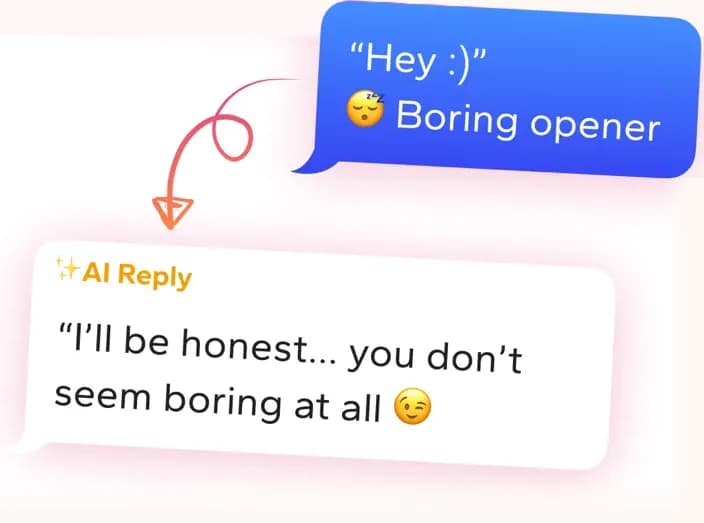
Get replies that sound like you
Screenshot the conversation in WingAI. It reads the vibe and gives you natural replies for this exact situation.
Try for freeRizz AI Screenshot the chat and get the next message for this person.
The week of silence matters more than the text
Her message is short because she's tired, not because she's checked out. People who are interested but overloaded tend to say so plainly, and that's what she's doing. Look at what she actually offered: a reason, a timeframe, and a rough next step. That's someone managing expectations, which is a good sign.
What would be worth worrying about is vagueness with no timeline, or a pattern where she's always busy and never proposes anything once the crunch is over. This week, though, she's named the end date herself. Take her at her word and let the timeline do the work. Your job is to make the next step easy for her when she comes up for air.
Answer before you get curious
Her message has an unspoken question: is this going to be a problem for you? Answer that first. A short, warm acknowledgment tells her you heard her and you're fine with it. It shows you took the information in and didn't get wounded by it.
Then stop. The temptation is to ask follow-up questions about her job, her boss, when the deadline is. Resist that. Questions about her workload, sent in the middle of her workload, read as one more thing she has to answer. Keep the reply about being easy to be around, and let her decide how much to say when she's ready to talk again.
Reply in daylight, not at 2am
If she's working late, she's likely to check her phone in short bursts between tasks, often in the evening or on a break. Sending your reply during the workday, when she can glance at it and move on, is kinder than making her deal with a long thread at midnight. Keep it short enough to read in ten seconds.
After you've replied, leave it. If she doesn't respond for several days, that's normal during a crunch. One well-timed message after the week ends, referencing what she said about being slammed, is enough to reopen things. If she still doesn't respond after that, let it go. Messaging into silence tells her the conversation mattered more to you than to her, and that's usually what ends it.
Why these replies fail
“Ugh, that sucks. Hope you survive! Let me know when you're free, I'm dying to hear about everything.”
Pressure hidden inside the sympathy: "dying to hear" makes her feel she owes you an update while she's overloaded.
“Wow, that's a lot. Are you sure you can't take an hour on Wednesday? Just for coffee?”
It asks her to rearrange her week for you right after she told you she has no slack.
“Ok no worries. Guess I'll just wait to hear from you then.”
The passive sulk makes her responsible for your mood and turns a normal scheduling gap into a small guilt trip.
Common mistakes
- Sending a long message that asks her to schedule a call or commit to a plan she has no bandwidth for
- Checking in every day to see if she's free yet
- Making a joke about her job or pretending the week doesn't matter to you
- Replying with a single word and then going silent, which can read as sulking
- Treating her availability as a test of how much she likes you
Questions people ask
- Should I wait for her to message first after she says she's working late?
- Usually yes, or at least let her make the next move. She told you when she'll be free, so you don't need to keep the thread warm through the crunch. Send one short message around the time she said things would ease up, referencing her week, and see whether she picks it up. If she does, you're back in the conversation without having chased her.
- How long should I wait before following up if she's still busy?
- Wait until the date she gave you, then give it a day or two of normal life. If she said Friday, a message the following Monday or Tuesday is reasonable. Don't follow up sooner than she'd expect, and don't send a second message if the first gets no reply. One follow-up is a normal nudge. Two in a row starts to look like pressure.
- Is it a red flag if she's always working late?
- Not on its own. Some jobs have brutal seasons, and plenty of people are only reachable in bursts. The question is whether she ever makes room for you once the busy stretch is over. If she names a time to talk or see each other and follows through when she's free, that's a good sign even with a demanding job. If she's always busy and never proposes anything, that's the pattern worth paying attention to.
- Should I tell her I miss talking to her during her busy week?
- Be careful with that. It can be sweet, but it also adds emotional weight she has no capacity to hold right now. If you want to signal interest, keep it light and aimed at the future, like looking forward to hearing how things went. Save the more direct feelings for when you're talking in person or she has room to respond to them.
What people say after using WingAI
“I was skeptical at first. Then I tried it on a dry chat and the replies actually sounded like me, not a chatbot.”
Mazoonx
“She went cold mid-week and I had no idea what to say. The reply I sent felt natural and she picked the chat back up.”
Marcus T.
“I overthink every text. Having three options and picking the one that sounds like me cut that spiral short.”
Sam R.
Get replies that sound like you
Screenshot the conversation in WingAI. It reads the vibe and gives you natural replies for this exact situation.
Try for free