What to message after a video call with awkward silences
Neither of you knew what to say on that first video call. Here is how to read the silence, time your follow-up, and restart the chat without making it a thing.
Think about what the other person likely felt as the call dragged. Silence on a screen is loud. Every pause comes with a face attached, and it is hard not to read a blank expression as judgment. Chances are she was running the same loop you were: searching for the next question, worrying about how she looked, wondering whether you were bored. Two people doing that at once produce exactly the stiff, stop and start rhythm you got. It says very little about how you would do over a coffee or a text thread.
Your goal for the follow-up is modest. You are not trying to rewrite the call or prove you are more fun than that half hour suggested. You want to lower the stakes and give her something easy to answer. A line that picks up a detail she mentioned, a small joke about the pauses, or a question with a one sentence answer does far more than a long message trying to explain yourself. Think of it as changing the room rather than apologizing for the last one.
Format changes things here. On a call, you cannot glance at a menu, a dog, a view, anything that gives the conversation a third object to lean on. Texting hands that back. She can answer on her own schedule, edit a half formed thought, and send a photo or a link. That is why a text often feels warmer than the call that preceded it, and why pushing straight into a second video session tends to reproduce the same freeze. If the platform you matched on has its own built in call feature, the pressure is higher still, because both of you chose to step into it.
Timing matters mostly in how it reads. A message within a few hours of hanging up feels like a person who is comfortable and moving on. A message five minutes later looks like a reaction to the discomfort, and one that arrives two days later looks like you stewed over it. Early evening, once the call has had time to settle, is a natural slot. Do not stack several texts if the first goes unanswered, and do not use the opener to quiz her on whether she is still interested. Both moves hand her a decision she did not ask to make.
When she replies, read the texture rather than the speed. Longer answers, a question back, a callback to something from the call, or a suggestion of her own all point toward real engagement. One word answers and silence for most of a day point the other way, though they can also mean she is busy or shy. If she warms up, shift toward something with a third object in it: a place, a plan, a topic you both care about. If she stays flat, let it rest rather than chasing a verdict.
Why silence on screen feels worse
In person, pauses get absorbed by the surroundings. You can look at the food, comment on the music, or shift your weight. On a call, the only thing to look at is the other person, so a five second gap reads as ten. Lag makes it worse, since you both start talking at the same moment, stop, and then overcorrect into politeness. That choppy rhythm is a technical and structural problem as much as a chemistry one. If you left the call with no clear sense of whether she liked you, that is normal. The format hides the small cues, like leaning in or laughing with her whole face, that usually tell you how it went.
Mention one thing she actually said
The easiest way to restart is to pull a thread from the call itself. Maybe she mentioned a trip she was planning, a show she was halfway through, or a coworker story that trailed off. Referring to it proves you were listening even while you were flustered, and it gives her a topic she already has opinions on. You do not need to address the awkward stretch directly, though a light nod to it is fine if it comes naturally. A specific callback beats a generic good to meet you, because it asks for a real answer rather than a polite acknowledgment she has to invent a reply to.
Steer toward a lower pressure format
After a stiff call, resist the urge to fix it with another call. Texting for a few days, trading voice notes if you both like them, or floating a casual plan to meet somewhere public gives the connection a different shape. A plan with a built in activity, like a walk, a market, or a coffee near her place, supplies the third object that video lacked. Keep the suggestion loose enough that she can counter it. If she proposes something different, that is a good sign she is invested. If she dodges the idea but keeps chatting, give it a little time before raising it again.
Why these replies fail
“Sorry that was so awkward, I'm usually way better at this. Want to try again?”
It apologizes for the silence and offers the exact format that just failed, so she has to reassure you before she can even think about her answer.
“That call was kind of painful lol. Are you still interested?”
Calling the call painful makes the discomfort official, and demanding an interest check right after it forces her to give a verdict she has not formed yet.
“Hey, let me know if you ever want to video chat again, no pressure.”
It puts all the effort on her, offers nothing to respond to, and the no pressure line reads as an expectation of being turned down.
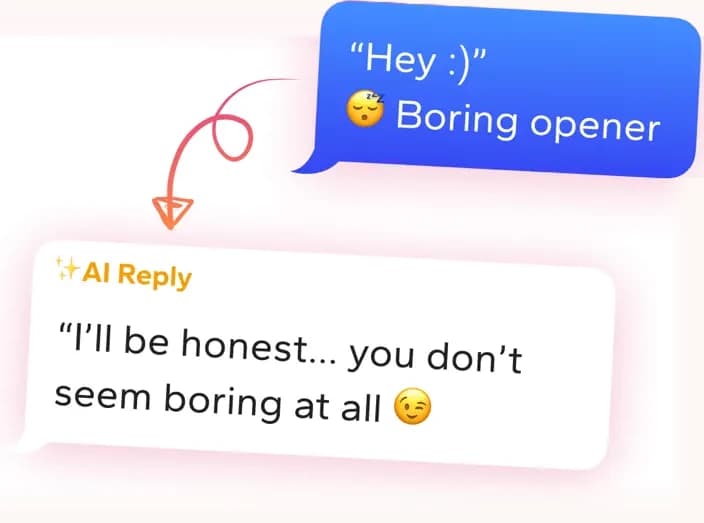
Get replies that sound like you
Screenshot the conversation in WingAI. It reads the vibe and gives you natural replies for this exact situation.
Try for freeQuestions people ask
- Should I message first after an awkward video call?
- Yes, send the first message. After a call where both of you struggled, each person tends to wait for the other to restart. A short, easy text gives her an opening without asking her to carry the conversation or explain how she felt.
- How soon should I text after an awkward video call?
- Aim for a few hours later, often that same evening. That is long enough to look relaxed and recent enough that the call is still fresh. Texting right away can look like a reaction to the awkwardness, while waiting more than a day makes it feel overthought.
- What if she does not reply after the awkward call?
- Give her a full day, since people get busy or need time to shake off an uncomfortable call. If nothing comes, let it go. One gentle follow up after several days is the most you should consider, and a second one tends to read as pressure.
- Should I suggest another video call to fix it?
- No, not right away. A second call usually brings the same stiffness, because the format is the problem. Text for a while or suggest meeting somewhere casual, where an activity or setting gives you both something to talk about besides each other's faces.
What users say
“I overthink every text. Having three options and picking the one that sounds like me cut that spiral short.”
Sam R.
“I'm busy and half the profiles give you almost nothing to work with. WingAI gets me a solid first line fast without me staring at the screen for ten minutes.”
Ralph
“I was skeptical at first. Then I tried it on a dry chat and the replies actually sounded like me, not a chatbot.”
Mazoonx
“Used it for a couple hours and set up a date the same night. Not even kidding.”
Nikola2214
Common mistakes
- Writing a long apology that explains why you were nervous, which makes her responsible for comforting you instead of replying.
- Proposing another video call straight away, which repeats the format that caused the freeze instead of changing it.
- Sending a string of follow ups within hours when she has not answered, which turns a quiet moment into visible anxiety.
Get replies that sound like you
Screenshot the conversation in WingAI. It reads the vibe and gives you natural replies for this exact situation.
Try for free