How to respond when your girlfriend says she needs space
She said she needs space. Here is the tone to take, what to include, what to skip, and how to adjust once she answers, without chasing or going cold.
When a girlfriend says she needs space, the first thing worth understanding is that she usually does not have a verdict yet. She has a feeling of being crowded, overloaded, or unsure, and she has not sorted out which. Telling you is a way of buying time before she says something she cannot take back. She may be buried at work, tangled up in a family problem, or reacting to how fast the two of you have been moving. Often she cannot explain it yet, which is why asking her to explain it lands so badly.
Your goal with the reply is narrow. You want her to read it and feel her chest loosen. She should come away thinking you heard her, you are not going to make this heavy, and she does not owe you anything right now. You are not trying to win her back, settle the relationship's future, or prove how much you care. A message that tries to accomplish any of that turns a request for quiet into a job she has to manage.
Because this usually happens over text, tone does most of the work. Written words lose your voice, so warmth has to come through word choice and brevity rather than volume. A short, steady reply reads as someone who is secure. A long one reads as someone bracing for impact. Timing matters too. Answering within a few hours reads as calm. Answering within seconds can feel like you were hovering over the phone, and answering the next day can read as a sulk.
Most of the damage comes from replies that sound accepting but carry a hidden ask. Questions about what this means, reminders of how much you love her, and announcements that you will be waiting are all requests for comfort wearing the costume of understanding. A line that dares her to enjoy herself works the same way in reverse, trying to make her feel guilty for having asked. She will notice the hook even if she cannot name it, and the space she wanted gets spent managing your feelings instead.
How she responds tells you how to proceed. A short thank you or a warm acknowledgment means you got it right, so say nothing more and let the quiet do its work. If she replies with more detail about what she is dealing with, answer kindly and briefly, without turning her openness into a long exchange. If she says nothing, that is fine. The message was never meant to produce a reply. If she answers with something cold or ambiguous, resist the urge to decode it. Take it at face value and give her room.
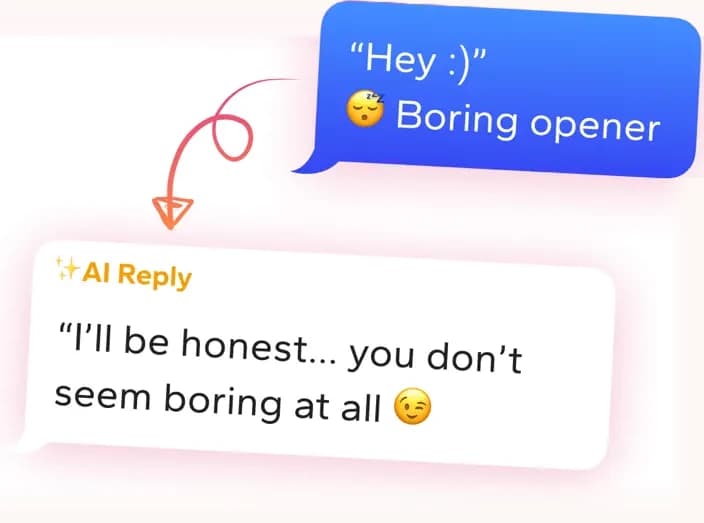
Get replies that sound like you
Screenshot the conversation in WingAI. It reads the vibe and gives you natural replies for this exact situation.
Try for freeThe tone that lands best
Aim for calm, warm, and brief. Think of how a steady friend would respond if you told them you needed a few quiet days: they would say they understood and leave it there. Skip the exclamation points that make you sound artificially cheerful, and skip the heavy emotional language that makes her feel responsible for your reaction. Your message should sound like you at a normal Tuesday level of feeling, slightly softer than usual. Two or three sentences is plenty. If you read it back and it sounds like you are performing maturity, cut it down. Plain beats polished here. She is already carrying something, so your reply should weigh almost nothing.
What belongs in your message
Start by reflecting back what she said in your own plain words, without softening it into something easier for you. If she said she needs time to think, say you hear that she needs time to think. Add a brief sign that you are okay, such as a mention of something you have going on this week or a light note of care about whatever she has been stressed about. If she mentioned a specific pressure, like a work deadline or a family situation, a short callback to it shows you listened. Close without a question and without a prompt to reply. The message should be complete on its own, so silence afterward feels natural.
Adjusting once she answers
Match her depth, never exceed it. If she sends a brief thanks, leave it unanswered, since replying to a thank you restarts the conversation she wanted paused. If she opens up about what is weighing on her, respond with real warmth but keep it contained, and resist turning her honesty into an invitation to talk about the relationship. If she reaches out a few days in with something casual, answer in the same easy register and let her steer. If her reply is short or flat, do not interpret it as a verdict. People who are overwhelmed often write in fragments. Give the next move to her, and hold the timing rules loosely rather than watching a calendar.
Why these don't work
“Okay, but can we at least talk about what this means for us? I just need to know we're alright.”
She asked for room because she cannot answer that question yet, so this hands her the exact pressure she was trying to step away from.
“Fine. I guess I'll just sit here alone then. Enjoy your space.”
It dresses guilt as acceptance, teaching her that honesty about her needs costs her your good mood.
“No problem, take all the time you want! I'm here for anything, always, and I love you so much and I'm not going anywhere.”
The second half is a plea for reassurance, so she has to reply with comfort when she asked for quiet.
Pitfalls to avoid
- Burying the acknowledgment under paragraphs of feelings, so she has to read through your anxiety to find the respect.
- Sending a follow up within hours because the first message got no reply, which turns a calm response into pursuit.
- Keeping up small contact like likes, stories, or shared links, which tells her the space is not being respected even if the texts stop.
- Treating a brief or flat reply as a verdict and responding with a long message to repair a damage that may not exist.
People also ask
- How do I respond when she says she needs space over text?
- Keep it to two or three calm sentences. Reflect back what she asked for, show you are fine, and stop there with no question attached. Reply within a few hours so it reads as steady rather than panicked or sulky. Then leave the thread alone and let her decide when to pick it back up.
- How long should I wait before contacting her again?
- If she named a timeframe, wait until it passes, then send something light that does not demand an answer. If she gave none, give her at least a week, and lean longer if she seems heavily stressed. A few days only works when she said so herself. Never treat silence as permission to check in early.
- Should I ask her what she means by space?
- No. She said what she needs, and asking her to define it puts work back on someone who is already overloaded. It also suggests you were not listening the first time. If the terms were vague, choose the more generous reading and give more room rather than less.
- What if she reaches out first during the space?
- Answer warmly and briefly, matching her tone and length. She may need something practical or may be testing how comfortable the two of you can be. Do not use the opening to raise the relationship or ask where things stand. Let her take the conversation as far as she wants it to go.
It doesn't sound like a bot
“I was skeptical at first. Then I tried it on a dry chat and the replies actually sounded like me, not a chatbot.”
Mazoonx
“I overthink every text. Having three options and picking the one that sounds like me cut that spiral short.”
Sam R.
Get replies that sound like you
Screenshot the conversation in WingAI. It reads the vibe and gives you natural replies for this exact situation.
Try for free