What to do when he goes silent after you share something vulnerable
He went quiet after you shared something personal. Learn what the silence can mean, how to respond once without chasing, and how to read what comes back.
Telling someone something tender is a small act of trust, and trust invites a response. When none comes, the mind fills the gap with the worst available story. He's repulsed. You said too much. You ruined it. Most of those stories are guesses, and the honest truth is that silence has several possible causes that look identical from where you sit.
From his side, a personal disclosure can land as a weight he didn't know how to hold. Some people freeze when they feel they owe an emotionally equal reply and can't produce one on the spot. They tell themselves they'll answer when they find the right words, and then days slide by while the pressure to be eloquent grows. Others are simply stretched thin by work, family, or their own mess, and your message arrived on a day with no room. A smaller group sees closeness building and pulls back because they wanted something lighter. None of these are visible in the silence itself.
What you're trying to achieve matters more than decoding him. You want to know whether this person can receive you, not to win a reply. That reframing helps, because it lets you design one message that gives him a fair chance and gives you a clear answer either way. Your aim is information and self respect, not reassurance. If you find yourself drafting something to make the discomfort stop, that message is for your nerves, not for him.
Timing and the medium shape how much weight to give the quiet. On a dating app, a gap of a day or two is ordinary, since people check in bursts and conversations get buried. After weeks of texting with a steady rhythm, the same gap reads differently, especially if he's visibly around elsewhere. Evenings and weekends carry more information than workday hours. Still, an active story tells you he has a phone, not that he has an answer.
What tends to backfire is anything that tries to repair the moment by shrinking it. Apologizing for sharing, joking it away, or stacking follow-ups teaches both of you that your openness is a problem to be managed. Anger fails too, because it hands him a grievance to focus on instead of his own absence. Chasing with several messages turns a single clean question into pressure, and pressure makes avoidant people retreat further.
When he does reply, read the content before the speed. A response that names what you shared, even clumsily, shows he took it in. A reply that skips past it and asks about your weekend is a quiet vote to treat it as never said. An apology with specifics beats a breezy one. And a long burst of warmth that vanishes again within days tells you something about his pattern, not about your worth.
Telling pause from avoidance
Compare the silence to his own baseline rather than to some universal clock. If he normally answers within a few hours and now a full day has passed, that stands out. If he usually disappears for a day anyway, the gap says little. Look for partial contact too: a reaction to your message, a short note saying he'll reply properly later, a reply the next morning. Those are the behaviors of someone thinking it over. Total silence while he stays active elsewhere is closer to avoidance, though even that can come from awkwardness rather than indifference. Hold the reading loosely until you've given him one clear chance.
Writing one message that holds
Aim for a single, short message that treats what you shared as real without demanding a verdict on it. Name that you opened up, say you'd like to hear where his head is, and stop there. No paragraph of explanation, no softening, no hints about how hurt you are. Keep the tone warm and level, the way you'd speak to a friend who'd gone quiet. Leave out deadlines and ultimatums, since those turn a door into a test. Read it once as if you were him, tired and slightly embarrassed. If it sounds like a summons, trim it until it sounds like an invitation.
What your own wait should look like
After sending, put your phone down and let a couple of days pass without reopening the thread. Don't scan his activity for clues, because every sign you find will be ambiguous and will keep you tethered. Spend the time on things that remind you how you're regarded elsewhere: a friend who knows the story, a plan you were postponing. If a reply comes, you'll meet it from a steadier place. If nothing arrives, you aren't owed a verdict from him to move on. You can decide, by yourself, that someone who can't answer an honest message isn't where your energy goes next.
Why these replies fail
“Sorry if I overshared earlier, I know that got heavy. Anyway, did you watch the game?”
It takes back the thing you were brave enough to say and buries the unanswered question under small talk, so his silence ends up looking like the right call.
“Wow, okay. Guess you can't handle real conversation. Good to know who you are.”
It turns your disclosure into an accusation, so he'll respond to the tone instead of to what you actually shared.
“I know I can be a lot and I'm working on being easier to talk to. I hope that helps.”
It treats his absence as proof that you were too much and promises to change before he's even said what happened.
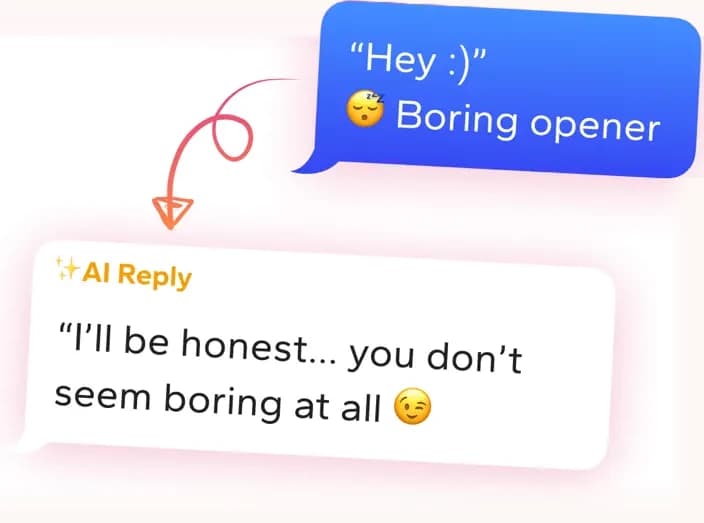
Get replies that sound like you
Screenshot the conversation in WingAI. It reads the vibe and gives you natural replies for this exact situation.
Try for freeQuestions people ask
- Is he just processing what I told him, or is he pulling away?
- You can't tell from silence alone, and a day or two of quiet is within normal range. Compare it to his usual rhythm. Someone processing often sends a short note or reacts to your message. Complete silence while he's active elsewhere leans toward avoidance, but give one clear message a chance before deciding.
- Should I mention what I shared or carry on as if nothing happened?
- Mention it once, briefly, and without apology. Carrying on as if nothing happened can leave you resentful and leaves him unsure whether you want a response. A short, warm message that acknowledges you opened up and invites him to respond gives him a fair way back in.
- What if he reappears days later with an excuse?
- Hear him out, then weigh what he does next. A specific, sincere explanation paired with real attention to what you shared is worth another try. A vague excuse followed by a topic change is a different answer. You get to decide how much a pattern like that matters to you.
- How should I reply when he finally answers?
- Read it first and notice whether he engaged with what you said. If he did, even awkwardly, respond with warmth at your normal pace. If he skipped over it, you can name that once calmly or let your interest cool. Don't reward a breezy reply by pretending the gap never happened.
What users say
“I overthink every text. Having three options and picking the one that sounds like me cut that spiral short.”
Sam R.
“I was skeptical at first. Then I tried it on a dry chat and the replies actually sounded like me, not a chatbot.”
Mazoonx
Common mistakes
- Sending several follow-ups in a row, which turns one honest question into pressure and gives him a reason to retreat further.
- Watching his story views and last-seen status for proof of what the silence means, which keeps you waiting on a message that those signs can't explain.
- Answering in the first raw hour, when the message is still carrying hurt or panic instead of the plain curiosity you meant to send.
- Retroactively shrinking what you shared by joking about it or calling it nothing, so he learns your openness comes with an escape hatch.
Get replies that sound like you
Screenshot the conversation in WingAI. It reads the vibe and gives you natural replies for this exact situation.
Try for free