What it means when she gets vulnerable in texts
She's sharing something personal or admitting struggle. What that signals and how to respond without freezing or over-correcting.
When she opens up about something that matters, it's a permission slip. She's testing whether you can hold something real without panicking or turning it into a therapy session.
Vulnerability isn't a signal she likes you more. It's a signal she's lowering her guard. That's different. She's decided it's safer to be less filtered around you than around most people.
A good reply does two things. First, it acknowledges what she said without making it bigger than it is. Second, it shows you're still the same person she was texting before. Not suddenly her therapist. Not suddenly backing away. Just... steady.
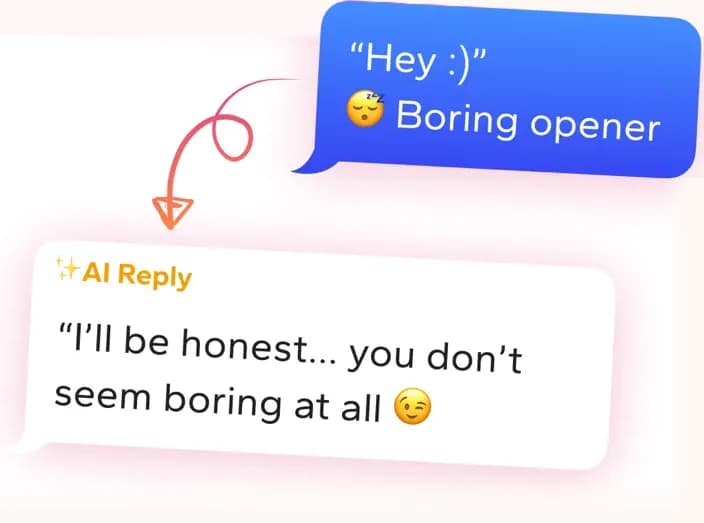
Get replies that sound like you
Screenshot the conversation in WingAI. It reads the vibe and gives you natural replies for this exact situation.
Try for freeRizz AI Screenshot the chat and get the next message for this person.
She's testing the container, not asking for rescue
When someone shares something real, they're usually not asking you to fix it. They're checking if you'll stay normal. If you freak out, she learns you can't be told difficult things. If you go quiet, she learns she messed up by being honest. If you pivot to advice, she learns you see her as a problem to solve.
Vulnerability shared is vulnerability trusted. She's decided you won't weaponize what she said or use it to prove she's broken. That's the bar. Not fixing her. Just not flinching.
Stay grounded and show up as a peer
A solid reply does three things. One, it acknowledges specifically what she said, not a vague 'I hear you'. Two, it says something true back, even if it's small. Three, it moves forward without pretending she didn't say it.
Don't become her support system in one reply. Don't become distant. Just match her tone and keep being the person she was already talking to. If she made herself smaller by admitting something, you make yourself proportional by responding naturally.
Wait through the discomfort, don't rush reassurance
Send your reply when you've thought for a minute, not instantly. Quick reassurance feels like you need her to stop feeling bad so you stop feeling awkward. That lands differently than 'I got this, talk when you're ready.'
If she doesn't reply right away, that's normal. She might be processing or worried she said too much. Give it at least a day before checking in. If she goes quiet for more than a few days after opening up, a single light message is okay. After that, leave space. She's either processing or she's testing whether you'll pressure her, and either way you lose by pushing.
Why these replies fail
“That's okay, you're not alone. A lot of people struggle with this. I do too sometimes. You just have to be more aware of your patterns.”
Leads with reassurance, makes it about your own experience, then shifts to advice. Feels like she overshared and you're normalizing her back to the default.
“wow okay that's a lot. do you want to talk about it? like really talk? because we should probably have a real conversation about this”
Makes her small admission seem heavy and dramatic, turns it into a scheduled emotional event, adds pressure instead of ease.
“(no response for 3 days, then) hey how are you feeling”
The delay signals discomfort, the check-in feels guilty and obligatory, not like you were thinking about what she said.
Common mistakes
- Jumping into advice mode ('You should try...' or 'Have you considered...')
- Making it heavier than she did ('This sounds really serious, are you okay?')
- Disappearing or going quiet because you don't know what to say
- Turning it back to you or your own struggles
- Over-reassuring with 'You're perfect the way you are' type responses
Questions people ask
- Does vulnerability mean she likes me more?
- No. It means she feels safer. That could lead somewhere or stay as is. Safety and attraction are different things. Don't assume her guard coming down means romantic interest. It means she trusts you a bit more in that moment.
- What if I don't know what to say?
- Say the specific thing you noticed, not a generic response. Name it back: 'That sounds frustrating' or 'I get why you feel that way about it.' Then send it. Silence after vulnerability is worse than an imperfect reply.
- Should I bring it up again later?
- Only if she does first. Don't treat it like a secret shared between you or something that needs processing. Acknowledge it happened if it comes up naturally, but don't make it your new reference point for her.
- What if she texts about something heavy and I'm busy?
- Reply within a couple hours, even if it's short. A quick 'got you, replying properly in a bit' beats waiting until evening. Don't leave her hanging after she opened up.
What people say after using WingAI
“I was skeptical at first. Then I tried it on a dry chat and the replies actually sounded like me, not a chatbot.”
Mazoonx
“She went cold mid-week and I had no idea what to say. The reply I sent felt natural and she picked the chat back up.”
Marcus T.
“I overthink every text. Having three options and picking the one that sounds like me cut that spiral short.”
Sam R.
Get replies that sound like you
Screenshot the conversation in WingAI. It reads the vibe and gives you natural replies for this exact situation.
Try for free